Chess in the Cloud
The battle between the US and China over global hegemony has moved to the technological arena. But what we really need is a democratic digital commons.
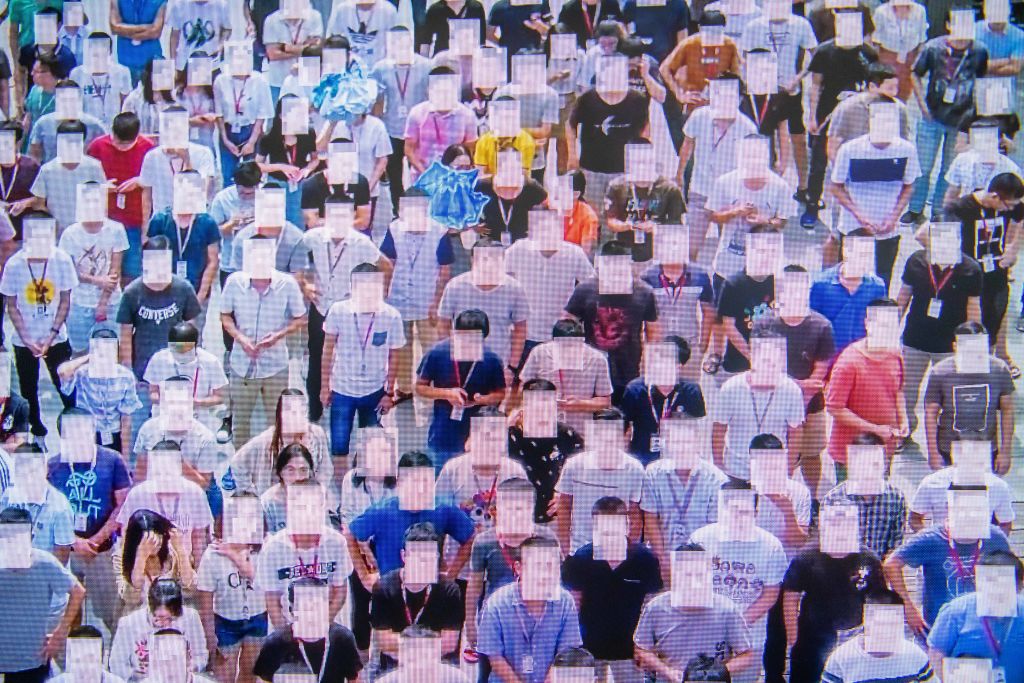
Monitoring technology is seen at the exhibition hall at the Huawei Technologies Co. headquarters on March 29, 2019 in Shenzhen, China.Billy H.C. Kwok / Getty
Grindr users can rest easy. The US government has made users of the world’s most popular dating app for gay, bi, trans, and queer people safe from potential blackmail by the Communist Party of China (CPC). Late last month the Committee on Foreign Investment in the US (CFIUS) demanded that Beijing Kunlun Tech, a global gaming and technology company and the current owner of Grindr, divest the mobile app unit in a fire sale.
US officials cited concerns that sensitive information collected by the app — HIV status, sexual orientation, age — could compromise Grindr users (some of whom are government and military officials or have civilian security clearance), possibly even making them vulnerable to “cold pitches” by the Chinese government to spy on the United States.
The Grindr case is just one of a number of recent geopolitical tussles over digital technology. Both the California and the New York state pension funds are facing pressure from the Senate Foreign Relations Committee to divest from Hikvision, the world’s largest surveillance company. The Hangzhou-based firm is in the spotlight over reports that it is a leading supplier to China’s “vocational education training centers” in the country’s Xinjiang region, where an estimated 1 million Uighurs are being confined.