Agnès Varda (1928–2019)
Agnès Varda’s films evinced a love of, rather than mere fascination with, people.
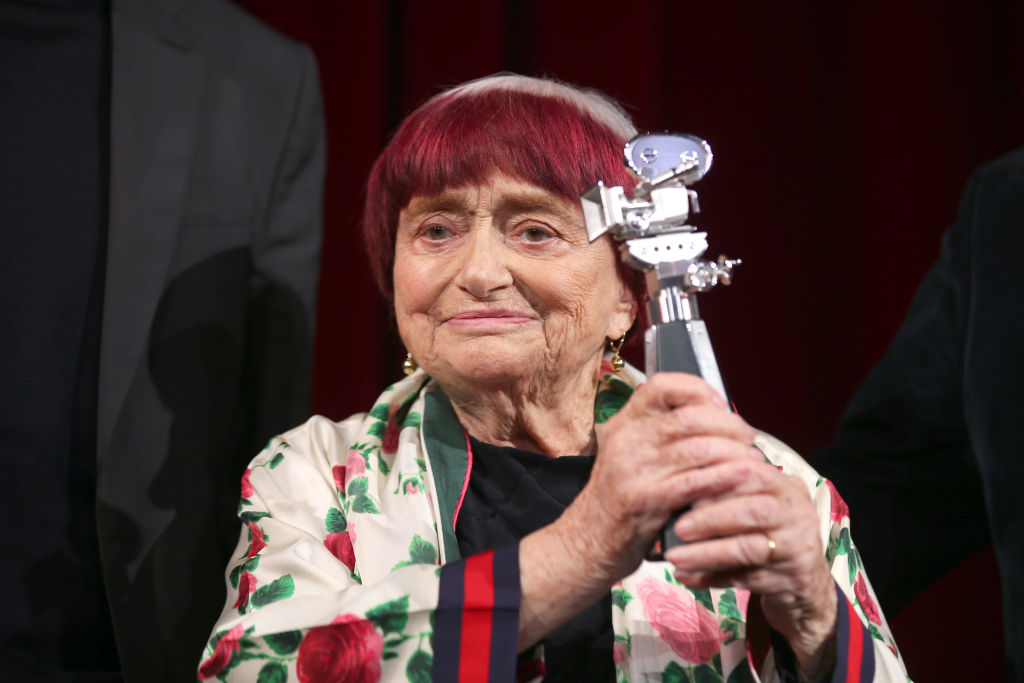
Director Agnes Varda on stage at the Berlinale Camera award ceremony during the 69th Berlinale International Film Festival Berlin at Berlinale Palace on February 13, 2019 in Berlin, Germany. Thomas Niedermueller / Getty
Born Arlette Varda in Belgium in 1928, Varda renamed herself Agnès at the age of eighteen and trained as a photographer in France before directing her first film La Pointe Courte in 1954. She lived in the same apartment on the Rue Daguerre in Paris for almost seventy years; she died March 29.
Varda’s background as a photographer and love of painting informed her aesthetic as a filmmaker, but as memorable as the distinctive visual language that characterizes her films are the varied people who populate them: shopkeepers and fishermen, hippies and potato farmers, painters and singers, Black Panthers and Cuban revolutionaries, women on the road and in the city, family and friends. Varda’s films evince a love of, rather than mere fascination with, people.
Her films often depict women drifting alone. In Cléo from 5 to 7 (1962), which cemented her reputation as a leading figure of the French New Wave, the camera accompanies the glamorous self-absorbed heroine through Paris as she waits to receive the results of a medical test. Varda conveys the way anxiety dilates time, portraying the kinds of quiet fears and subjective dramas that might be preoccupying any stranger passing on the street but to which we ordinarily remain oblivious.