The Death of a Class
Italy's illustrious Marxist filmmaker Bernardo Bertolucci died last week. His films explored the death of the bourgeoisie; his legacy points us to the death of the chauvinist male auteur.
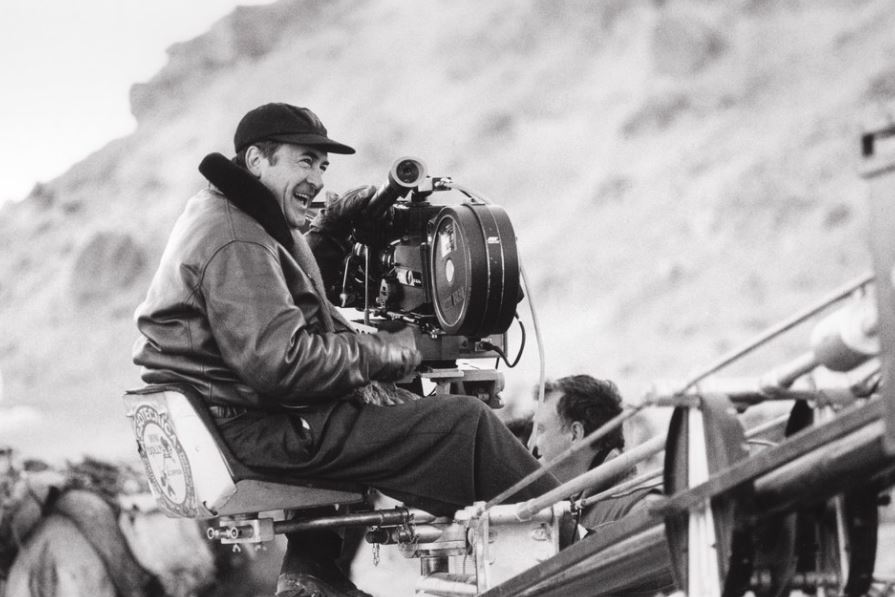
Bernardo Bertolucci in 1990. Wikimedia Commons
Bernardo Bertolucci, who died last Monday aged seventy-seven, was the last of the masters of Italian cinema, from an intergenerational group of directors who debuted between the end of World War II and Italy’s economic boom at the beginning of the 1960s. In five decades of filmmaking, Bertolucci weaved a complex nexus between the local (particularly Parma, where he was born, and Rome) and the global and transnational. He made films in different continents, from low-budget productions to Hollywood, gaining a critical and audience success that has little equal in the history of cinema.
But Bertolucci wasn’t a mere observer and narrator of the history unfolding in Italy, or indeed the nation’s past. Rather, at a time when films mattered, he himself influenced history, whether “anticipating” 1968 (with his 1964 film Before the Revolution), analyzing the consequences of a world increasingly dependent on oil (La via del petrolio, The Path of Oil, 1965), or dealing with the complex and unresolved legacy of fascism in Italy (The Conformist and The Spider’s Stratagem, both 1970).
Close to the leftist movements of the 1960s and after 1968 a member of the Italian Communist Party (PCI), Bertolucci could not be defined as a militant director. With a couple of exceptions, he did not so much make films about politics, as make films in a political way. With his passing, the death of one of the last auteurs in film, we can start evaluating with greater critical distance a certain tendency of making, watching, and understanding cinema itself.