The Tories Think Voting Is Too Easy
Unlike the voter-supressing US, Britain is a country where it’s easy to vote. Now the Tories are trying to change that.
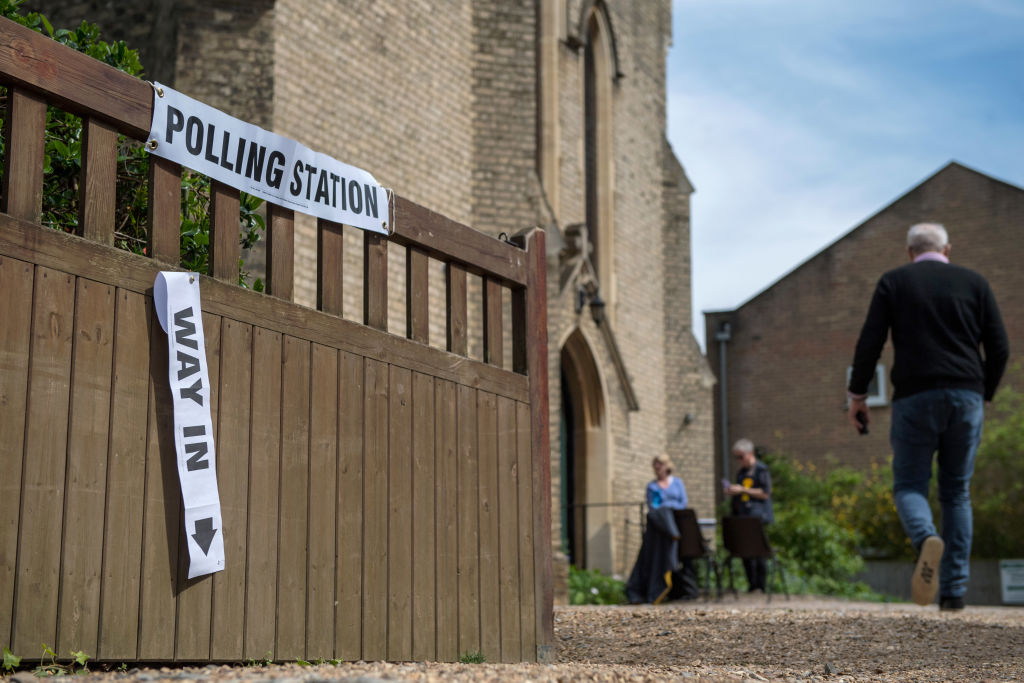
A man walks into a polling station in a church in Twickenham as voters go to the polls in the English local council elections on May 3, 2018 in London, England. Chris J Ratcliffe / Getty Images
Voting in Britain is incredibly easy. Often, you receive a card, reminding you of your polling station, usually a school, church or community center. On election day, you can arrive without the card, state your name and address to two volunteers, then mark your preference on the ballot with a pencil. In Northern Ireland, an electoral identity card is required to prove your age and name, and is issued for free. The process is straightforward, and remaining registered is just a matter of registering online or returning one of the letters the local council regularly sends to each property.
But that’s changing in many areas: the Conservatives are piloting a scheme that requires identification before individuals can cast their vote. Citing concerns around electoral fraud, passports and driving licenses are accepted, but the trial is clearly designed to prevent the poorest and most vulnerable in society from being able to vote at all. Those who are homeless often lose paperwork and identification. And for many people the cost of a passport, £75.50, is prohibitive. Many people never learn to drive — I have epilepsy so am banned from even holding a provisional license. The people affected by the change are the poorest and most vulnerable in society — and also the least likely to vote Conservative.
The scheme reeks of other attempts at gerrymandering from the Conservatives: pushing for a boundary review of constituencies (“redistricting,” in American lingo) that with the altered electoral math would have seen the Conservatives easily become the largest party, and prominent left-wingers including Jeremy Corbyn losing their seats in Parliament. Another move to update the Electoral Register saw the number of people registered to vote shrink by 1.2 million between 2012 and 2016.