Why the Differences Between Sanders and Warren Matter
Elizabeth Warren is no centrist. But Bernie Sanders would be the most progressive president in US history — and he'd have a movement to back him up.
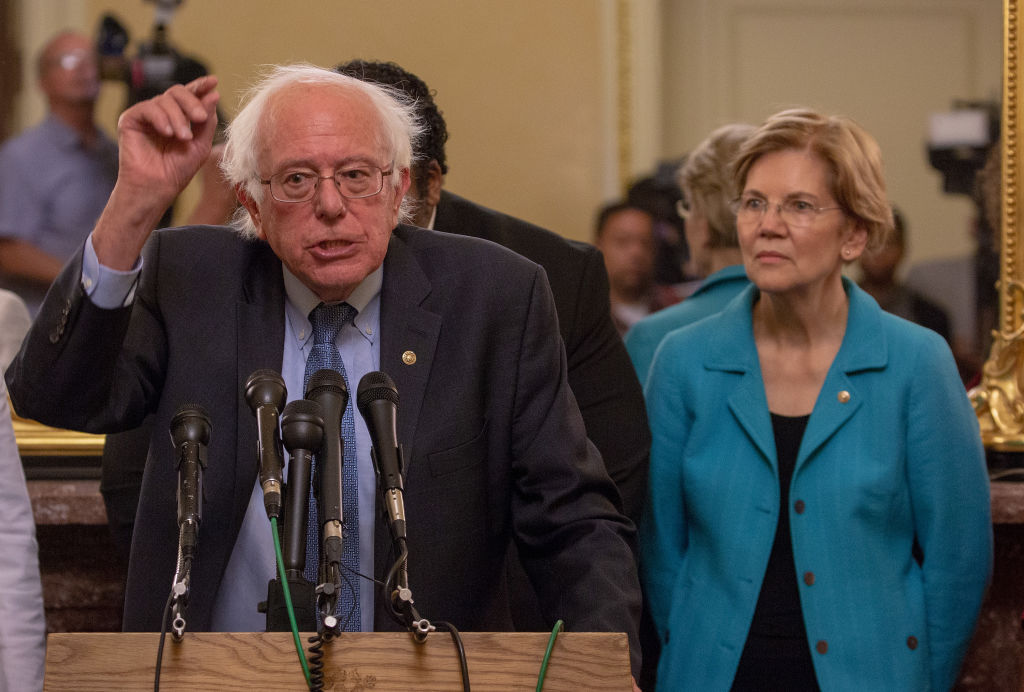
Sen. Bernie Sanders and Sen. Elizabeth Warren attend a press conference on July 24, 2018 in Washington DC.Tasos Katopodis / Getty
Both are critics of the Democratic establishment. Both are foes of Wall Street. And both are substantive, policy-focused politicians. But that doesn’t mean Bernie Sanders and Elizabeth Warren share the same worldview.
Sanders tends to focus on “post-distribution” remedies, meaning he prefers to use the government’s power to tax and spend to directly meet Americans’ needs — or replace the market altogether. His social-democratic ideas, like free college and single-payer health care, are now policies most Democrats have to tip their hat to at least for electoral reasons. Warren wants to empower regulators and rejigger markets to shape “pre-distribution” income, before taxes. Less likely to push for big-ticket programs, she wants to re-regulate Wall Street and make life easier for consumers.
Before I go any further, I should lay my cards on the table. I have a conflict of interest — towards Warren. In 2012, I worked for the Progressive Change Campaign Committee (PCCC), the most influential outside PAC supporting Warren. I raised thousands of dollars for her and recruited dozens of volunteers. I spent hundreds of hours helping elect Warren to the Senate. I have written favorably about most of her Senate career since.