Flouted Justice for Berta Cáceres
The trial against Berta Cáceres’ accused assassins has been riddled with irregularities and bias — and barred the victims' lawyers from participation. It is a tragic lost opportunity for justice in Honduras.
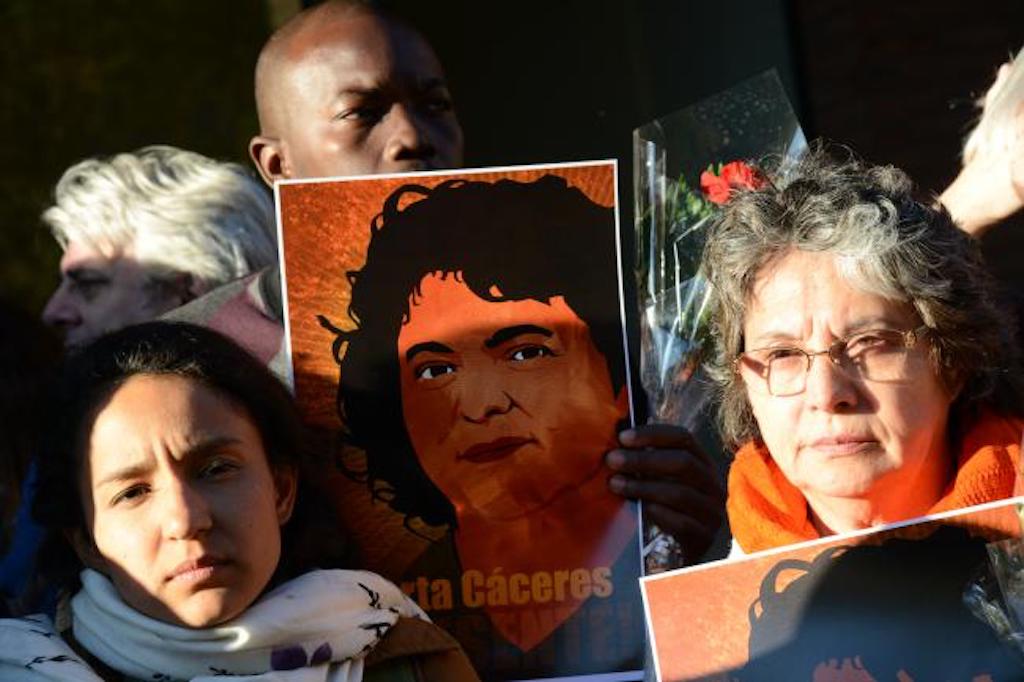
A vigil for Berta Cáceres at the Organization of American States on April 5, 2016. Berta’s daughter, Bertha Zúñiga Cáceres, is on the left. (Daniel Cima/Flickr).
Three weeks into the trial for the murder of Indigenous Lenca leader Berta Cáceres and attempted murder of Mexican environmentalist Gustavo Castro in Honduras, it has become abundantly clear that political interests will supersede true justice in one of the most emblematic cases the country has ever seen. Cáceres, an internationally-known activist and former leader of the Civic Council of Popular and Indigenous Organizations of Honduras (COPINH), was most known for her opposition to the construction of a dam in Indigenous territory called Agua Zarca, owned by the Honduran company Desarrollos Energéticos SA (Energetic Development, DESA).
The trial against eight men accused of participating in the murder opened on October 19 after a pre-trial period marked by irregularities and bias — even though the judges in the case are currently embroiled in a recusal process and the victims were ordered to be represented by state prosecutors instead of their own attorneys. A ninth man, David Castillo, a former military intelligence officer and General Manager of DESA, was arrested on March 2, 2018 in connection to the murder, but will face a trial at a later date.
The goal of the legal process they have mounted has been to get to the truth of what happened in Berta’s case, but also to expose the state and economic systems in place that perpetuate racism, dispossession, and impunity in Honduras. Berta Cáceres’ three daughters, son, and mother, as well as Gustavo Castro, the only eyewitness to the events of March 2, 2016, who was also shot and injured during the attack, are the victims of the case. The family and Castro, with their lawyers, assert that Berta was killed as part of a coordinated campaign by DESA against COPINH and Cáceres, and that the assassination was not an isolated event. Their lawyers affirmed that there is evidence of systematic attacks by DESA against COPINH, which Berta Cáceres co-founded, and the Lenca people, and are asking that DESA be exposed and prosecuted. During the August evidentiary hearing, key evidence was not accepted by the judges presiding over the trial that would have shown the historical and systematic attacks against the Lenca population by the state and companies working in their territory. The goal of the legal process they have mounted has been to get to the truth of what happened in Berta’s case, but also to expose the state and economic systems in place that perpetuate racism, dispossession, and impunity in Honduras.