The Front-Page Flop
For years, the Tories have relied on slavish support in the press to sell their austerity politics. But in the age of social media, this strategy has diminishing returns.
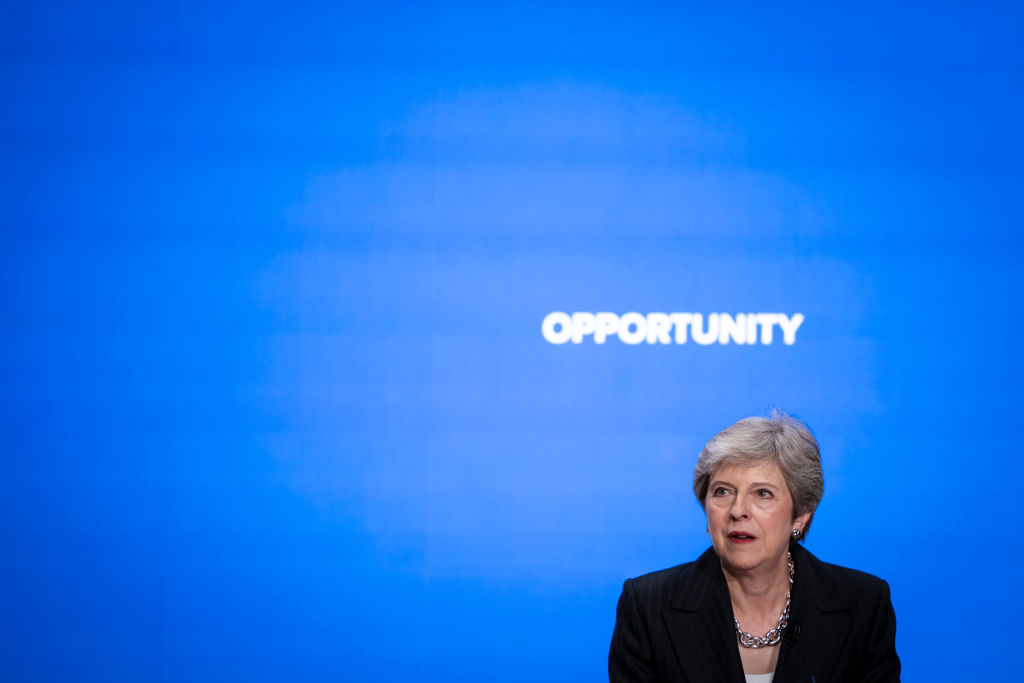
British Prime Minister Theresa May on October 3, 2018 in Birmingham, England. Christopher Furlong / Getty Images
News that the leader of a political party wants supporters of another party to vote for her shocked the editors of the Observer so much that they put it on the front page this Sunday, describing it as “extraordinary.”
Prime Minister Theresa May’s article had little news value, merely repeating the attacks of her Conservative conference speech a few days earlier. Beyond bland appeals to “patriotic moderates,” there was nothing to appeal to Labour voters: no new policies, no analysis of why the system was failing, and no inspiring vision of the future she wants to create. Just a plea for Labour voters to “look again” at her party.
After eight years of a Conservative government, and two years of Theresa May as prime minister, this kind of hollow rhetoric is telling. It reflects an idea of politics as a parlor game played out in the media, rather than a means to enact policies to improve people’s lives. The Conservatives have considerable faith in this approach. For years, they have relied on slavish support in the press to sell their austerity politics.