Own the Future
Corbyn's Labour Party is advancing a transformative project that could push beyond traditional social democracy — and toward democratic workers' control.
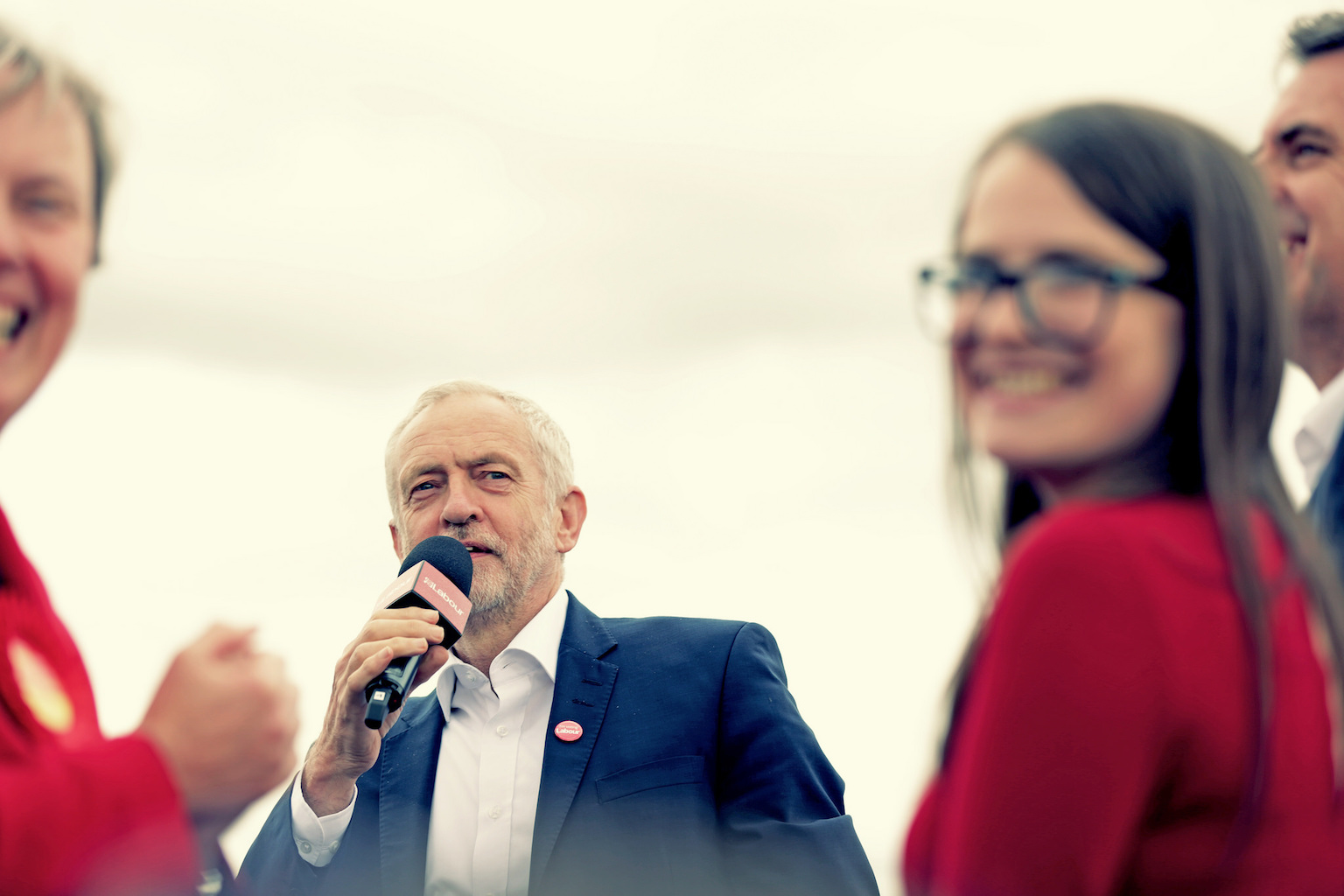
Jeremy Corbyn campaigns in West Kirby, England on May 20, 2017. Andy Miah / Flickr
Last year’s British Labour Party manifesto has received substantial attention from those — including myself — who see it as a comprehensive program for rolling back the tide of neoliberalism and revitalizing the labor movement, public services, and industrial strategy. But it also contains the seeds of a deeper critique that — if Labour wins and Jeremy Corbyn’s movement withstands attacks from hostile forces — could lead to a significant expansion of democratic control in work and production.
Labour not only promises to bring rail, mail, water, and energy into public ownership but commits itself to putting “democratically owned public services irreversibly in the hands of workers, and those who rely on their work.” A Labour government, Shadow Chancellor John McDonnell has vowed, isn’t “going to take back control of these industries in order to put them in the hands of a remote bureaucracy, but to put them in the hands of all of you — so that they can never again be taken away.” The party also pledges to double the size of the cooperative sector and to make workers the buyer of first refusal when their company is being sold, a proposal known as the “right to own.”
While the idea of pairing public ownership with worker control has deep historical roots, no Labour government — not even in the pre-neoliberal days — has ever implemented it. As socialists prepare for the possibility of a Labour government, it is worth reviewing the history of these movements, their great promise, and their lessons for the future.