The Party Transformed
Labour’s conference showcased a party preparing for government. But the vibrant mood also expressed the strengthening of conference’s role itself.
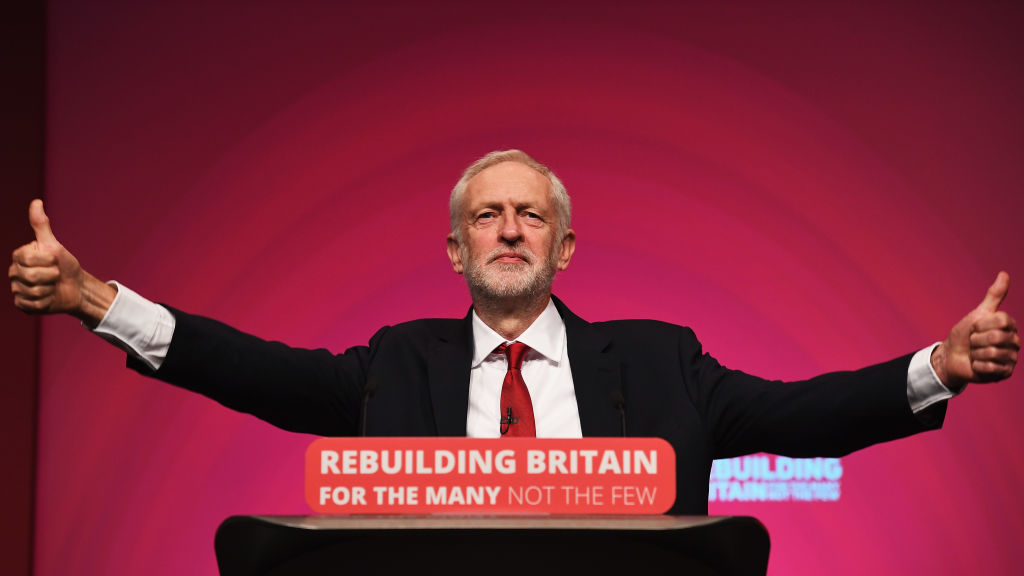
Labour Party leader, Jeremy Corbyn acknowledges delegates on day four of the Labour Party conference at the Arena and Convention Centre on September 26, 2018 in Liverpool, England.Leon Neal / Getty
Last week’s Labour Party conference in Liverpool was in some regards an ordinary party affair. The conference saw inconclusive battles over party reform, set-piece policy announcements, and fudges over Brexit, all presented to the rest of the world through the misleading lens of the British tabloids.
Yet if many delegates went home with the traditional “conference flu,” the Liverpool summit also reflected the dramatic changes that have taken place under Jeremy Corbyn’s leadership. Efforts to democratize party structures remain an ongoing battle, but what was most notable is the new life that Corbynism has breathed into conference itself.
The Times’s Daniel Finkelstein complained that in Corbyn’s outlook, “devolving decision-making to the party conference is a key part of the project to restore power to the workers.” And he’s right. After decades when members and trade unionists were shut out of decisions in Labour, this year’s conference showed how they have taken back control.