Disciplined and Punished
The European Memoranda imposing austerity on Greece came to an end last week. But the country still has no way out of its crisis.
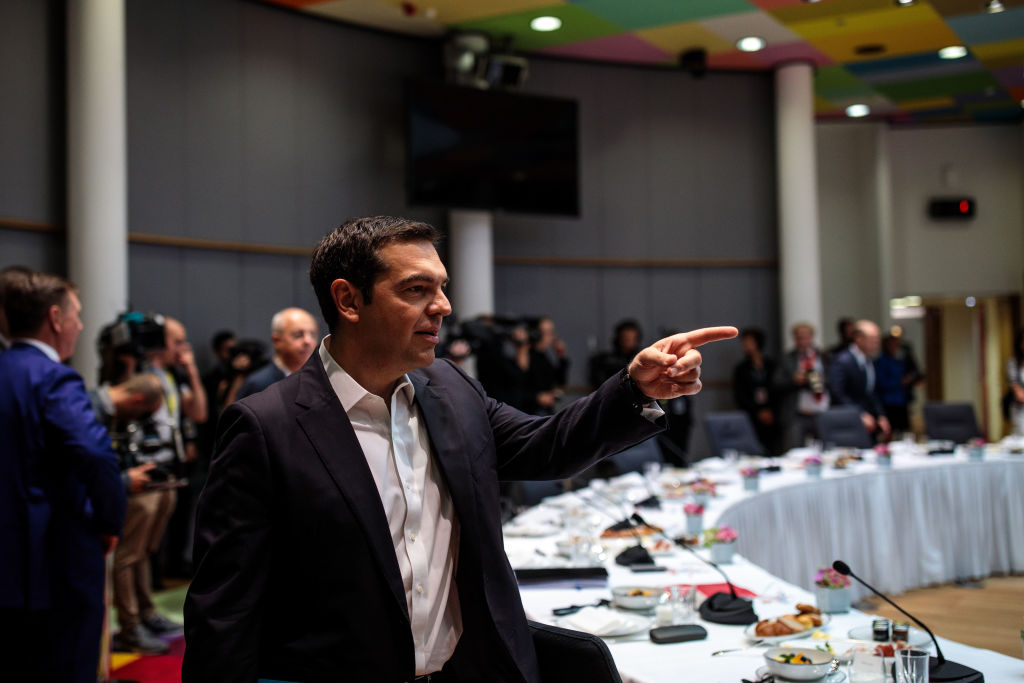
Prime Minister of Greece Alexis Tsipras on June 29, 2018 in Brussels, Belgium. Jack Taylor / Getty Images
On August 21 Alexis Tsipras chose Ithaca as the place to announce Greece’s exit from the bailout programs imposed by the European Union in collaboration with the International Monetary Fund. The main punch line of the speech: “the Odyssey’s over.”
This marked the formal end of the Memoranda of Understanding, which had accompanied each of the three loan agreements imposed on Greece by the “Institutions” or “troika” (i.e. the European Central Bank, the European Commission, and International Monetary Fund [IMF]) since 2010. Under this regime, each loan payment to Greece was conditional on its government implementing austerity measures and institutional reforms, supervised by “the Institutions.”
Last week the Greek prime minister could, indeed, announce the end of a specific phase of Europe’s so-called “financial assistance to Greece” — a program, despite the name, closely associated with the plundering of Greek society. But in fact, the formal conclusion of this program marks neither the end of Greece’s reduced sovereignty, nor the last of the Tsipras government’s austerity measures.