Facebook After Capitalism
Jeremy Corbyn’s call for a “free and democratic media” promises to break the stranglehold of the established monopolies. And that also means taking on tech billionaires like Mark Zuckerberg.
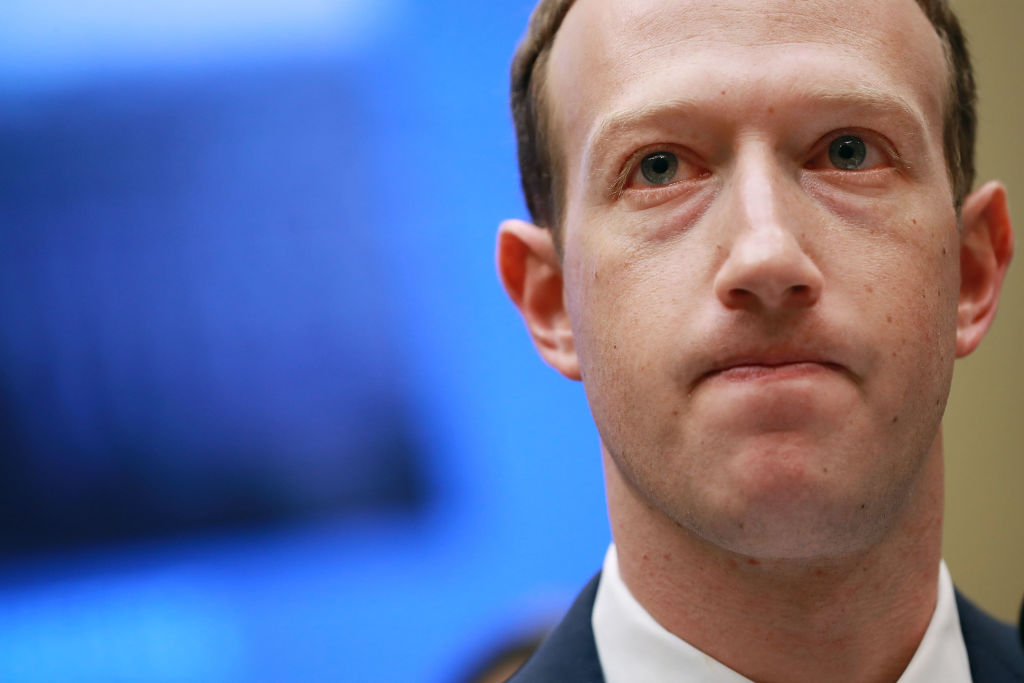
Mark Zuckerberg testifies before the House Energy and Commerce Committee in the Rayburn House Office Building on Capitol Hill April 11, 2018 in Washington, D.C.Chip Somodevilla / Getty
While the mainstream press has come under increasing scrutiny in recent years, digital media appears to be stuck in a Wild West phase. It seems that Facebook is constantly running into trouble, from reports of data being mined without our consent to moral panics about foreign agents hacking Western democracy and hate crime caused by fake news. Yet as the world’s largest social media platform faces a series of crises, the opportunity has opened up to discuss its regulation.
Labour leader Jeremy Corbyn made a bold move onto this terrain on August 23 in a major intervention in which he announced “a series of radical ideas to build a free and democratic media for the digital age.” In a speech in Edinburgh, he outlined his vision of democratizing both the publicly owned BBC and commercial journalism. He called for taxes on tech giants and internet service providers in order to help level the playing field between the digital monopolists and public-service media.
This call for media reform was a paradigm shift — particularly at a time when the power of firms like Facebook draws rising skepticism. Today privacy violations, the panic over Russian troll farms, and concern over social media’s impact on mental health have all dented public trust in Facebook, and indeed its previously spectacular share price growth. And if in 2010 the film The Social Network cast Zuckerberg as a flawed yet forgivable genius, his recent congressional hearing was met by memes portraying him as a grasping tycoon with a robot smile.