Remembering Pier Paolo Pasolini
A look at the life and politics of Pier Paolo Pasolini, heterodox communist.
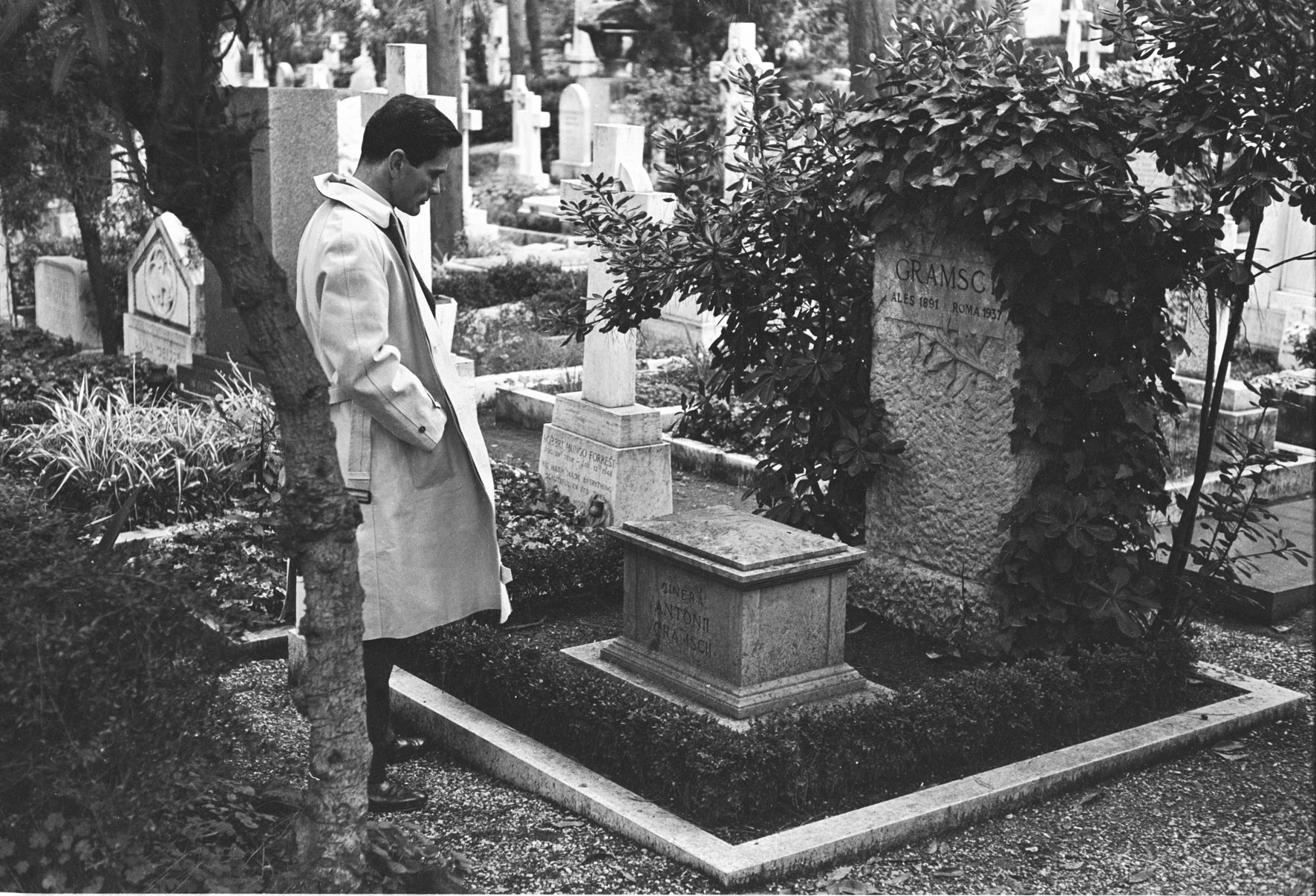
Pier Paolo Pasolini at Antonio Gramsci’s tomb, 1970.Wikimedia
The day after Pier Paolo Pasolini’s violent 1975 murder, L’Unità, the Italian Communist Party’s (PCI) newspaper, described him as “vero militante,” a true militant. Just a few decades prior, a column in the same paper caused Pasolini’s expulsion from the PCI.
In 1949, local party leader Ferdinando Mautino denounced the “deleterious influences of certain ideological and philosophical trends of the various Gides and Sartres . . . who pose as progressives, but in reality welcome the most deleterious aspects of bourgeois degeneration.” The PCI threw Pasolini out on account of these “deleterious influences,” but the real issue was his homosexuality.
A heterodox communist, Pasolini remained a fellow traveler of the Communist Party for his entire adult life. His complicated relationship with the PCI mirrored his interactions with the rest of the Left in Italy and abroad, which ranged from his skeptical support for student movements to his almost uncritical infatuation with the American New Left.