Why Bernie Sanders’s History of Racial Justice Activism Matters
Shaun King on the importance of Bernie Sanders's lifelong dedication to anti-racist struggle, from the 1960s to today.
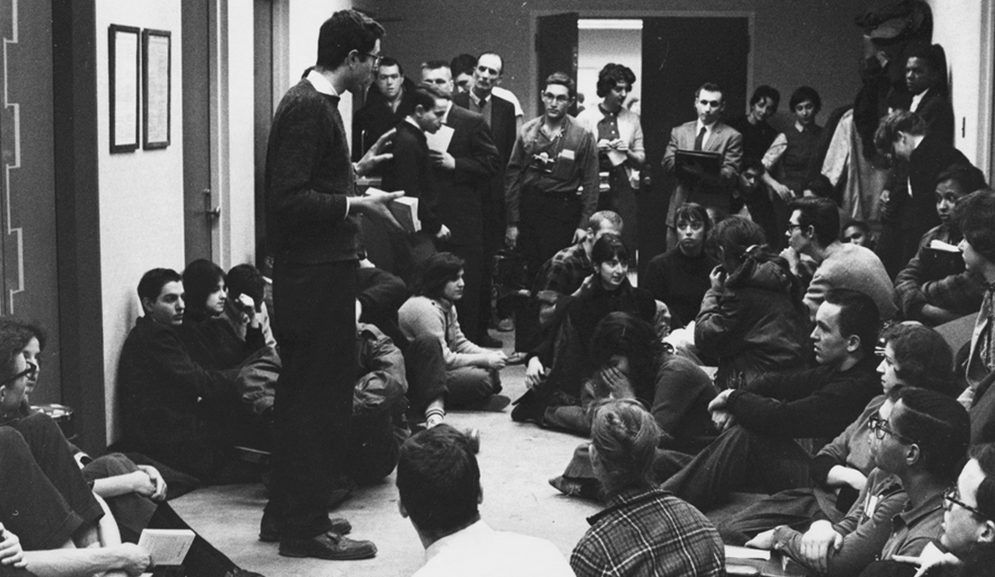
Bernie Sanders, a member of the Young People speaks to students on the first day of a sit-in at the University of Chicago in 1962.University of Chicago (Photographic Archive, Special Collections Research Center / University of Chicago Library)
I reject the idea that who Bernie Sanders was in the 1960s is irrelevant. Who you are and what you do, what you fought for, and who and what you fought against, is always relevant. Twenty and thirty and forty years from now, when people step up to lead, and run for office, what they did and where they were during the Black Lives Matter movement will mean something. If what Bernie did in the sixties doesn’t matter now, then what you are doing right now doesn’t matter. But you and I know it does.
Dr King once said, “The ultimate measure of a man is not where he stands in moments of comfort and convenience, but where he stands at times of challenge and controversy.”
Just a teenager, Bernie Sanders moved from his hometown of Brooklyn to Chicago at the height of the Civil Rights Movement. It was the most tumultuous and challenging time this nation had faced since the Civil War a hundred years earlier.