Before the World Arrived
Just ten days before the 1968 Olympics, hundreds of protesters lay dead in a Mexico City square.
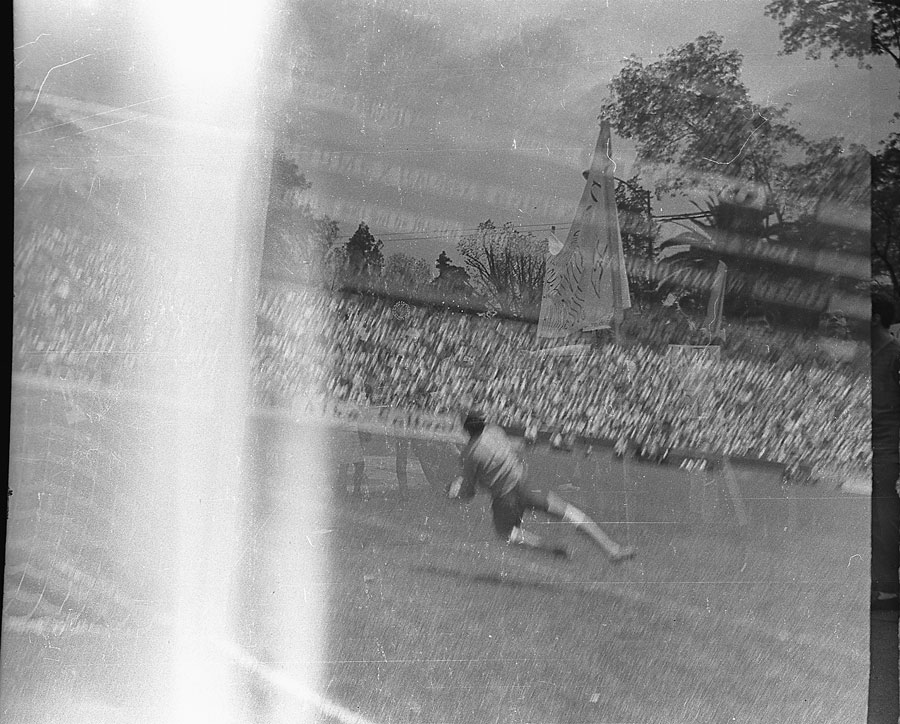
Colección Incorporada Manuel Gutiérrez Paredes / Archivo Histórico de la UNAM.
By the 1960s, bankers around the world were whispering of a “Mexican miracle.” Only a generation removed from a bloody civil conflict, Mexico was booming.
After the Institutional Revolutionary Party (PRI) consolidated national power in the 1930s and ’40s, Mexico enjoyed decades of rapid economic growth, confounding economists who had predicted nothing but doom. Mexico City soon glittered with monuments and nightclubs, winning comparisons to European capitals. The Mexican hinterlands stood open for travel and investment, freshly crisscrossed by thousands of new roads. Universities churned out bankers and engineers while factories generated cars, textiles, and washing machines.
At last, in 1968, national elites felt ready to project a new image of prosperity and peace. An energetic lobbying campaign delivered the 1968 Olympic Games to Mexico City — the first successful bid for a Latin American city in history. With the Olympics, the PRI and their colleagues in the private sector intended to announce Mexico’s maturation.