The Strike Against Fear
On this day in 1943, a strike in Italy’s FIAT company marked the beginning of the end for Mussolini.
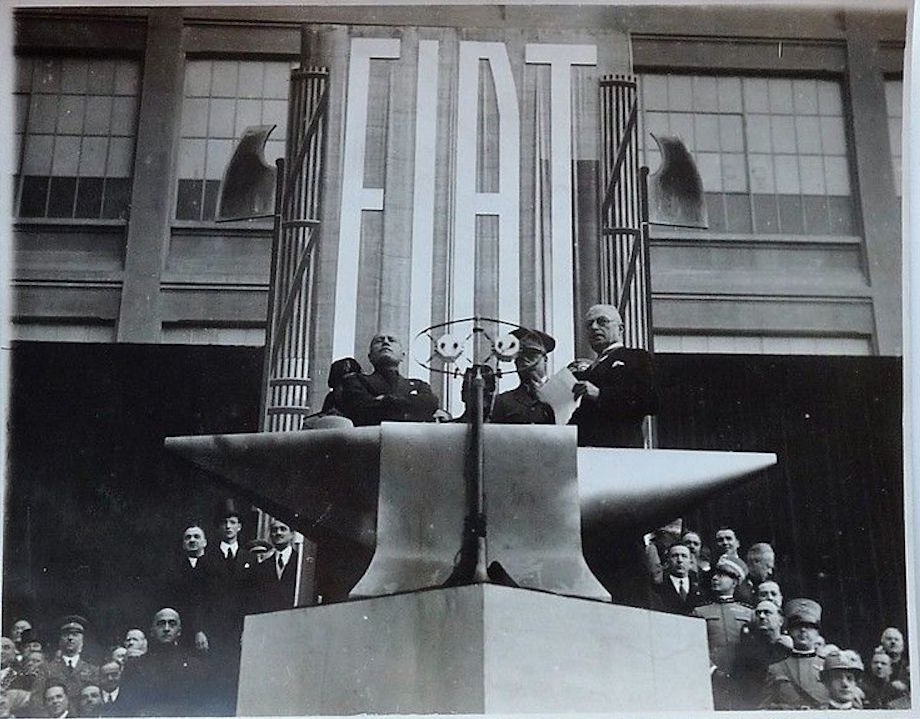
Benito Mussolini opens the Mirafiori Fiat plant in 1939. Italian Archive of Fascism.
The strike that began in Turin on March 5, 1943, was the first blow by Italian workers against fascism. As the clock struck ten, workers at FIAT’s Mirafiori plant started to down tools, walking out of the factory. News of their defiant stand soon helped spread the action to Milan and other smaller centers of industry. This was more than just a labor strike. Piercing the cloak of fear and resignation that had for two decades allowed fascism to dominate Italy, the revolt in Turin’s war industries was the prelude to the armed resistance that followed six months later.
While the action courted a violent response from the long-entrenched fascist authorities, within a week of March 5 some one hundred thousand workers were on strike. A regime on the retreat in Russia and North Africa oscillated between repression and concessions, further exposing its fading authority. Adolf Hitler slammed Benito Mussolini’s failure to crush the strike; for the Nazi tyrant, “in these cases those who show any weakness are lost.” In the palaces of Rome, elites long attached to Mussolini plotted to cast off the failed imperial adventurer.
March 5, 1943, would enter history as a break in popular consent for fascism. It responded to worsening material conditions as well as the state’s loss of face as its military defeats mounted. But the strike initiative itself was extremely hazardous. Far from simply a spontaneous outpouring of discontent, the Mirafiori action was a gamble by clandestine militants operating in highly dangerous conditions. Its overall effect was to display the collective power of workers who had previously remained silent and atomized. It nurtured the hopes that would characterize the resistance itself.