Partisans Without Purpose
If the US is in the throes of a constitutional crisis, it's one oddly devoid of social substance.
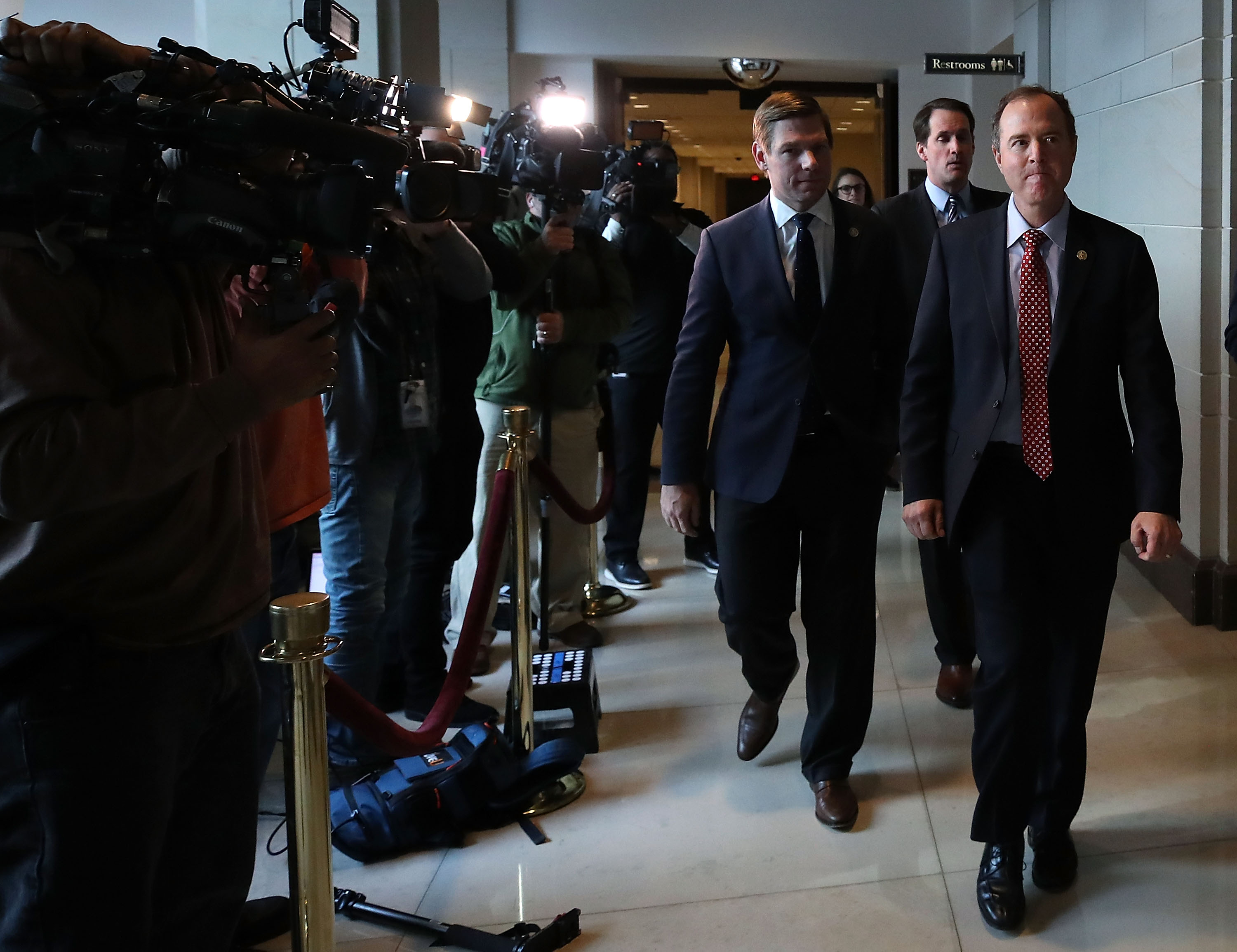
Adam Schiff (D-CA), ranking member of the House Permanent Select Committee on Intelligence, takes a break from a closed door interview with Steve Bannon on January 16, 2018 in Washington, DC. Mark Wilson / Getty Images
You hear a lot of talk on Twitter these days about a constitutional crisis.
The thing about previous moments of constitutional crisis in the United States is that they were never strictly about institutions and narrowly political questions; they were always about something socially substantive, something larger than the specific issue itself. The crisis provoked by the election of Lincoln in 1860, which led to secession and then the Civil War, was, of course, about slavery. The crisis of FDR’s court-packing scheme was about the New Deal and whether the American state could be used to bring American capitalism to heel. Watergate was about the Cold War and a murderous foreign policy.
What strikes me about the current crisis over Trump and the FBI, if that’s even what it is, is how far removed it is from the larger social questions that animated these previous crises. Obviously Trump and the GOP have a social base and are pursuing a social agenda, but the constitutional expression of the disagreement over the FBI and the Mueller inquiry bears no relationship to that social agenda.