The Legacy of Malcolm X
Malcolm X died 53 years ago today, just as he was moving toward revolutionary ideas that challenged oppression in all its forms.
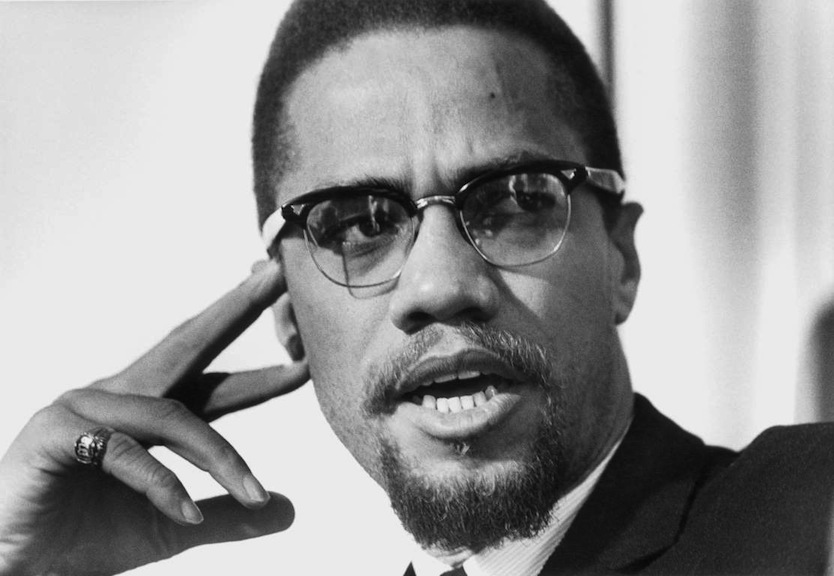
Michael Ochs Archives / Corbis
Racial segregation was not the law in the postwar North, but it was the reality. In virtually all aspects of life, Northern blacks encountered racism and segregation. Blacks who left the South found themselves forced to live in huge urban ghettos and educate their children in inferior schools. Skilled or professional jobs were reserved for whites. Blacks were constantly subject to white authority, especially police harassment.
Almost a quarter of blacks said they had been mistreated by the police, and 40 percent said they had seen others abused. Any illusions held by Southern blacks about the liberal North were not held by those already living there. And while Northern blacks were inspired by the struggles in the South, their conditions made them receptive to a movement independent of — and quite different from — the one led by Martin Luther King Jr’s Southern Christian Leadership Council.
In the first years of the civil rights struggle, the most significant organizational expression of this new movement was the Nation of Islam. By the late 1950s, the group’s membership reached an estimated one hundred thousand, with Malcolm X as its most prominent member.