The Murder of Malcolm X
There was nothing J. Edgar Hoover feared more than a charismatic black radical who could inspire the oppressed to fight back. And that’s why, according to a compelling new series, the FBI had its fingerprints all over Malcolm X’s murder.
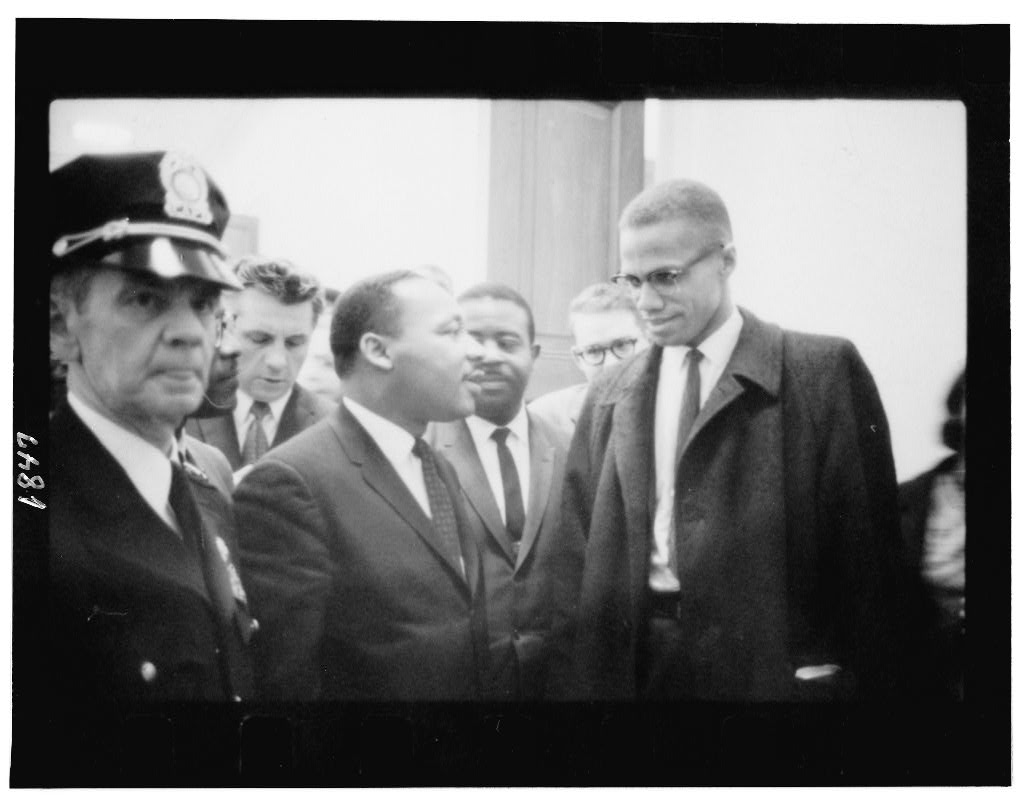
Malcolm X meeting Martin Luther King, Jr, on March 26, 1964. Library of Congress
The only time Malcolm X met Martin Luther King, Jr — in the US Capitol Building in March 1964 — he told King, “Now you’re going to get investigated.” By then, King had fought for and gained a place in America’s conscience; Malcolm had just fallen out with his teacher and the Nation of Islam, and he hoped to forge a united front of black liberation groups that included a rapprochement with King. The meeting took place a year before Malcolm’s death, during a time of intense travel and speeches, landmark civil rights legislation, and rampant government surveillance of both figures.
But while Malcolm joked about it to King, the degree to which various agencies were spying on the Nation of Islam’s most famous apostate escaped even him. In his final months, Malcolm softened his antagonism to King’s nonviolent approach, while speaking openly to friends of near-constant death threats. A series out this winter on Netflix suggests that the role US law enforcement officials played in Malcolm’s murder has been understated — and gets closer than ever before to laying the blame at the feet of the US government itself.
Originally shown at Fusion, Who Killed Malcolm X? features Abdur-Rahman Muhammad, a journalist, father, and Malcolm admirer who, over six episodes, guides the viewer through his decades-long investigation to reveal that two of the three men convicted for Malcolm’s murder were innocent. He goes on to show that the FBI knew this but did not submit evidence to exonerate the men. During a key episode, he meditates on why. Taking his questions to Nation of Islam veterans and Pulitzer Prize–winning and in-house FBI historians, Muhammad finally establishes that this oversight could not have been accidental. As a protagonist and guide through the annals of Malcolm X revisionism, Muhammad is so convincing that Malcolm’s murder case has been reopened.