From Zuma to Ramaphosa
Jacob Zuma won't be remembered as a liberation hero, but as a corrupt leader who broke the South African left.
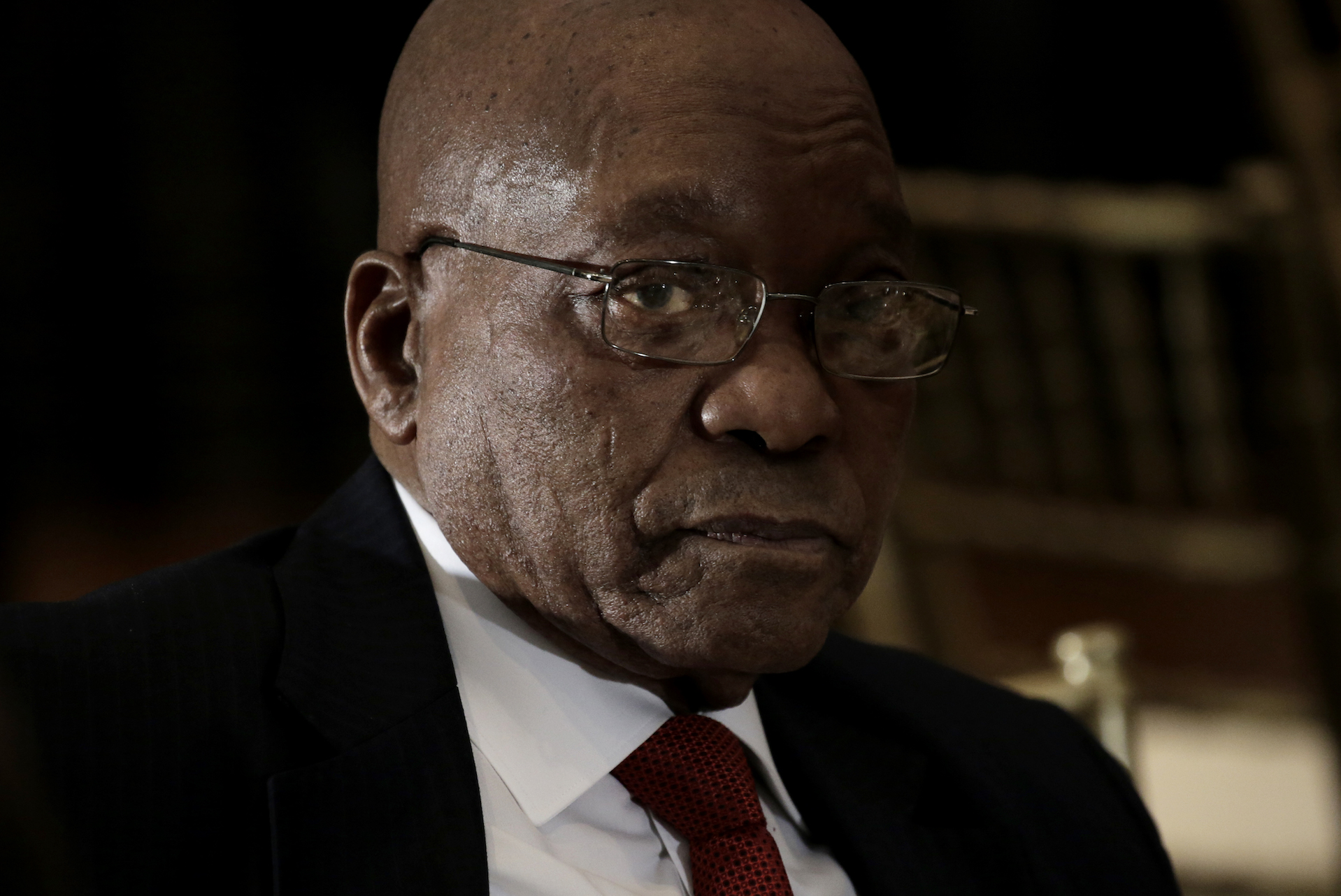
Jacob Zuma attends a luncheon for world leaders at the United Nations General Assembly on September 20, 2016. Peter Foley / Getty Images
On Valentine’s Day, Jacob Zuma announced that he would resign as South Africa’s president. Earlier that day Zuma gave a surreal, rambling speech disguised as an interview, where he maintained that he had done nothing wrong in his nine years as leader. If Zuma’s aim was to project an air of defiance, he came across as pitiful, alone, and sad. This was a far cry from his reputation as a Machiavellian strategic operator who had repeatedly defied both public opinion and his party.
Zuma survived eight motions of no-confidence in parliament, including one last year, where some members of his own party, the African National Congress (ANC), broke with tradition and voted with opposition parties in a secret ballot. In the end, though, he resigned so as not to subject himself to humiliation the next day in parliament, where ANC members of parliament were planning to join the opposition in voting to throw him out.
Some, wary of the many premature obituaries written throughout Zuma’s political career, were worried he might pull one last stunt. In his Valentine’s Day interview, he had made vague threats of violence and days earlier shadowy groups like “Hands of Zuma” and Black First Land First — the latter implicated in professional trolling on Zuma’s behalf — held marches declaring him a kind of radical figure who was only being persecuted because he was leading a vaguely defined struggle for something called “Radical Economic Transformation” against “White Monopoly Capital” and neoliberalism.