The Radical Paris Agreement
The much-maligned Paris climate deal has the potential to transform capitalism — if we know how to use it.
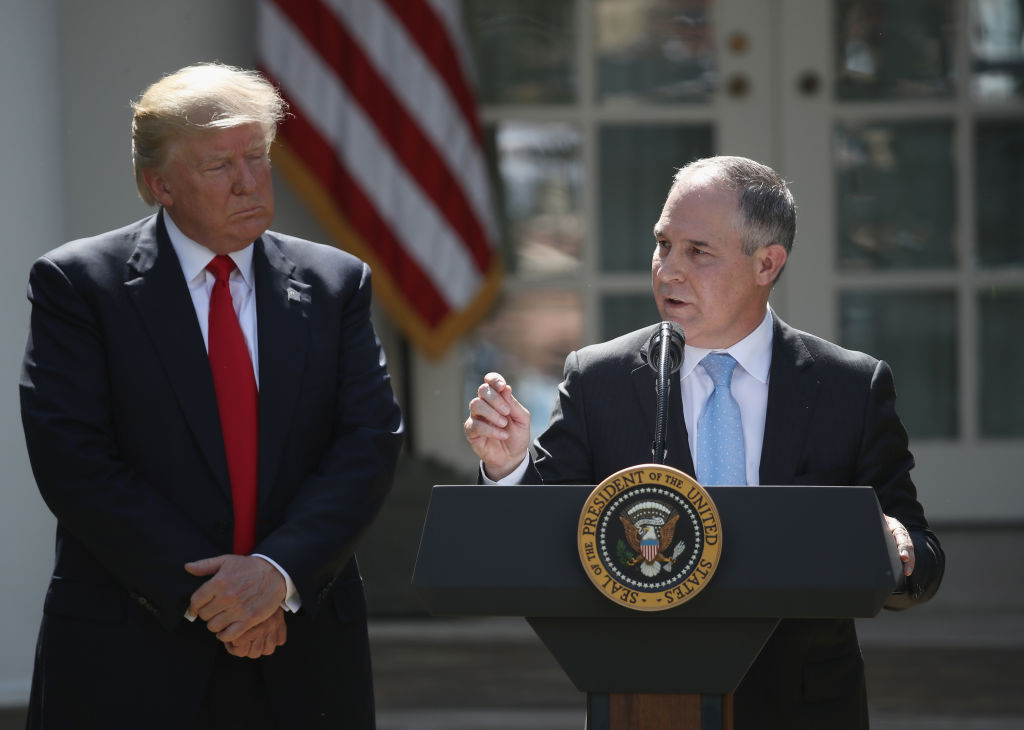
President Donald Trump announces his decision regarding the United States’ participation in the Paris climate agreement in the Rose Garden at the White House, June 1, 2017. Win McNamee / Getty
Among the many reasons to celebrate the resurgence of the Anglo-American left, the battle to stall climate change surely approaches the top of the list. Even a passing understanding of contemporary science reminds us that we live in an age that demands radicalism. Transforming the globe’s energy system within the time available is challenging enough, but we must do so in opposition to some of the wealthiest and most powerful corporate and political interests in history.
Climate change is the first test of whether democracy can constrain capitalism in the name of justice, and the question of whether history will continue as anything but barbarism hangs on the outcome.
Stopping climate change requires both state power and international cooperation. Regarding the former, the contemporary left seems broadly in agreement: Christian Parenti persuasively argues in Dissent that “it is this society and these institutions that must cut emissions.” Likewise, Alyssa Battistoni opens Jacobin’s recent climate-focused issue by explicitly rejecting the idea that we should wait for the revolution to deal with climate change. Instead, the Left should secure “more democratic political control over industry, technology, and infrastructure; more conscious intention about how we build our world, why, and for whom.”