Forty Billionaires and Forty Million Beggars
Although Kenya often appears in the press as a nation split by ethnic discord, it has just two “tribes”: the rich and the poor.
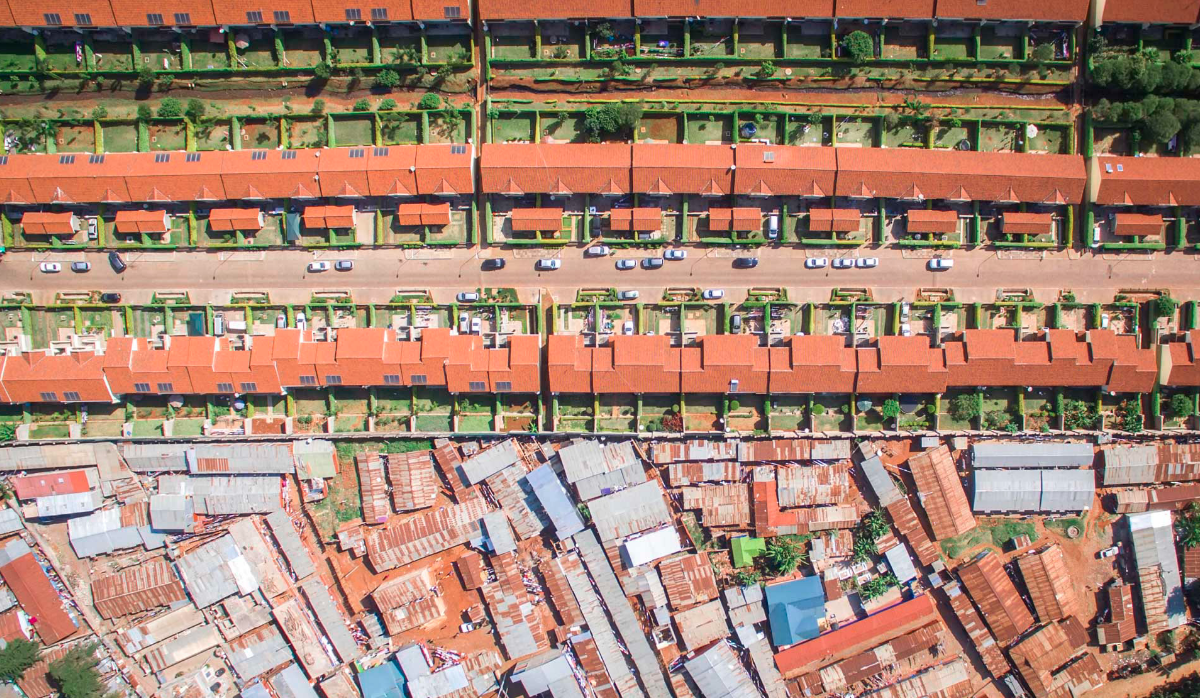
Planned, gated communities abut dwellings for the poor in Nairobi, Kenya. Johnny Miller / Unequal Scenes
In recent months, presidential politics have dominated the international coverage of Kenya — and for good reason. Political scions Uhuru Kenyatta and Raila Odinga — sons of the country’s first president and vice president, respectively — have squared off for the nation’s highest office in an environment swirling with legal battles, corruption, and state-sponsored violence.
On August 8, the initial vote resulted in the first judicial nullification of a presidential election in the African continent’s history. And even after a rerun of the election last month — which returned Kenyatta to power amid a mass boycott — the political crisis hasn’t subsided.
The issues animating the ongoing convulsion are complex. The nation’s colonial past, its struggles with authoritarianism, and its unequal development are all sources of contention. Kenyatta and Odinga’s ideological differences — rooted in their fathers’ political struggles over regionalism and inequality in the 1960s — also generate political conflict.