Sexual Harassment Is Everybody’s Problem
Let's seize this opportunity to change how harassment is dealt with.
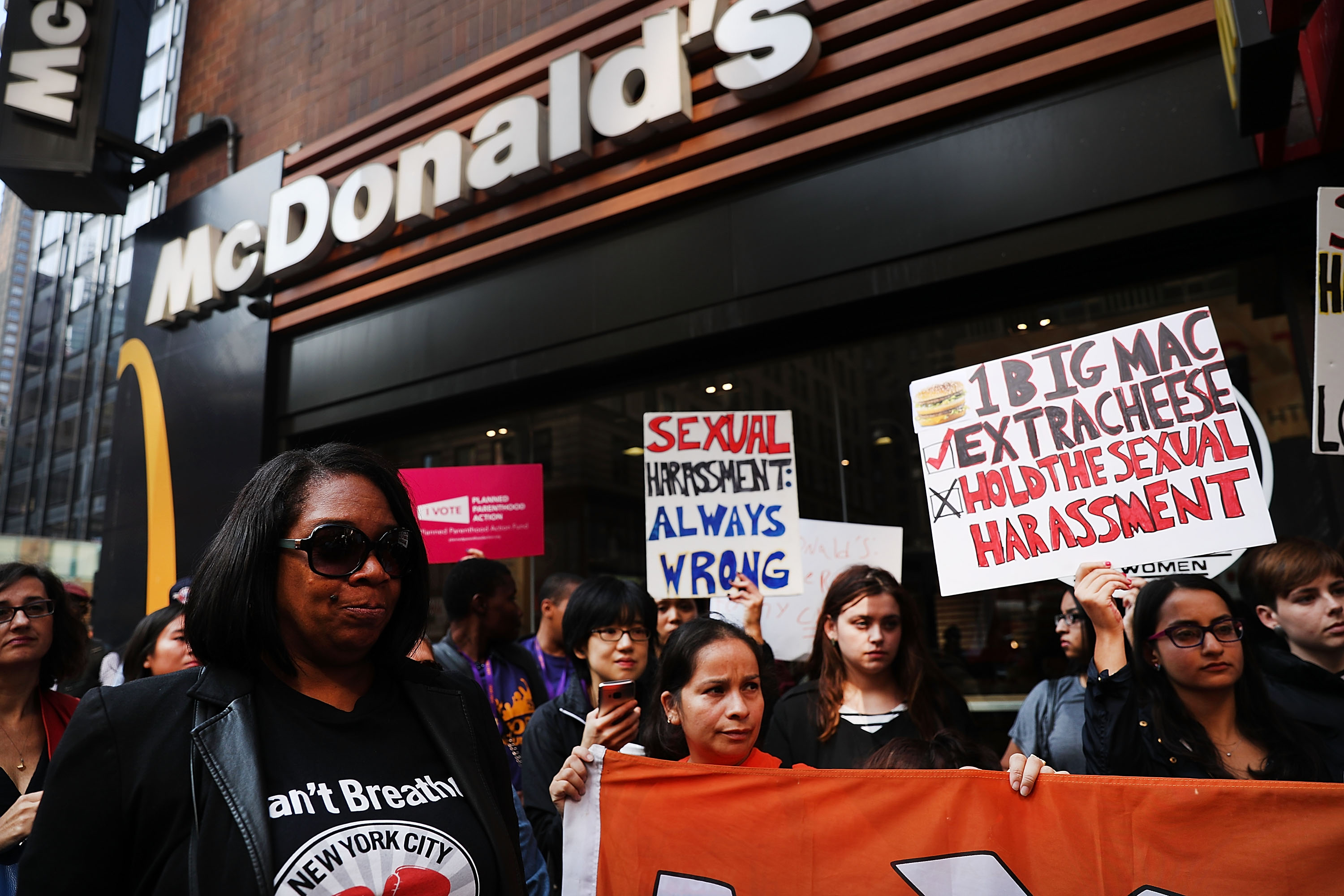
Protesters demonstrate outside of a McDonald’s near Times Square on October 6, 2016, after charges were brought against the company that they have ignored serious instances of sexual harassment.Spencer Platt / Getty Images
In an article on sexual harassment by Linda Gordon — originally published in a special issue of Radical America from 1981 and recently republished in Viewpoint Magazine — Gordon explains why sexual abuse matters as an obstacle to working-class solidarity and unity, and as an obstacle to unity on the Left:
The attitudes that produce sexual harassment also maintain a powerful bonding among men which not only weakens any existing class consciousness, but is one of the major obstacles to its development.
Thus, from a socialist perspective as well as from a feminist one, no general issue is more important than sexual harassment. To challenge it, to make it unacceptable, is to attack one of the major barriers to unity among people who have the possibility of bringing about radical social change.
If the racism of white workers was debilitating for the American labor movement, the same could be said for sexism within the working class. From the earliest years of labor organizing, sexism, and unions’ periodic complicity in preventing full equality in the workplace for women and people of color, male and female alike, hamstrung the development of working-class power. Neither of these bigotries has been resolved: racism remains a problem among white workers of all genders, and as we can see from the overwhelming evidence of pervasive sexual harassment, sexism continues to infuse the workplace.