Making Rent and Rent-Making
Tenants in Minneapolis are organizing for a practice with a long and varied history: rent control.
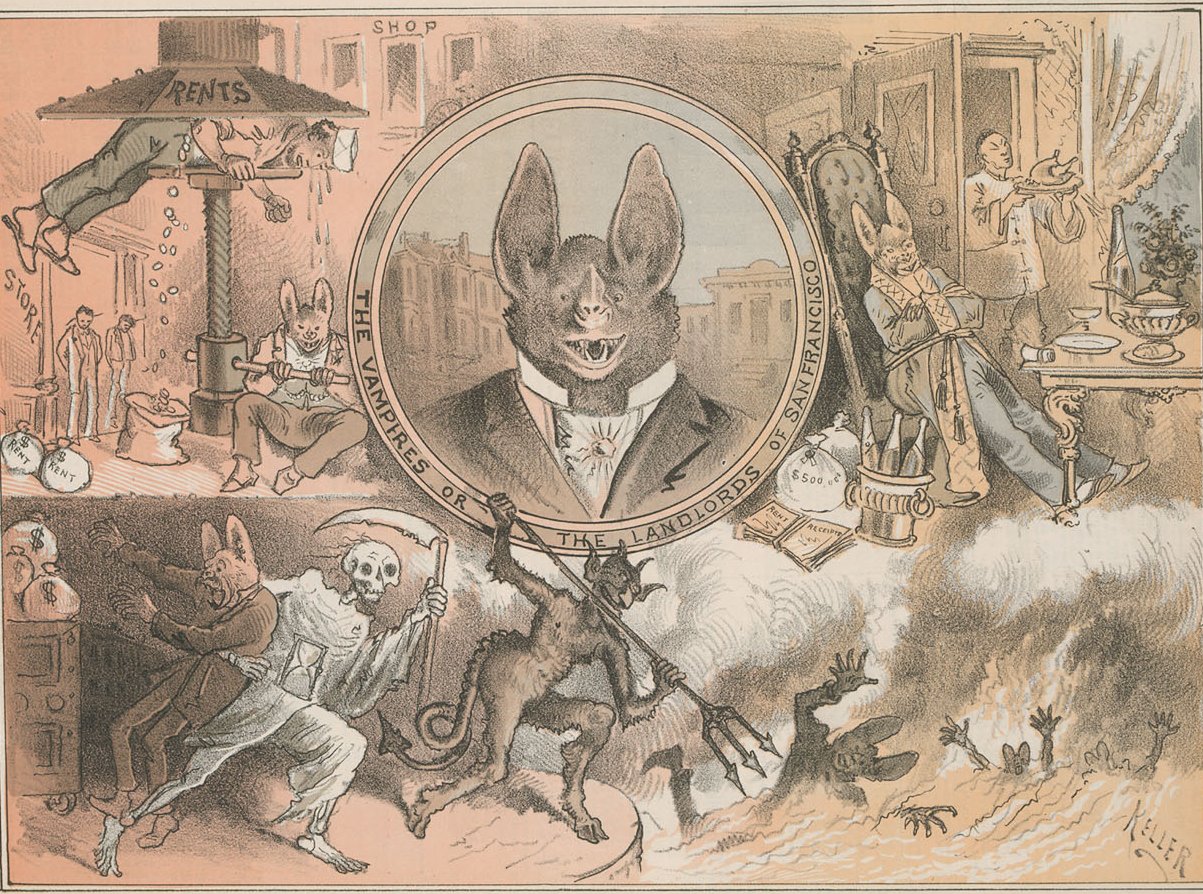
1882 political cartoon from San Francisco, California, depicting a landlord as vampire. Keller / Library of Congress
In 1981, Minneapolis was facing an affordable housing crisis. Rents had risen 61 percent in the five years since the repeal of Nixon-era rent controls; they were expected to increase another 10 percent the following year. A number of condominium conversions had decreased available units, and the city’s vacancy rate had fallen from 4 to 3.4 percent. With rent increasing as much as 7.6 percent in just a few months, tenants found that they could not survive.
The cost of an efficiency unit consumed roughly 30 percent of the household budget for an individual making minimum wage. At the time, fifty thousand of Minneapolis’s residents had incomes below the federal poverty level, and, of these, ten thousand very low-income residents paid more than half of their income towards rent.
In response, tenants organized for a city ballot referendum on rent control that would have limited the amount landlords could increase rent per year — a practice now referred to as rent stabilization — while also prohibiting owners from converting rentals into condos.