Pressuring Peace
Nathan Thrall, author of a new book on the Israel/Palestine conflict, on the logic behind recent developments in the region.
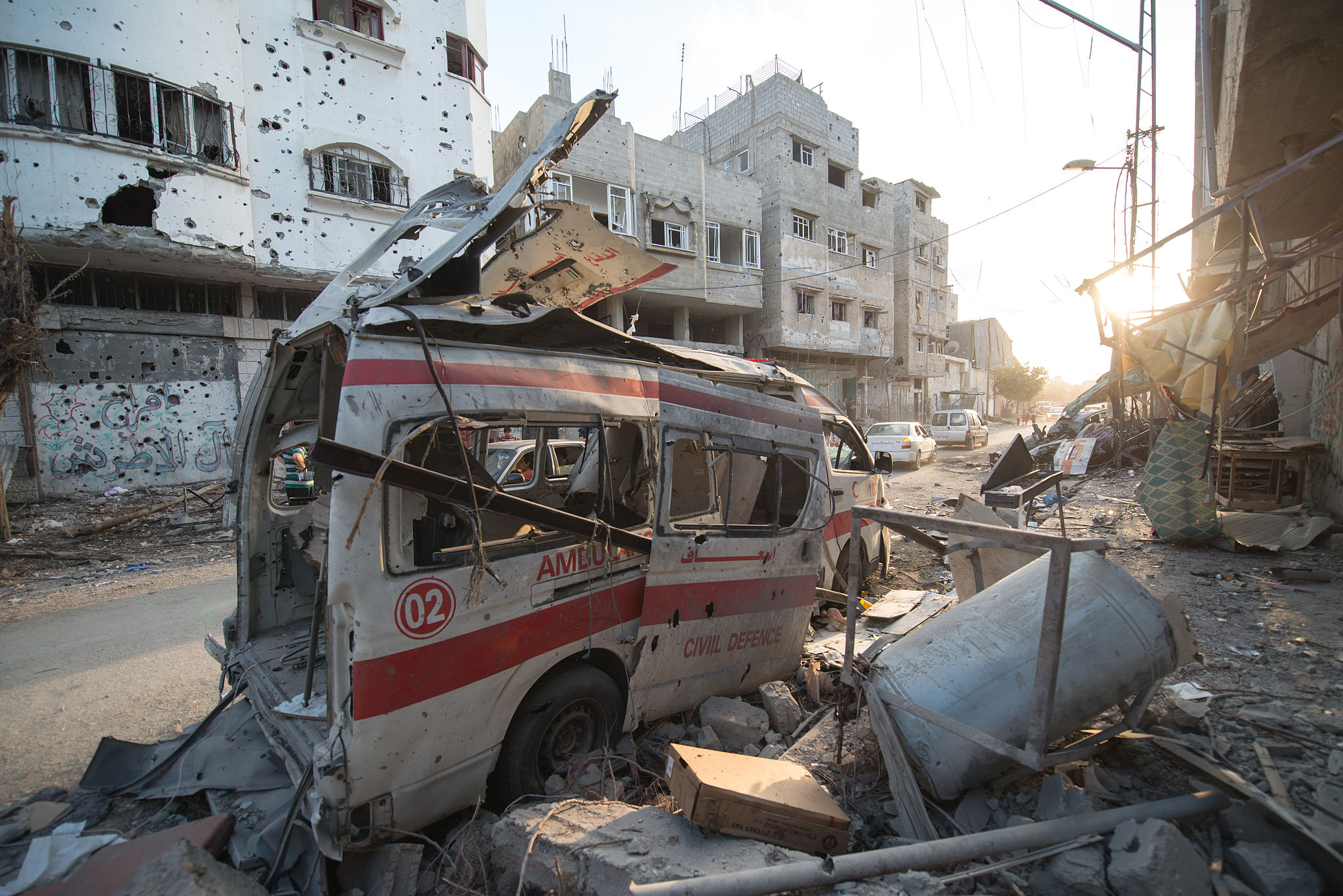
Photo of a destroyed ambulance in Shuja’iyya in the Gaza Strip, taken during the ceasefire between Hamas and Israel on of August 6, 2014.Boris Niehaus / Wikimedia
For decades, the general contours of a resolution to the Israel/Palestine conflict have been widely known and broadly accepted by Palestinian representatives and the international community: a two-state solution based upon pre-June 1967 borders, with land swaps, and East Jerusalem as the capital.
Today, many believe the window for such a settlement is rapidly closing. US officials in particular argue, however, that pressuring Israel to accept a compromise of any kind would only make things worse.
In his new book, The Only Language They Understand: Forcing Compromise in Israel and Palestine, Nathan Thrall says that’s all wrong. Thrall, previously an editor at the New York Review of Books, argues that pressure of many kinds — diplomatic pressure, civil disobedience, and even violence — has worked in bringing about change in the Israel/Palestine conflict.