Victory in Stagnation?
Die Linke’s electoral result shows what the party must do to really contend for power.
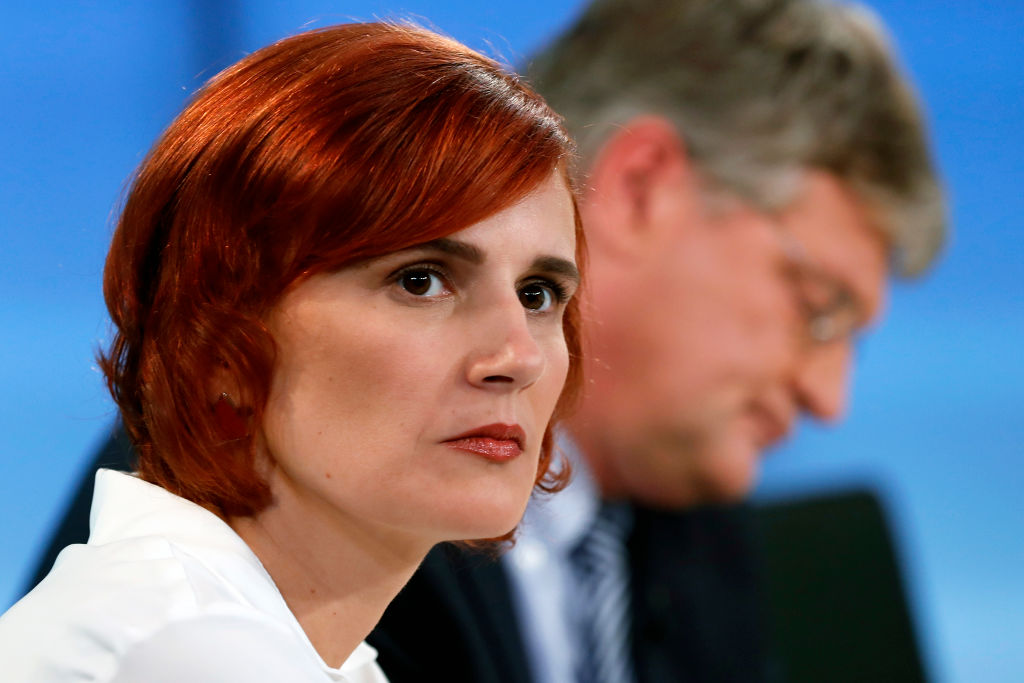
Katja Kipping, co-chairwoman of Die Linke, and Joerg Meuthen, federal co-chairman of the AfD, attend a TV discussion with the top candidates in the German federal elections on September 24, 2017 in Berlin, Germany.Felipe Trueba / Getty
The news was predictable, but still bitter. After September 24’s general election, the far right Alternative for Germany (AfD) has entered the Bundestag with ninety-four MPs. For the first time since World War II, parliament will include a party to the right of the Bavarian Christian Social Union (CSU).
Germany’s ostensible safeguards against the reemergence of fascism as a political force — the 5 percent electoral threshold, the celebrated process of Geschichtsaufarbeitung (coming to grips with the past), and other social policies — have all failed.
The success of the far right partially reflects the decimation of the Social Democratic Party (SPD). The historic party of the German working class won just 20 percent of the vote, its worst result since 1949. This, however, is just the nadir of a decline that began with the SPD chancellor Gerhard Schröder’s early 2000s neoliberal reforms. His Agenda 2010 rolled back huge swathes of the once generous German welfare state, liberalized the labor market, and allowed low-wage contract labor to spread, dramatically accelerating the decline of organized labor, the party’s historical backbone.