When the Floods Hit
The catastrophic flooding in India shows that the greatest victims of global warming will be those least responsible for it.
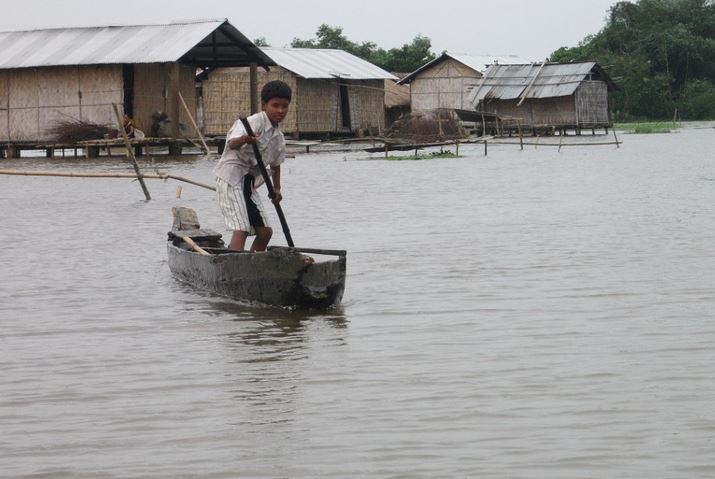
Flooding in Assam, India in 2012. Oxfam International
Extreme rains lashed Mumbai, the iconic city on India’s western coast, in the final days of August. On August 29 alone, fourteen and a half inches of rain poured down in less than twenty-four hours. Fourteen people died, and tens of thousands were stranded at their workplaces and schools. Two days later, battered by the powerful rains, an old residential building collapsed in south Mumbai, killing thirty-four.
For many people in this city of twenty million, it was not just the travails of the ongoing flooding that dogged them but the trauma it evoked, of another rain, at another time. On July 27, 2005, more than thirty-eight inches of rain fell on North Mumbai, and well over five hundred people died in the ensuing floods. That nightmare has hung over every intense downpour since.
And unfortunately, there have been a lot of them. Climate scientists caution against blaming any single extreme rainfall event on global warming, and instead urge that we look at general trends. And the trends are becoming obvious. “Extremely heavy rainfall” — defined by the Indian Meteorological Department (IMD) as more than 244.5 mm (or 9.6 inches) in a single day — has hit Mumbai nine times since the turn of this century. Not unrelatedly, the city’s average maximum temperature has risen by 1.6 degrees Celsius since 1901.