The Meaning of Lula’s Conviction
Lula's conviction could shore up Brazil's bickering ruling class while further fragmenting the Left.
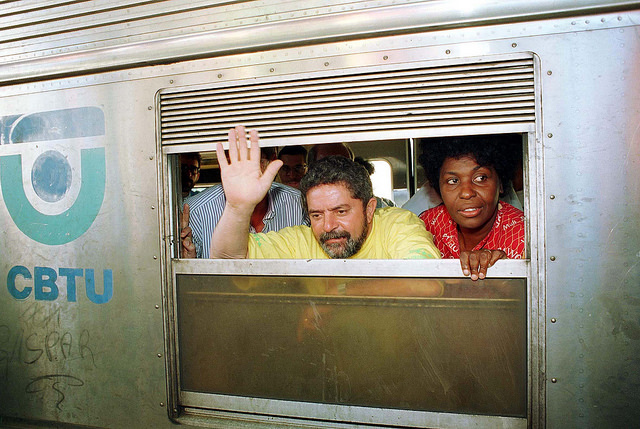
A young Lula in Rio de Janeiro. Clóvis Ferreira / Flickr
After almost thirty years of trying, the Brazilian forces of reaction have convicted the Workers’ Party (PT) leader and former president Luiz Inácio Lula da Silva.
Lula is the leading candidate for the 2018 general elections, and if his conviction stands, it blows open the race, forcing the PT — and the wider left — to seriously reconsider its strategy. The PT without Lula is like the 2014 Brazilian football team without their star player Neymar, and that culminated in the darkest day in Brazilian sporting history: the historic 7-1 rout by Germany.
The parliamentary coup of 2016 was carried on the back of anti-corruption protests that targeted the PT. These were stoked by the regular leaking of corruption revelations to the media by the Lava Jato (“Car Wash”) investigations. But if Dilma Rousseff’s impeachment last year was the coup’s principle maneuver, Lula’s conviction now looks like its completion.