The Phantom Limb
Why it matters that the United States has no labor party.
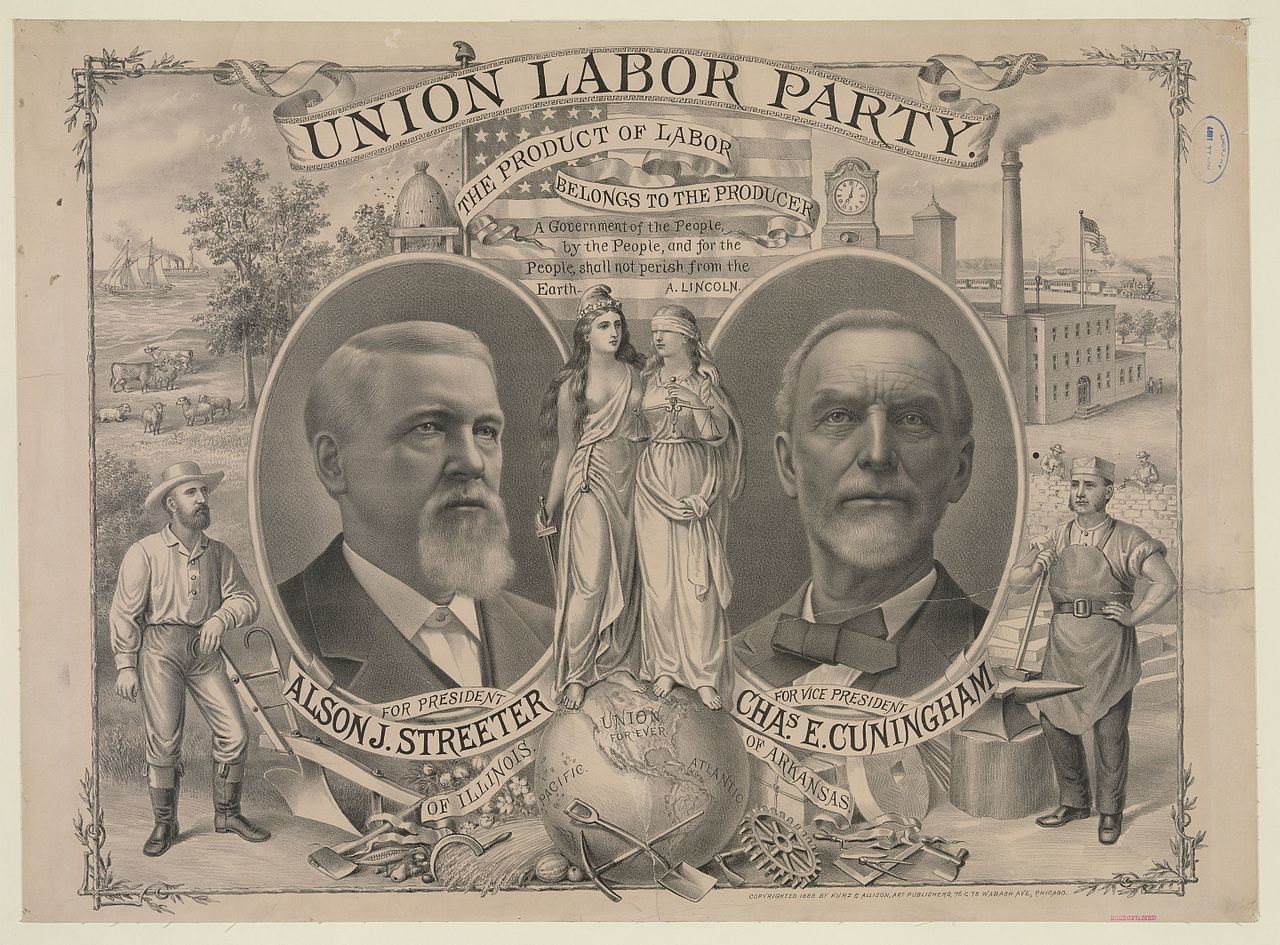
Union Labor Party campaign poster, 1888.Kurz & Allison / Library of Congress
In the aftermath of Donald Trump’s surprising victory over Hillary Clinton in this year’s presidential election, some contended that the Democratic Party chose the wrong candidate. Rather than going with Clinton, whose coziness to financial elites and the party establishment left her vulnerable to Trump’s populist attacks and created the much-discussed “enthusiasm gap” among Democratic voters, they argued that Bernie Sanders would have been the better choice. Unlike Clinton, he offered a left populist vision that could have countered Trump’s nativism, racism, and misogyny, while responding to the profound economic anxieties to which the Democratic Party establishment had proven so tone-deaf.
Without getting into the merits of this argument, what is remarkable about it is the fact that it is a plausible argument to make. Just a year ago, the idea that anyone other than Clinton could be the Democratic Party’s standard-bearer would have been almost unthinkable. Even more inconceivable was the idea that a rumpled, self-described “democratic socialist” from Vermont would galvanize tens of millions of voters and come dangerously close to derailing Clinton’s anointment.
And yet this is precisely what happened. Not only did Sanders give Clinton a serious run for her money, but he pulled the political discussion to the left during the primaries. He forced Clinton to at least mouth support for a fifteen-dollar minimum wage, oppose the Trans-Pacific Partnership (TPP) and Keystone XL pipeline, along with backing some half-measures to guarantee “debt-free” college, put a “public option” for Obamacare back on the table, and “get tough” on Wall Street.