Labor Must Take on Capital
Unions must expand beyond narrow bargaining to challenge those who hold wealth and power at the highest levels.
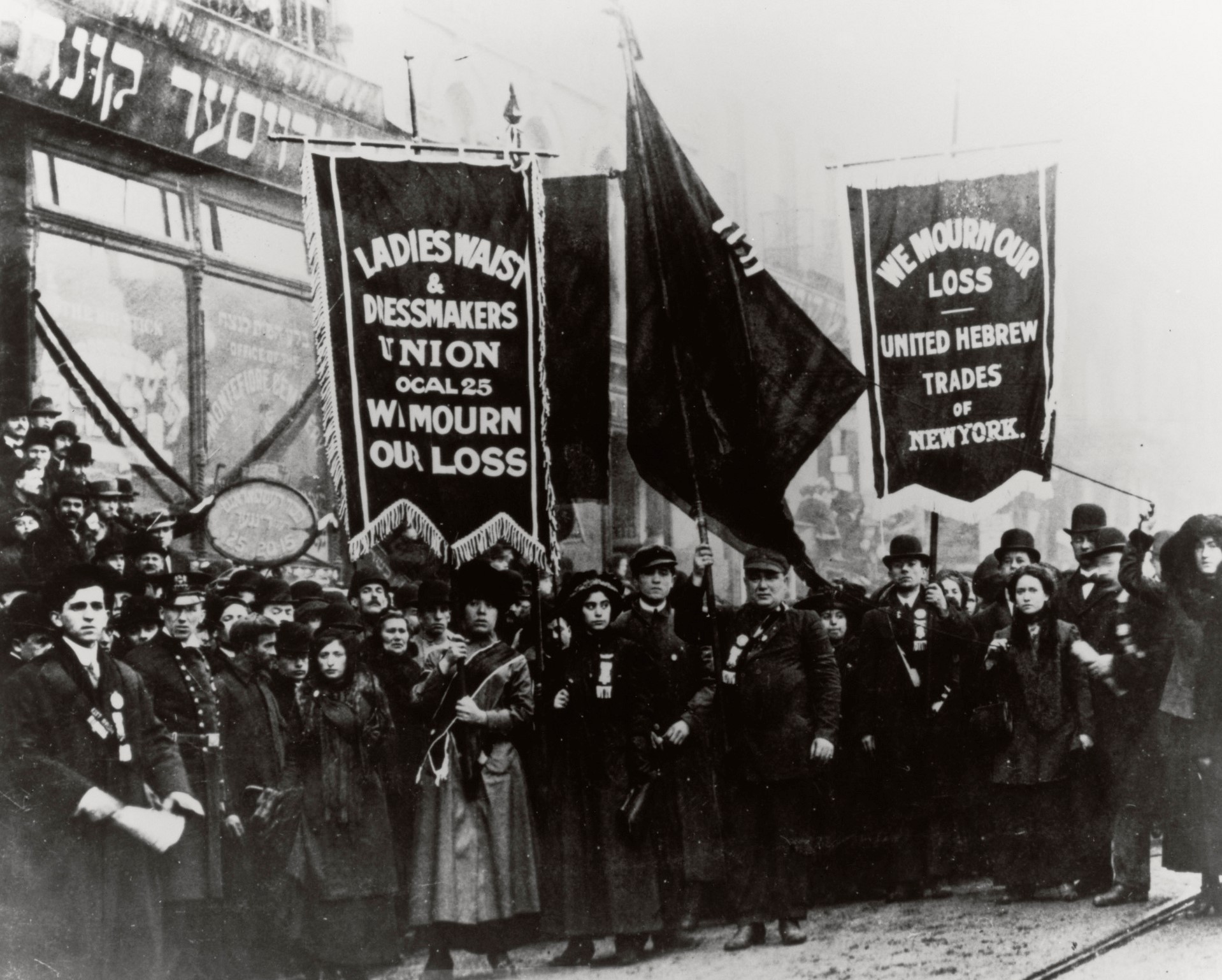
Demonstration of protest and mourning for Triangle Shirtwaist Factory Fire of March 25, 1911.Department of Labor, Historian’s Office / US National Archives
The numbers have grown familiar, though no less stark. When the American Federation of Labor (AFL) and the Congress of Industrial Organizations (CIO) merged in 1955, one in three private-sector workers were in unions. Union density in the private sector has declined with increasing speed almost every year since then, and less than 7 percent of private-sector workers belong to unions today.
Having already crippled private-sector unions, corporations, the superrich, and the Right have now set their sights on the public sector. The Supreme Court dealt public-sector unions a devastating blow with its Harris v. Quinn decision in 2014 and would have landed a knockout punch to public-sector unions with Friedrichs v. California Teachers Association if Justice Antonin Scalia had not died unexpectedly.
But these decisions are merely symptoms of labor’s decline, not its cause. The challenge before the labor movement today is to figure out how to reverse course now, when it is smaller and weaker than it has been in nearly a century.