Once Again, Flight Attendants Are Leading the Way
Private-sector unions need to up their organizing ambition — for everyone’s sake. The Association of Flight Attendants’ campaign to unionize Delta shows the kind of ambition we need.
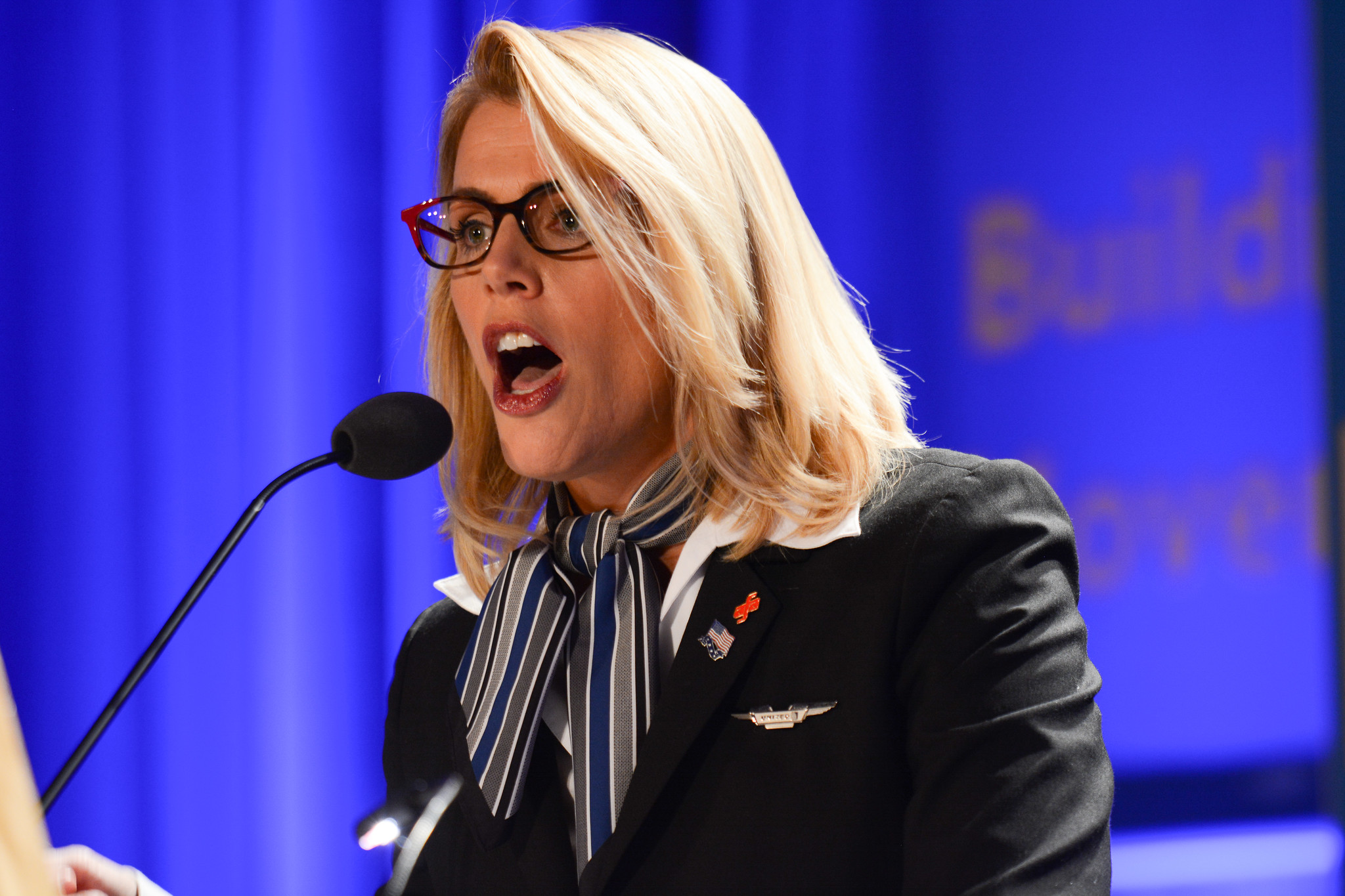
Sara Nelson, president of the Association of Flight Attendants, at the 2019 AFGE Legislative & Grassroots Mobilization Conference. AFGE / flickr
The percentage of US workers in labor unions reached its peak in 1953, at more than a third of the workforce. Now, after decades of neoliberal assaults on the labor movement, only about 10 percent of US workers belong to unions. As the trend continues, unions struggle to retain political or economic relevance, unable to defend themselves against further efforts to undermine collective bargaining rights and workers’ living standards.
But all hope is not lost. As union density has declined precipitously in the private sector, it’s held more of its ground in the public sector. And, as the number of private-sector strikes has dwindled over the decades, a strike wave emanating from the public sector took the nation by surprise last year.
The teachers’ strike wave was a windfall for the labor movement. And because public-sector unions have a special (which isn’t to say exclusive) ability to bargain for the common good — that is, to connect their demands to the well-being of the broader community — the teachers’ strikes likely contributed to the continuing rise in labor-union support among the general population. In 2018, Americans’ approval of labor unions reached 64 percent, nearly as high as when union density was at its peak.