Yes, the French Revolution Was Necessary
Historians who argue otherwise overlook the appalling conditions on the ground.
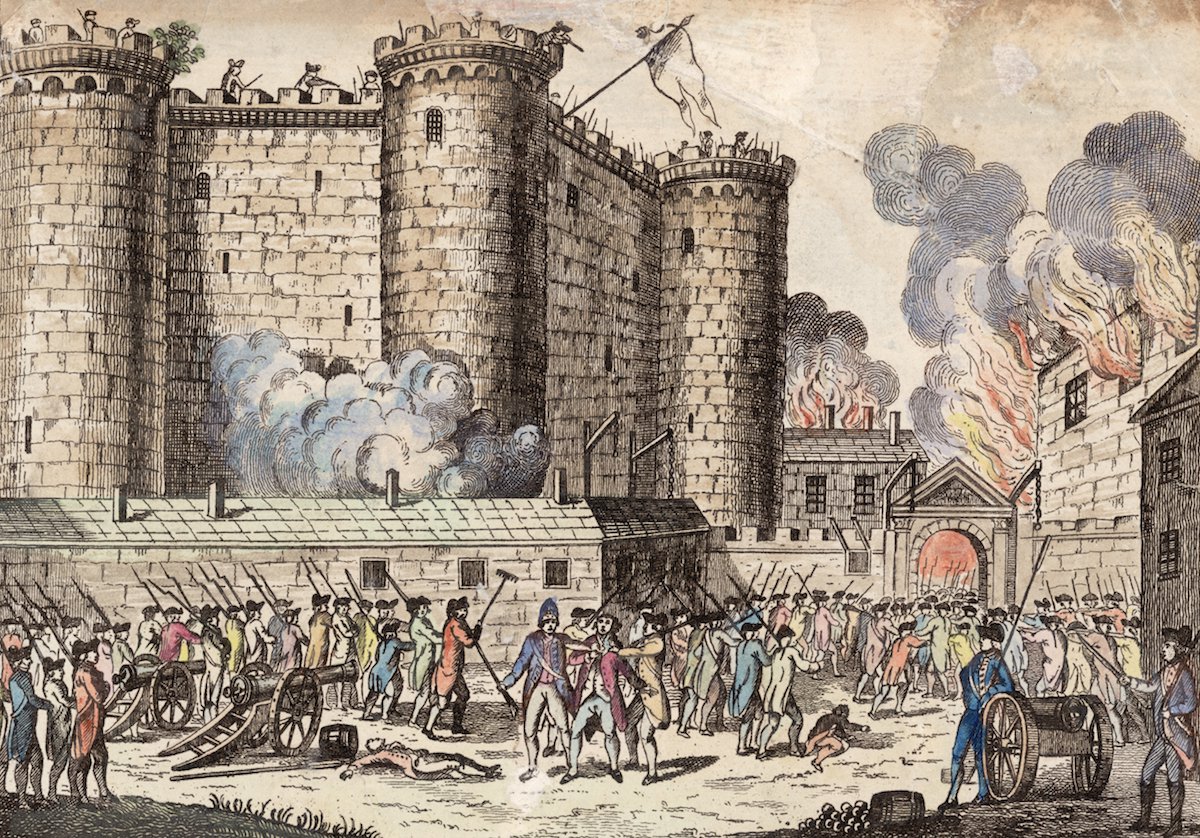
Citizens of Paris, headed by the National Guards, storm the Bastille prison.
What is at stake here is a choice between two contrasting views of the French Revolution. For a whole lineage of historians stretching from Alexis de Tocqueville to François Furet, the substance of the revolutionary upheaval was already under way, if not completed, by the end of the ancien régime. An American-style revolution, calm and democratic, would have led to the same end result, while avoiding sound, fury, and the guillotine: “The Revolution finished off suddenly by a convulsive and painful effort, without a period of transition, throwing caution aside and without any consideration, what would have automatically been finished gradually and by slow degrees.”
In his commentary on Tocqueville, Furet argues that the ancien régime was already dead: “The revolutionary consciousness, from 1789 on, was informed by the illusion of defeating a state that had already ceased to exist.” He reaches the following verdict: “nothing resembled French society under Louis XVI more than French society under Louis-Philippe.”
Tocqueville explains how centralization was established on top of “a diversity of rules and authorities” that were the debris of the feudal order. At the summit was the royal council, which was the supreme court of justice as well as the higher administrative authority, and “subject to the king’s approval [had] legislative powers; it could debate and propose most laws; it fixed levies and distributed taxes.”