Outside the New China
The exploitative relationship between city and countryside pervades Chinese life. Nowhere is inequality in access to public goods clearer than in the country’s urban education system.
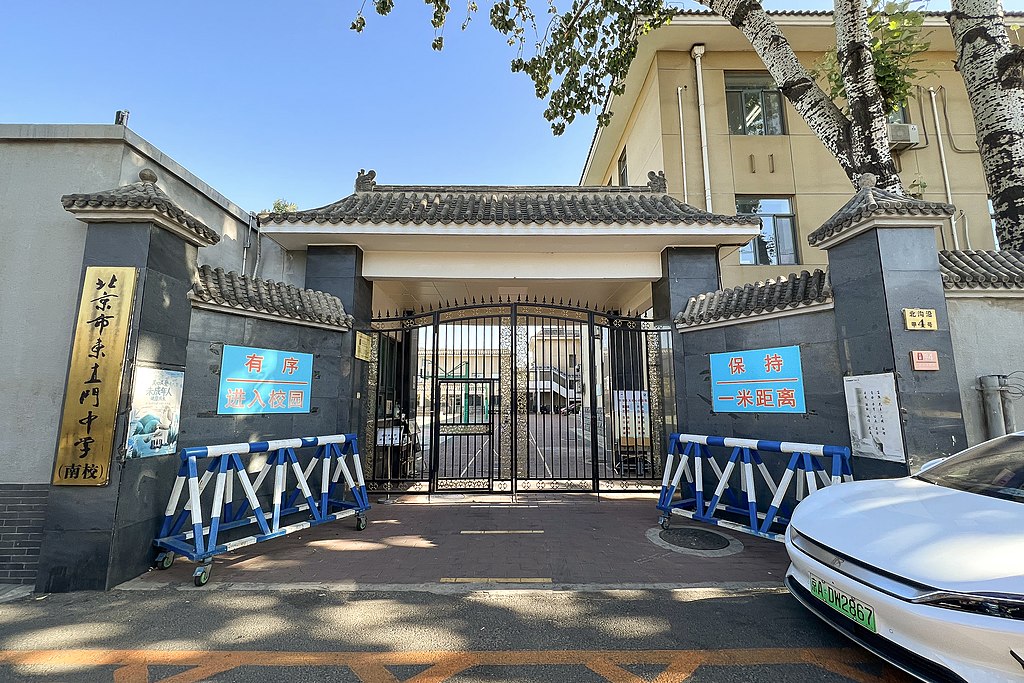
Beijing No. 79 Middle School, October 31, 2022. (Wikimedia Commons)
A key element of China’s generation-long economic boom has been its ability to provide employers with a flow of cheap labor that is also relatively healthy and educated. How has such a magical combination been possible?
The answer, to put it somewhat abstractly, is this: by spatially separating economic production from social reproduction, capital has been able to buy labor power at less than its value.
The labor of 250 million Chinese migrant workers, now the numerically and politically most important part of the working class, is largely deployed in the country’s many metropolises. But if the production of consumer goods, skyscrapers, and high-speed railways is taking place in the cities, the production of migrant labor power itself — social reproduction — by and large takes place in the countryside. That is where the social and financial costs of providing education, healthcare, and care for the aged are borne.