Captain Picard Was a Socialist, and So Was Patrick Stewart
Patrick Stewart, who died last week at the age of 86, was a committed socialist from the start. That conviction ran through his greatest role: Jean-Luc Picard, a leader who used reason and compassion rather than force.
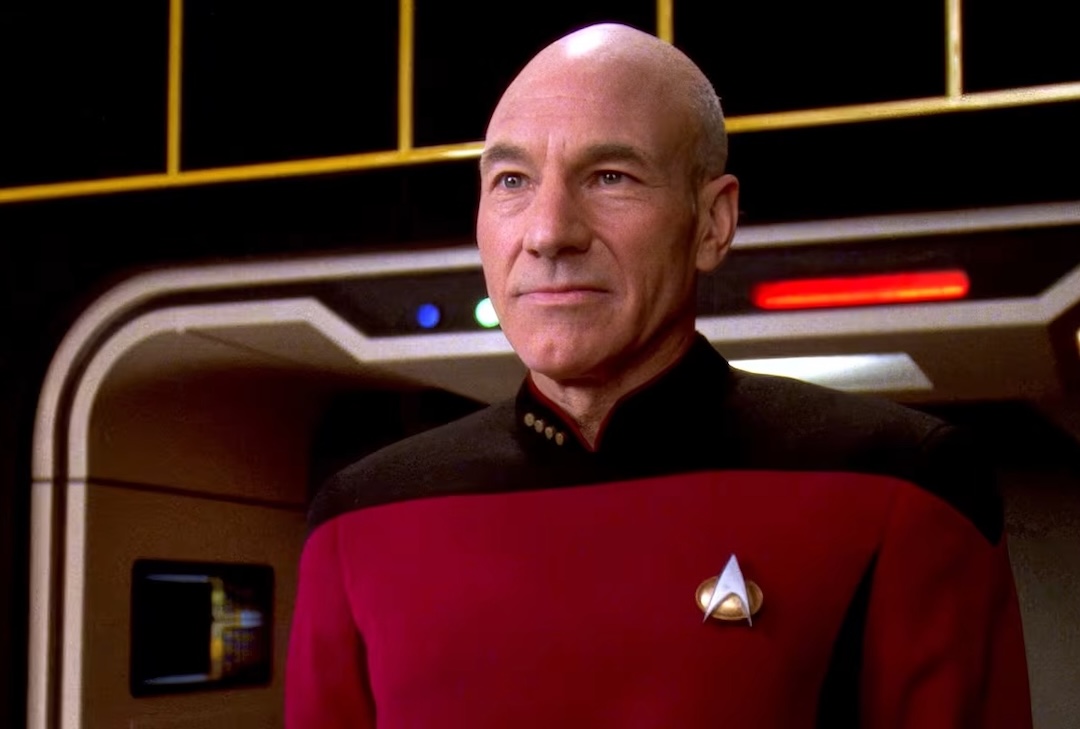
Hollywood is full of stars with vague liberal politics. Patrick Stewart was an unapologetic socialist and said so in public. (Paramount Television)
For those of us who grew up watching Star Trek: The Next Generation, Patrick Stewart’s death last week was an enormous loss. Stewart was an actor of extraordinary talent, commanding every scene he appeared in while bringing emotional depth to even the most imposing characters. Equally comfortable with Shakespearean tragedy, science fiction, and comedy, Stewart could do it all. There was also something about his premature baldness that aged him — adding to his already impressive natural gravitas — but also gave him an ageless quality over the decades. Whether he was performing Shakespeare onstage or appearing in sci-fi shlock like the naked-space-vampire thriller Lifeforce (1985), he always fully embodied the characters that he played.
Best remembered for his portrayal of Captain Jean-Luc Picard in Star Trek: The Next Generation, Stewart was also something exceedingly rare among Hollywood’s biggest stars: an unapologetic, lifelong socialist. He never hesitated to make his political convictions known, even among the industry’s wealthy elite: “There’s nothing more fun than being at a dinner party in Beverly Hills, surrounded by elegant people, and telling them you’re a socialist.”
A Socialist from the Start
Much of Stewart’s radical political perspective emerged at an early age. Born in 1940, he grew up poor in Yorkshire, England, the youngest of three brothers. Stewart’s mother worked in a textile factory, while his father worked several working-class jobs, including as a day laborer and postman, never coming to terms with the post-traumatic stress disorder (PTSD) he suffered from after his experiences during World War II.