US Pop Culture Has Long Raged Against Health Care Injustice
The memes celebrating Luigi Mangione are far from novel: they represent a long tradition of American popular culture voicing outrage at the injustices of our health care system, from Dog Day Afternoon to Star Trek: Voyager to John Q.
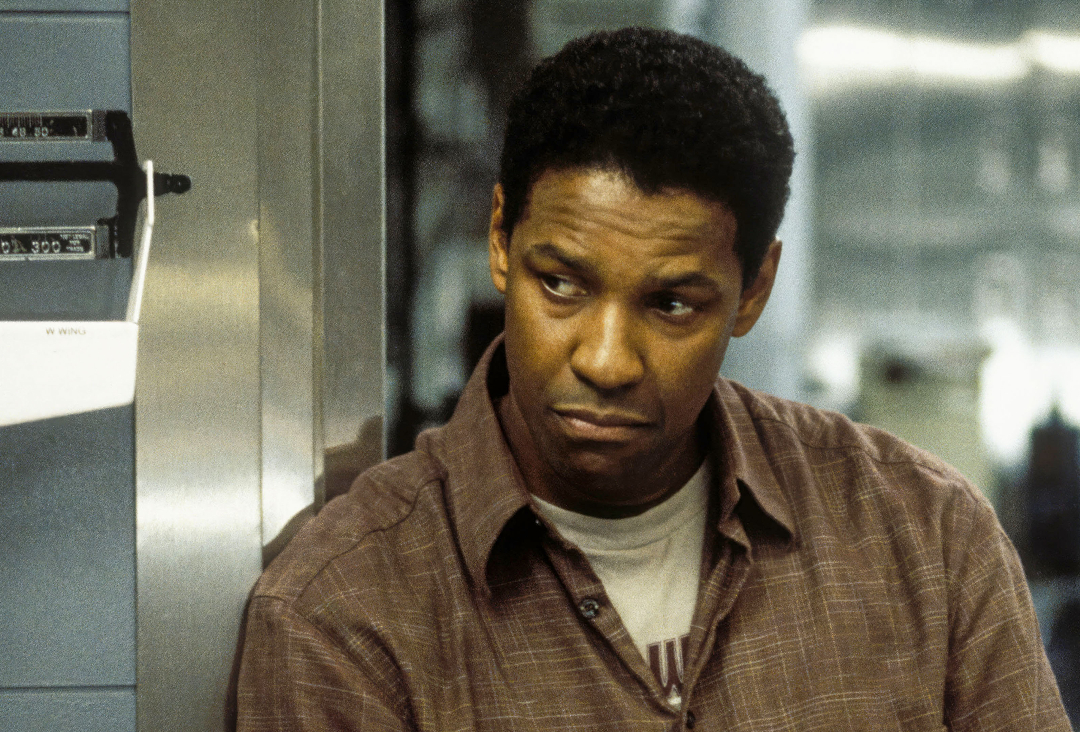
Denzel Washington stars in the 2002 film John Q. (New Line Cinema)
On November 1, 2000, less than a week before a presidential election in which health care was a central issue, Americans tuning into Star Trek: Voyager got a critical look at a dystopian alien medical system that uncannily resembled their own.
In “Critical Care,” Voyager’s holographic (artificially intelligent) doctor (known simply as “the Doctor”) is abducted and sold to for-profit administrative consultants who run a hospital ship floating above a polluted extraterrestrial city. Although he protests his kidnapping and demands to be released, when he is presented with dozens of seriously ill patients, the Doctor’s Hippocratic Oath obliges him to act.
Because he comes from the United Federation of Planets, a postcapitalist society where health care is a universal right, the Doctor expects care to be freely given “to each according to their need.” But he soon learns that’s not how things work at this hospital, which is divided into brutally unequal levels of care based on the algorithmic calculations of an artificial intelligence called “the Allocator.” Far from a right-wing caricature of universal health care as “rationed care,” the Allocator’s dubious calculations present a clear stand-in for the immorality of capitalist health care, providing boutique anti-aging treatments to patients deemed “valuable to society” while leaving those deemed “a drain on resources” to die of easily curable infections.