Los Angeles Socialists Won Big in the Blue Electoral Wave
A key but occasionally overlooked site of socialist resurgence in the United States: Los Angeles, where members of the Democratic Socialists of America won local races, the mayoralty, and a seat in Congress.
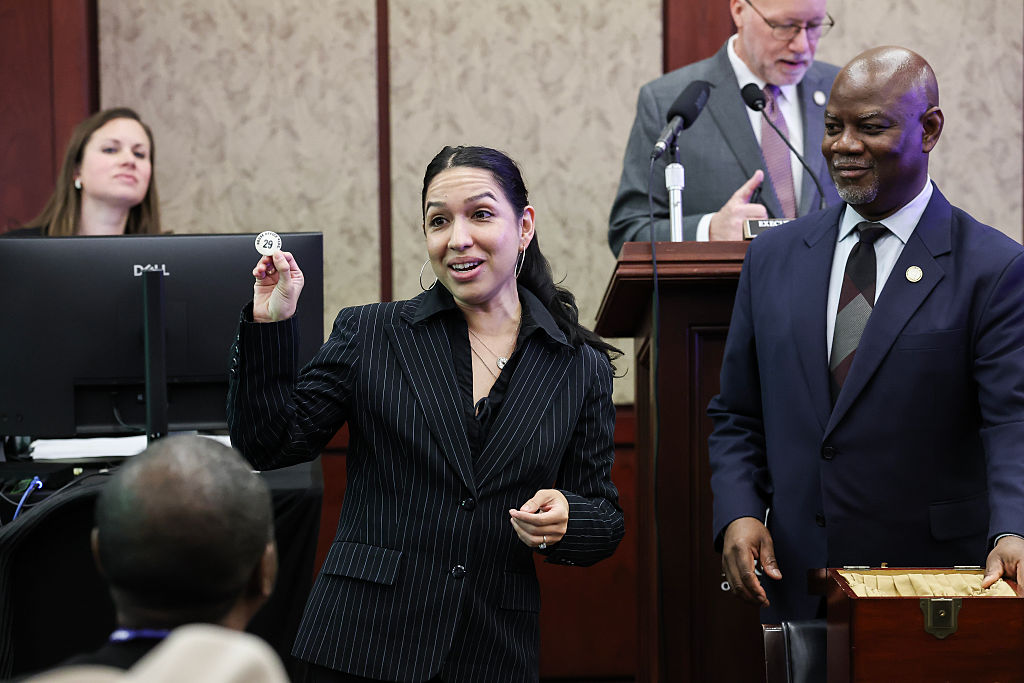
In the midterm elections, democratic socialists won two of Los Angeles’s most powerful citywide offices and sent a socialist to Congress from the city for the very first time, in a race that few expected a year ago would even be a close challenge. (Anna Moneymaker / Getty Images)
LA was at a critical cusp in its history. Globalization had reorganized its economy, rewiring it in dramatic ways, and many people were being left behind. Yet the city had — and still has — this incredible, protean potential for better things, for progressive politics, for surprising activism.
The midterm elections were truly seismic. Like many places across the country, Los Angeles made good on its protean potential from the 2026 blowout with a stronger socialist movement and a larger share of political power. Democratic Socialists of America (DSA) members won up and down the ballot. Nithya Raman won the mayor’s office of the country’s second-largest city in an upset victory. Marissa Roy has won the city attorney’s office, and Angela Gonzales-Torres is headed to Congress.
Together their victories put democratic socialists in two of Los Angeles’s most powerful citywide offices and sent a DSA-LA member to Congress for the very first time in a race that few expected a year ago would even be a close challenge. The formerly conservative, sleepy suburb of Burbank has elected a DSA council majority, one of the first on the West Coast.
Behind those wins is DSA’s second-largest chapter. In the last year alone, the LA chapter doubled its membership to over six thousand members, launched a citywide Shake Up LA slate, and knocked more than 110,000 doors. And it did so alongside a realignment of the city’s left-labor coalition, especially that of the powerful hotel workers union UNITE HERE Local 11, which cross-endorsed most of DSA-LA’s Shake Up City Hall slate from Nithya down to Burbank City Council, and whose thousands of members knocked doors for her.
National Earthquake
This didn’t happen in a vacuum. Nationally, Democratic candidates of all stripes won control of both chambers of Congress, while Republicans lost ground in a shocking 99 percent of roughly 2,100 counties where most ballots had been counted by the morning after the election, according to Reuters. The electorate shifted left nearly everywhere, all at once.
Within that national revolt, Los Angeles voters were also shifting left. Gonzales-Torres decisively defeated Democratic incumbent Jimmy Gomez, winning over 62 percent of the vote while running openly as a DSA member, supporting a free Palestine and the abolition of Immigration and Customs Enforcement (ICE), and rejecting corporate money. Her victory gives DSA-LA its first foothold in Congress with a candidate that took clear positions against corporate power and state violence and for Palestine and the Boycott, Divestment, and Sanctions (BDS) movement while building a winning electoral coalition.
Roy’s victory carries a historic mandate as well. With more than 695,000 votes and roughly 68 percent support, she received the largest vote total ever won in a Los Angeles city election at any time, according to her campaign. She campaigned uphill, against the Democratic establishment and real estate lobby’s support of the incumbent, on turning the City Attorney’s Office into LA’s largest public-interest law office: pursuing abusive corporate landlords, enforcing workers’ rights, holding polluters accountable, and challenging the Trump administration in court.
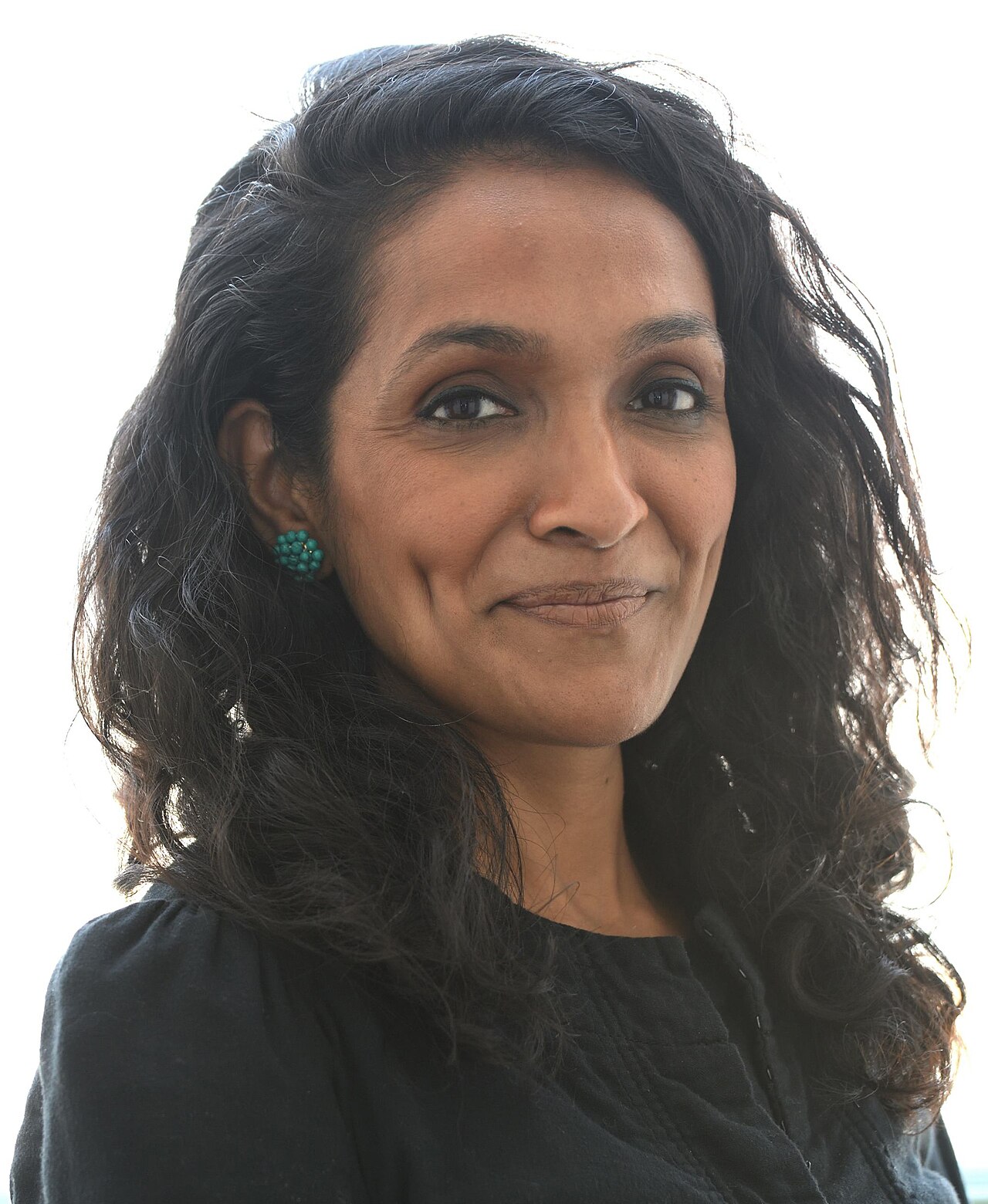
Raman’s mayoral victory expands that opening considerably. Her 2020 city council victory helped establish DSA-LA as a force in city politics. Six years later, she has defeated incumbent (and onetime New Leftist) Karen Bass to become Los Angeles’s first democratic socialist (and immigrant) mayor.
Her victory gives the socialist movement a new scale of power to advance housing, tenant protections, and public services across Los Angeles. An ongoing tension will be between her independence as an elected and the co-governance and criticism of both the LA chapter and DSA’s national leadership about her level of support for the BDS movement and other issues she may not be in lockstep with the chapter on.
The chapter has also consolidated its existing beachhead on the LA City Council. City Council Members Eunisses Hernandez and Hugo Soto-Martínez and Los Angeles Unified School District Board Member Rocío Rivas all won reelection. In the Inglewood area, Estefany Castañeda retained her seat on the Centinela Valley Union High School District board, while Yaritza Gonzalez won election to the Inglewood Unified School District board.
Red Burbank
The chapter’s reach also expanded beyond Los Angeles. In Burbank, victories for Mike Van Gorder and Nolan Southerland created a democratic socialist council majority alongside Konstantine Anthony, while Stephen Post won in West Hollywood. Estuardo Mazariegos’s race in Los Angeles’s Ninth Council District remained unresolved, with Mazariegos trailing by a mere eighty-seven votes after taking on an opponent backed by major corporate and police union spending.
Los Angeles is also part of a national advance forward by socialists. DSA reported at least eight members elected to the next House: Gonzales-Torres, Chris Rabb, Darializa Avila-Chevalier, Melat Kiros, Claire Valdez, and Donavan McKinney, alongside Alexandria Ocasio-Cortez, and Rashida Tlaib. Its election coverage also recorded state legislative wins in Florida and Tennessee. These wins give the socialist movement more opportunities to connect local organizing with struggles over national policy.
The scale of the work behind these campaigns matters. In its largest electoral effort to date, DSA-LA endorsed thirteen candidates and mobilized more than 1,700 volunteers to fill over 4,000 canvassing shifts. Its members knocked more than 110,000 doors in chapter-led canvasses. Over the same period since the 2024 election cycle, membership grew from nearly 3,000 to more than 6,000 and has added several hundred new members since Election Day alone.
The Long Arc
The chapter’s program places this strategy in a longer history of multiracial working-class struggle, from Justice for Janitors in the 1990s to the immigrant rights marches of 2006 and the teachers’ strike of 2019. Those movements demonstrated how organized workers could reshape Los Angeles’s politics and advance demands benefiting the wider public.
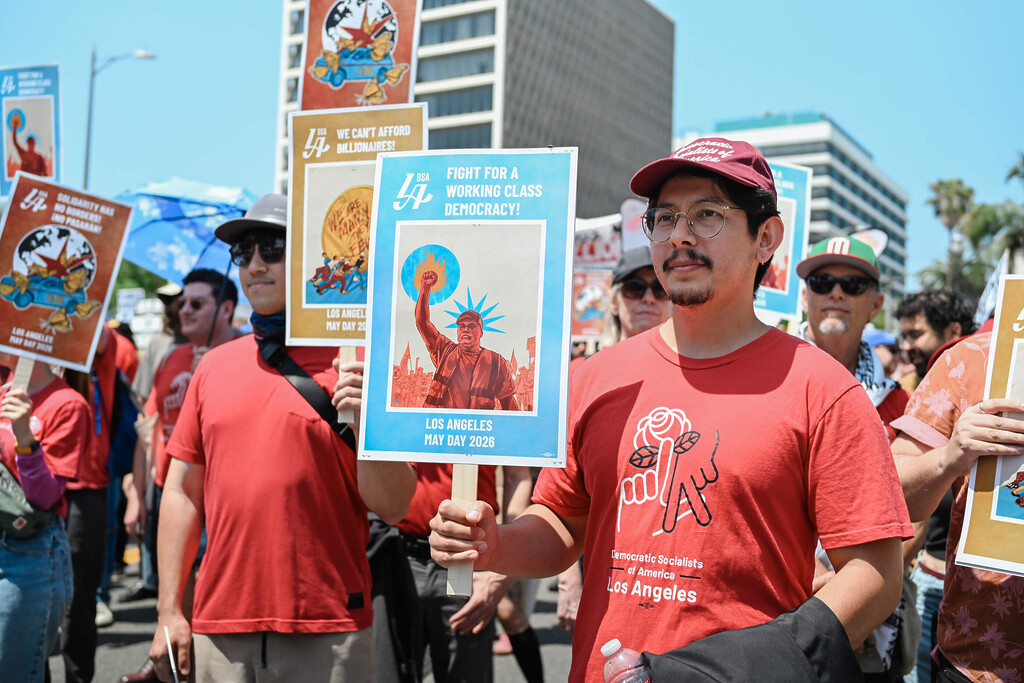
Combining electoral work, movement activism (from anti-ICE mobilizations to mass transit organizing to Palestine solidarity work), and member growth points toward a way to build durable socialist organization and power. An endorsement backed by thousands of volunteer shifts creates opportunities to develop new organizers and leaders, forge relationships with neighbors, and bring people into a member-run organization.
Keeping that capacity alive takes work. New members need meaningful roles and on-ramps to activity, political education, and a voice in deciding what comes next. Campaign volunteers need opportunities to remain active after their candidate wins or loses.
There is a wide constituency for that work. Gallup’s September report found that 43 percent of Americans viewed socialism positively, the highest share in its series. In Los Angeles, late October University of California, Berkeley Institute for Governmental Studies polling put democratic socialist identification at roughly a third of likely city voters. “The democratic socialist constituency is real, and it is growing,” said DSA-LA Cochairs Leslie Chang and Sean Wakasa.
The Promise
The election results alone cannot settle every argument about which message or strategy worked best. They do, however, create an opening for a Left that offers more victories, confronts concentrated wealth, and refuses to sacrifice solidarity for supposed electoral advantage.
The next test will be whether these victories open up more struggles and, most of all, change people’s lives. Roy’s promised enforcement agenda, a stronger socialist presence on city council, and Raman’s incoming mayoral administration create opportunities. Those gains, as always, will require organized pressure, alliances with unions and community groups, and members willing to remain involved in the difficult work of governing. They will also take sustained and coordinated pushing and accountability from movements and DSA locally.
The promise of the democratic road to socialism is that working people can collectively govern the institutions that shape their lives. In Los Angeles, that promise now has more members, more organizers, and more elected socialists behind it.