Robert Kramer Is the New Left’s Great, Forgotten Filmmaker
Robert Kramer’s films captured the New Left from the inside, from its promising beginning through its painful unraveling. He faded from view mostly because his work was so hard to see. In our new age of political volatility, he deserves a revival.
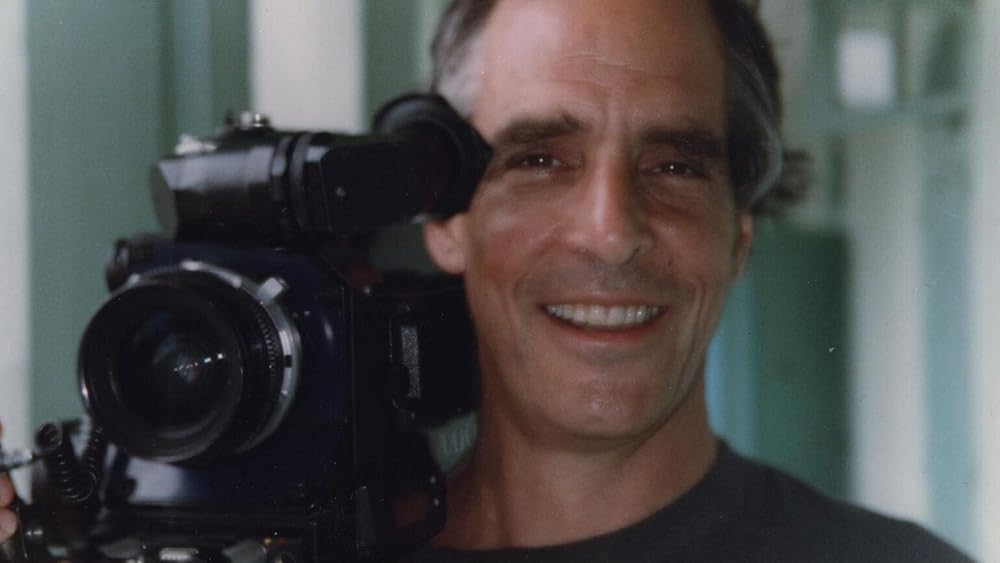
Few filmmakers of the 1960s were as admired by radicals and critics alike as Robert Kramer. (IMDB)
When Robert Kramer’s 1968 film The Edge reached Los Angeles, its ad in the Free Press posed a provocative question: “Should we kill the President?” And while Lyndon Johnson survived that film’s alienated would-be assassin, Kramer’s next film left little question as to where he stood. Ice, shot in early 1969 and released in late 1970, imagined an armed leftist insurrection in New York City, taking the jolting documentary-like style of Gillo Pontecorvo’s Battle of Algiers (1966) and bringing its war home to the Big Apple. Watching Kramer’s revolutionaries move through Grand Central Terminal, JFK Airport, New York University, and other recognizable sites as they try to create an all-American National Liberation Front is an eerily captivating sight in 2026. It’s impossible not to think of Luigi Mangione, or Elias Rodriguez, or perhaps January 6, or the death of the revolutionary ’60s dream.
Kramer, who was born in 1939 and died in 1999, was almost indisputably the key filmmaker of the US New Left. He played a central role in shaping Newsreel, the agitprop documentary collective that forged the New Left’s aesthetics, and his political ties included everything from Students for a Democratic Society (SDS) to the Weather Underground to armed communes in Vermont to the People’s Movement for the Liberation of Angola (MPLA). While his closest contemporary Haskell Wexler was filming the 1968 Democratic National Committee chaos, Kramer was being arrested there for attempting to coat roads in spiked balls to hinder the police, which helped land him on the FBI’s Security Index of dangerous subversives. His resolutely independent films captured the New Left from the inside and offer its most cohesive filmic legacy.
Yet Kramer remains somewhat obscure. He’s remembered best in France, where the Cahiers du cinéma crowd adopted him early, listing him on the October 1968 cover among the Quatre Américains at the forefront of independent US film, alongside John Cassavetes, Andy Warhol, and Shirley Clarke. Kramer moved there at the end of the 1970s, stayed through his death, and has always remained visible in national film culture. Back in his native land, however, he’s a cult director at most, known almost exclusively to the sorts of cinephiles who haunt repertory theaters and the deep-cut wing of Letterboxd.
It’s tempting to attribute Kramer’s near-invisibility to political repression, of which there was of course plenty. But having spent several years investigating his life and work for my new book, Films That Explode Like Grenades: Robert Kramer and the Search for a Radical Cinema, I reached a somewhat more materialist conclusion: Kramer faded from sight in the United States because for several decades almost none of his work was easily available to see.
The home video market of the 1980s and ’90s bypassed him almost completely, and even now in the age of streaming and torrenting, many of his works remain elusive. But it’s my hope that we’re on the brink of a Kramer renaissance. As the contradictions of American politics continue to heighten, and as its internal tensions intensify, Kramer’s explorations of radicalism have rarely felt more pertinent.
The Making of a Radical
Robert Kramer grew up on Park Avenue in Midtown Manhattan, the only child of a highly accomplished physician father and an equally respected textile designer and art collector mother, both from families that had fled Eastern Europe in the Jewish diaspora. His father, Milton, was among the first doctors dispatched to Hiroshima after the atomic bomb. He never discussed the horrors he witnessed, and Robert grew up in a cocoon of affluence and alienation.
He attended Swarthmore, graduating in 1961 just before the New Left arrived en masse there. Consequently, instead of joining its early organizing, he spent his postcollegiate years as an aspiring novelist, laboring on a gargantuan modernist tome that his friends found ponderous. He was accepted into Stanford’s doctoral history program and promptly quit. His major romantic relationship, with ceramics artist Jane Doubilet, often seemed driven by inertia and ennui, and after they married unhappily, they traveled on family money to avoid confronting their mutual dissatisfaction. While they were in South America in 1965, his father died from a cerebral hemorrhage at age fifty-eight.
Only then did Kramer plunge into both film and the Left, using both as a springboard out of his malaise. His childhood friend Peter Gessner, son of film studies pioneer Robert Gessner, was working in a small production unit headed by blacklisted Hollywood exiles when they received footage smuggled out of Venezuela by revolutionaries with the Armed Forces of National Liberation (FALN). Gessner invited Kramer to collaborate. The resulting half-hour short, FALN (1965), was a straightforward, inauspicious debut — except for the arresting fact that it endorsed revolutionary violence against a US-backed puppet state.
By that point, Kramer had found SDS. The flagship New Left organization was attempting to move beyond its largely white college campus base by organizing in black urban areas and forging what a strategy document called “an interracial movement of the poor” premised on new forms of grassroots solidarity. Lead planners Carl Wittman and Tom Hayden decamped for Newark, New Jersey, and their presence and the proximity to media-capital New York made the city the flash point of the national project.
Kramer was too much of an individualist to be a strong community organizer, but he was nevertheless a photogenic, charismatic, and commanding speaker. When the documentary Troublemakers (1966) chronicled the Newark Community Union Project (NCUP), Hayden appeared as a clear leader, but Kramer brought the on-screen cool in his sporadic appearances, waving a cigarette as he cast doubt on working within existing systems, clearly thinking of the armed FALN as he declared, “My whole life has been spent trying to figure out how stinking the political system is, and I don’t really understand how all of a sudden we’re going to step in and change it.” NCUP primarily focused on block-level organizing, but Kramer appeared as a hip radical ready for revolution. One acquaintance from this era recalled him as “how all of us imagined On the Road to look, always in shades and leather jackets, looking like an angry bohemian.”
He didn’t last long in Newark and was gone before the city erupted in the infamous June 1967 rebellion. But Troublemakers made an impression, catching the New Left at the transitional moment when it was beginning to hypothesize about the limitations of participatory democracy and warm to the idea of more radical intervention, with Kramer as the film’s avatar of this pivot. Stokely Carmichael, then the chairman of the Student Nonviolent Coordinating Committee (SNCC), endorsed the film, and underground film impresario Jonas Mekas called it the “only American film I know that preaches revolution.” While he had been peripheral to NCUP itself, Kramer was suddenly at the center of New Left film culture.
The Cinema of Accelerationism
Troublemakers’ directors, Robert Machover and Norman Fruchter, became his crew for a minimalist feature, In the Country (1967). The film tells the story of a couple who burns out from left organizing, retreats to a country house, and engages in sustained recriminations as their own romantic relationship disintegrates. Beholden to European art-house style, it was a bold if indulgent directorial debut (also introducing actor William Devane to the screen) which went largely unseen but served as a useful laboratory for The Edge.
Kramer’s second feature, in which a young leftist announces his plan to kill LBJ and his friends mostly shrug, was another dissection of what he saw as the catatonia and paralysis of the Left, intended as an internal autocritique. Presidential assassination provided an alluring hook, but The Edge steadfastly refused thrills, instead confronting a movement that Kramer found frozen. While a voracious reader, devouring works by Frantz Fanon, Malcolm X, Régis Debray, and other radical theorists of the day, Kramer was undeniably susceptible to romantic adventurist views and constantly judged the US New Left against the revolutionary anti-colonial movements then sweeping the Global South, finding it insufficiently committed. Nothing short of revolution could end the war in Vietnam or upend the hollow hypocrisies of American daily life. With no real rising action or climax, The Edge’s allegorization of Kramer’s dissatisfaction surely frustrated anyone seeking a political thriller, but it was precisely the coiled, unresolved tensions that led to Kramer’s adoption by Cahiers. No less than French New Wave pioneer Jacques Rivette listed it as his favorite film of the year.
For all that buildup, it was Newsreel and Ice that catapulted Kramer to the forefront of international radical film. Newsreel, formed in early 1968 by an ad hoc group of leftist and experimental filmmakers, immediately became the de facto documentary wing of the New Left. It produced visceral shorts on the student occupation of Columbia University, antiwar protests, the Black Panther Party, and more. Kramer himself traveled to North Vietnam with an SDS delegation to pick up three released prisoners of war and make a film featuring Ho Chi Minh. When the leader fell ill, Kramer’s team instead shot at village schools and self-defense trainings. When they returned home, US customs confiscated their footage, releasing it only after the Newsreel team challenged them in court. The resulting film, People’s War (1969), became an immediate staple of US anti-imperialist cinema, a paean to the perseverance of the Vietnamese people.
Newsreel’s choppy, grainy-16mm style deliberately contrasted with the sanitized polish of the mass media. Kramer frequently served as an always-quotable spokesman, telling Film Quarterly that Newsreel sought to “make films that unnerve, that shake assumptions, that threaten, that do not soft-sell, but hopefully (an impossible ideal) explode like grenades in peoples’ faces, or open minds up like a good can opener.” They didn’t seek dialogue or debate, Kramer explained. “We strive for confrontation,” he said. “We prefer disgust/violent disagreement/painful recognition/jolts — all these to slow liberal head-nodding.”
That is what he attempted with Ice, a film whose lasting impact stems partly from its bewildering contradictions. It is unambiguously a work in support of revolution. Opening with a communiqué from the National Committee of Independent Revolutionary Organizations, it tracks the efforts of “urban white people whose task must be armed struggle” to join a vanguard that includes the Black People’s Army and Mexican Revolutionary Front. Its frenetic handheld camera (manned by Machover from Troublemakers and Kramer’s previous two films) brings a restless nervous energy, occasionally released through prison breaks, assassinations, and the storming of an upper-middle-class apartment tower to force its residents at gunpoint to watch Newsreel-like propaganda.
Yet for all that, Kramer withholds the sort of stirring spectacle central to left cinema since Sergei Eisenstein first toyed with montage; violence in Ice (which includes the castration of Kramer’s own translator character) is neither cathartic nor triumphant but rather crude and brutal. If the plot charts rising action, the affect retains the eerie flatness of The Edge, with characters committed to insurrection but wholly unable to relate to one another, leaving Ice, true to its title, frozen in a revolutionary limbo, trapped between the thrill of insurrection and the existential abyss of capitalist personal alienation. For all the charge-the-barricades bravado of his public statements, Kramer proved more dialectical than didactic behind the camera, refusing the satisfying pleasures of more triumphalist agitprop while forcing the viewer to grapple with the film’s deliberate unresolvedness, which is precisely what gives Ice its unsettling staying power.
This also allowed Kramer to maintain two simultaneous positions: more than any other film, Ice indexed the radical currents of 1969 as SDS imploded and mass democratic politics gave way to the vanguardist tactics of the Weather Underground, some of whose explosions echoed scenes from the film (indeed, some cast members joined the group). Yet as much as Kramer himself supported the Weather Underground, including a brief affair with leader Bernardine Dohrn at the height of her fame on the FBI’s Most Wanted list, Ice also predicted its failure. For Kramer, this stemmed more from the icy social relations of the Left than the swerve to doomed ultraleftism per se, but it nonetheless renders the film a uniquely haunted and haunting artifact of a moment that was somehow both the height and nadir of the New Left’s revolutionary strain.
After the Revolutionary Dream
Ice took over a year to emerge on-screen, mostly due to internal debates over its politics at Newsreel, which ultimately declined to distribute it. Thus a film that predicted the Weather Underground instead appeared to follow it. Even so, when it reached the public in 1970, it caused a stir at Cannes, was widely seen and debated on the US left, and helped spur Cahiers into a militant theoretical frenzy that lasted the next half-decade. Robert Kramer had become the face of radical American film.
It took Kramer a half-decade to complete another film, during which he spent time in Vermont with the Red Clover Collective, an armed commune that failed to inspire an Ice-like uprising. After the collapse of SDS and the COINTELPRO-led attack on black radicalism, the early-’70s left spun in numerous directions of varying impact. On one side was the flowering of gay liberation, women’s liberation, the American Indian Movement, black feminism, and other voices that had previously been marginalized even within radical circles; on the other was the excesses and embarrassments of such fringe sectarian organizations as the Symbionese Liberation Army, which soured public opinion on radical politics.
The Vermont commune scene contained all of these tendencies. Kramer was adjacent to a women-led Free Garage auto repair collective, the “underground railroad” to Canada for draft resisters, and the regional electoral organizing out of which Bernie Sanders’s early political career emerged. His main interest at the time, though, remained revolution, which he and many others still considered imminent. Red Clover stockpiled guns, pamphleteered at local high schools, staged agitprop street theater, and only slowly, painfully began to reckon with the undeniable fact that they had miscalculated.
This was devastating for Kramer, and Milestones, codirected with Newsreel comrade John Douglas, arrived in 1975 as an attempt to make sense of the new context, with a sweeping overview of life after what they saw as “The Movement” (a unity that many of those marginalized groups had long questioned). Following dozens of former New Leftists as they struggle to locate foundations for new forms of resistance, Milestones’s three hours constitute one of the most searching examinations of the very conditions of possibility for a US Left seen on-screen in the 1970s. The film, a narrative feature shot in often improvised semidocumentary fashion, breathtakingly captured the natural beauty of America, from New Mexico and Colorado to Vermont, but coupled these observations with ruminations on the nation’s history of racial exploitation and annihilation. The title came from a prison poem by Ho Chi Minh, and as always, Kramer offered fewer answers than open-ended inquiries. But the film’s colorful humanism, somewhat akin to Alain Tanner’s contemporaneous Swiss-French meditation on the reverberations of the 1960s, Jonah Who Will Be 25 in the Year 2000 (1976), marked a departure for him, surely informed by his codirector Douglas. American audiences mostly ignored Milestones, but it was one of the most celebrated films of the 1970s by French critics.
If Kramer saw the spirit of 1968 slipping away at home, he thought he spied it elsewhere. The Portuguese Carnation Revolution, overthrowing the world’s longest-running fascist regime, began in 1974, and when he took Milestones to Cannes the next year, he stopped over and found the atmosphere electrifying. With friend Phil Spinelli, he returned with a camera and almost no budget. Their resulting Scenes from the Class Struggle in Portugal goes in search of that initial euphoria — and instead finds the revolution already being supplanted by incipient neoliberalism. Kramer then ventured to Angola, which had recently succeeded in its own anti-colonial struggle against Portugal, hoping to make a film — but he soon contracted malaria and returned home. Back in San Francisco, where he spent most of the ’70s, he lowered his sights, beginning work on a book of photojournalism with a tiny leftist press.
The late ’70s proved a crushing disappointment for Kramer, personally and politically. The ’60s dream appeared dead, and his work went ignored in the United States, even despite such champions as New York Times critic Vincent Canby. He flirted with a Hollywood deal, then with working in a crew capacity for Jean-Luc Godard and Francis Ford Coppola, but nothing coalesced. Instead, he moved to Paris with his partner Erika and their daughter Keja, and began making smaller, art-house-oriented works, plugged into an exile network that included other itinerant filmmakers like Chris Marker and Raúl Ruiz.
Some of Kramer’s adventures landed, such as the raw, startling Notre nazi (1984), an on-set documentary about the making of an experimental film starring a murderous former SS officer. Others didn’t, as when his one mainstream crossover attempt, the postapocalyptic sci-fi flick Diesel (1985), deservedly flopped. But the legacies and afterlives of the New Left proved a recurring through line of Kramer’s work. One example was the father/son drama Doc’s Kingdom (1987) that united Ice star Paul McIsaac with a young Vincent Gallo on the Portuguese coast. Another was Route One/USA (1989), a four-hour trip down the eastern seaboard from Maine to Key West on the brink of the 1988 presidential election, which finds a nation haunted by many things, including the merely spectral vestiges of a vibrant, hopeful, popular left.
By the time a sudden meningitis infection took Kramer’s life just after he turned sixty, he had long since abandoned the incendiary politics of his youth, but he never stopped interrogating their ramifications, or, for that matter, the nature of political cinema. The last feature-length film he completed, Walk the Walk (1996), took its title from an old Black Panther slogan: “If you talk the talk, you’d better walk the walk,” as Kramer remembered it. He had his flaws, and in my book Films That Explode Like Grenades Robert Kramer and the Search for a Radical Cinema, I’m unsparing about them. But for whatever critiques we can and should mount — and Kramer, who loved contradictions, very much also embodied them — no other artist holds as strong a claim to being the emblematic filmmaker of the US New Left.