Online Pornography Created the Model for Platform Capitalism
Moral debates about sex work often overlook the wider effect of online porn in shaping our digital existence. More than just a corner of the internet, it has profoundly shaped how platforms keep our attention, and how we present ourselves online.
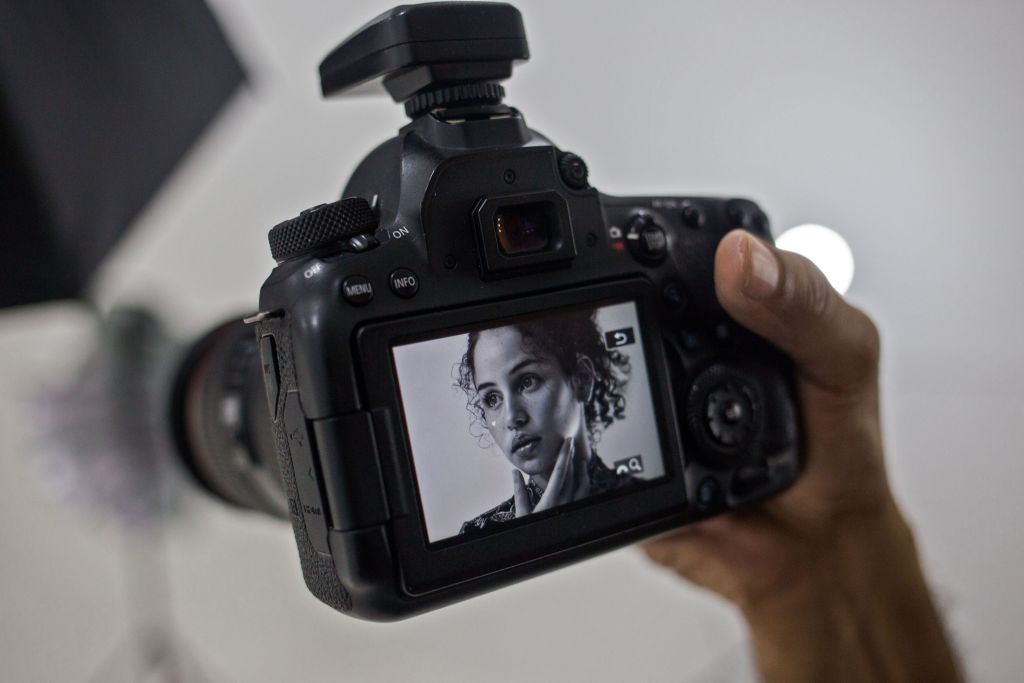
“What does it mean to be a sex worker in this digital economy, where we have a paradigm of platform labor where we’re all more or less encouraged to monetize our image to vie for attention online?” (Cristian Hernandez / AFP via Getty Images)
- Interview by
- Bartolomeo Sala
Online pornography is often seen as a corner of the web that doesn’t bear much analysis. And yet it can hardly be ignored. Firstly, that’s because of the sheer size of the adult-content industry — a sector that in itself is worth around $97 billion annually worldwide and that, at peak times, commands 10 percent of all internet traffic. But more than that, a discussion of its inner workings sheds light on the mechanisms that govern the special kind of attention economy and platform capitalism that we are all wrapped up in.
In Guilty Pleasure: The Pornification of the Internet, the Economy, and Everything Else, the journalist Patricia Nilsson discusses porn’s place at the heart of today’s digital ecosystem. As the Financial Times journalist explains, many of the technologies meant to hold and monetize our attention were pioneered by porn sites, and we can even say that digital life in general operates according to the same logic of endless titillation.
For Nilsson, “online culture runs on the onanistic logic of porn.” In this new creator economy, everyone is forced to perform a heightened and often openly sexualized version of themselves. In an interview for Jacobin, she spoke to Bartolomeo Sala about what effects this is having on relationships, users, and creators themselves.
Bartolomeo Sala
You begin Guilty Pleasure by discussing the arguments for and against pornography originating in debates dating back to the 1970s.
You relay the criticism, shared by both second-wave feminists and conservatives, that porn should be censored, as it demeans women (“porn is the theory, rape is the practice”) and undermines social cohesion. On the other hand, you discuss the experience of sex workers and porn professionals who value it for its emancipatory, transgressive potential.
However, you continue by showing how this moral debate fails to consider the specific digital ecosystem in which porn is produced, disseminated, and consumed. Why do you think these old attitudes are no longer sufficient, and what do they miss about the current political economy of the porn industry?
Patricia Nilsson
That’s a big question. I’ll say two main things.
Firstly, if we talk about porn from the perspective of a traditional feminist critique, whether we should be for or against — I think I write at some point in the book that, to this day, we have not resolved what sex actually means to women. That’s the elephant in the room. I find what someone like Ellen Willis has to say very interesting: that women should be formulating their own sexual desires and fantasies and taking part in the world as equal beings. But the reality is that it’s still a world dominated by male experiences.
As to whether these debates aren’t really relevant nowadays, I think we’re so focused on sex that we have failed to form a better understanding of what pornography means today. Why is it so shameful, so taboo, to be a sex worker? The idea that you’re selling yourself? What does it mean to be a sex worker in this digital economy, where we have a paradigm of platform labor where we’re all more or less encouraged to monetize our image and to vie for attention online? A lot of these aspects you could see from sex workers, especially cam workers more than thirty years ago: thinking about your online persona and building a virtual self to attract attention and sell a fantasy other people can consume.
That is the core of platform labor today. So I think that a lot of the conversations we’re having today about sex work, especially pornography, miss the point that we have a virtual economy that’s now completely dependent on this type of self-exploitation, which goes way beyond the purely pornographic.
Bartolomeo Sala
The central idea of Guilty Pleasure is that porn, far from “a trivial sideshow,” is a key feature of the platform capitalism that rules every aspect of our lives. Many of the technologies that keep us glued to our devices, and that track, monitor, and analyze each and every one of our behaviors, were pioneered by porn sites.
Today most tube sites such as Pornhub and Youporn are owned by a handful of monopolists backed by big finance who, together with payment processors Visa and Mastercard, are ultimately the arbiters of what can or cannot be shown online. Can you tell us a bit more about how the architecture of the attention economy is a product of online porn?
Patricia Nilsson
When I say that the logic of porn shaped the business model of the internet, I mean that some of the first people who started making money online were making money in pornography. I remember speaking to this guy, who made a lot of money in the ’90s, who told me, “I never wanted to be a pornographer. I just wanted to make money on the internet. Pornography just happened to be the way.” A lot of these early sites were the first ones to play with how to attract huge amounts of people online — to get them to stay for as long as possible and return as often as possible — and how to make money from their attention.
Take things like affiliate marketing: when you host a link on your website, and then if someone clicks on it and goes somewhere else, you get paid for it. Fabian Thylmann — the German dude who is known for inventing tube sites’ business model by bringing Wall Street money into it — didn’t build tube sites. What he did was build one of the first affiliate marketing softwares, which essentially enabled tube sites to track people’s behaviors while on the platform. Or, if you look at camming, it pioneered live streaming. It was the place where people first got to experiment with such things as pay-per-minute models, taking people into private rooms, and using prepaid tokens for tipping. These are all driving the business model of platforms like Twitch and TikTok and attracting more and more people into this virtual economy.
But camming also brought a completely extraordinary notion of the online persona: the idea that we can be whoever we want to be or whoever the person on the other side of the screen wants us to be. This doesn’t apply just to ourselves but also to how normal it has become to consume others, to consume the image of others. By that I don’t only mean watching porn or following your favorite influencer on Instagram. Everything has become this form of consumption. This is how we date; this is how we follow our friends. I live in Germany now. I used to live in the UK. I know what’s happening in many of my friends’ lives because I’m consuming their feeds. So that’s what I mean when I say that the logic of porn has seeped through the internet and influenced everything.
Bartolomeo Sala
I think you perfectly replied to my next question, which was about your claim that “online culture runs on the onanistic logic of porn.”
Before we turn to the key takeaway of the book, however, I was wondering if you could tell me a bit more about how the modern porn ecosystem reflects the specific brand of capitalism we all live under. You discuss at length, for instance, how the current state of affairs, in which extreme concentration goes hand in hand with lack of accountability, was born out of a specific US federal law, Section 230, which in the name of freedom of speech shields consumer-generated platforms from liability so long as they remove content that’s violent, illegal, or simply uploaded without consent.
Can you tell me how all this came about? And how this arrangement, in which the right to censorship comes at the discretion of powerful financial actors, reflects a more general threat to freedom of expression?
Patricia Nilsson
Just before we get into Section 230, since you have mentioned it, what I mean when I talk about the “masturbatory business model of the internet” is that the entire virtual ecosystem is designed to be masturbatory to the extent that watching porn essentially is satisfying a psychosocial need on your own by staring at content that has been algorithmically engineered to appeal to you. That is what watching porn is today. And that is what being on your phone is today as well. You know, they’re the same thing. Are you familiar with gooning?
Bartolomeo Sala
Unfortunately yes, I remember the Harper’s story when it came out.
Patricia Nilsson
It’s not such a crazy thing as it is made out to be. Gooning is the extreme end of a spectrum that we’re all on in one way, shape, or form. That’s what I mean by the masturbatory business model of the internet: what we’re really doing is being caught up in this loop of self-gratification and self-soothing. That’s why we pick up our phones. We want to soothe ourselves.
On Section 230 and freedom of expression: I am not an expert on the issue of regulation. I am not “Section 230 ride or die.” I think it’s obvious to everyone that there is something deeply wrong with the online world, and that we need to change it somehow. At the same time, I argue in the book that regulation of the internet has, in many ways, historically been driven by an attempt to regulate pornography, and that has had a lot of unintended consequences. Section 230 was intended to stop private companies from having too much power over what individuals can say. And with the erosion of Section 230, this is exactly what we’ve been seeing.
Visa and MasterCard have become the de facto regulators of porn. They don’t want to have this role, but they have it. A couple of years ago, there was a pressure group that pressured them into taking down over ten million videos on Pornhub. Again, you might say, “we shouldn’t have porn uploaded by unverified accounts,” so maybe this is a good thing. But it misses the bigger point that this kind of pressure exists, and private companies can force content to come down this way. And in a world like ours where things are changing very quickly, you may imagine where that leads.
Bartolomeo Sala
One aspect of porn being algorithmically engineered to keep us hooked is how this loop of “compulsive self-gratification: craving, stimulation, and temporary relief” directly leads to the “extremefication of porn” and the consequent molding of people’s sexual preferences. If the name of the game is keeping your attention as long as possible, it makes sense that your preferences will be algorithmically nudged toward more intense and fetishistic material as novelty wears off and habituation kicks in.
However, I am more interested in asking you how these perverse incentives (pun intended) have also led to what you characterize as unprecedented commodification of the self. OnlyFans might be the most notable example of this new creator economy that blurs the distinction between not just pornographic and non-pornographic content but also between work and everyday life, intimacy and its performance. You write, on the subject of “thirst traps,” that “in the platform economy, sexual self-presentation is just another way to craft a personal brand that serves as both a source of validation and a potential revenue stream.”
Can you tell me more about this burgeoning economy: the careful staging of authenticity it requires but also the specific kind of alienation and burnout it breeds?
Patricia Nilsson
There’s a quote in the book from Bryce Adams, where she talks about why she decided to become an OnlyFans performer. She says if TikTok is just full of people, mainly women, performing these overt eroticized selves all the time, then logically, why not just make money from it, if I am going to be constantly performing as my sexual self in this way anyway?
I think this is so interesting for two reasons. On the side of the consumer: What happens to us when we are consuming this type of content? Can it actually start replacing reality? I think we’re starting to see that it can. A lot of people who, for whatever reason, have started spending a lot of time online find that nothing in reality can quite match the excitement, vividness, and speed with which they can feel gratified and validated online. And you can see why. If you’re constantly engaged with performers who are excited, optimistic, and positive, then it can feel quite anticlimactic to go out in the real world and have to negotiate real relationships.
However, this is something that I saw very strongly in performers as well, people who are choosing to do this sort of work. A lot of people I spoke to who are OnlyFans performers, or do camming, for example, don’t want to have a real job. That is the driver: the idea of having to go to an office every day and seeing people and having a boss and negotiating with colleagues. A lot of people I spoke to describe having deep anxiety or just not feeling comfortable being with people in person. Being an online sex worker and making money by having these mediated online interactions is just so much safer, because they don’t even have to leave their room.
In the last chapter, I interviewed a performer called Lizzy Capri, who was a YouTube mini-celebrity before she launched her OnlyFans. She told me that the way she sees the world is that we are all either consumers or performers, and she would much rather be a performer, a creator. She was telling me that if she didn’t have the incentive to film herself doing things and share them, she would often lack the motivation to do anything at all. She would just end up laying on her sofa all day.
Bartolomeo Sala
This is what is so dystopian about OnlyFans and performers such as Bryce Adams. It’s like the last stage of capitalist subsumption where life itself is turned into eroticized spectacle. Contrary to tube sites, it doesn’t act as a stress valve for our most primal sexual urges. It seems to respond to an all-too-real craving for connection, but it’s ultimately a simulacrum designed to suck us ever deeper in this voyeuristic sort of parasocial intimacy.
Patricia Nilsson
I think I say in the book that OnlyFans is the marriage of the pornographic undertones of the internet and the influencer economy that has stemmed from it. OnlyFans performers don’t need to learn any new skills. They are just doing the type of platform labor that we have all been taught to do since being children, which is essentially posting pictures of oneself and being “authentic” — and what I mean by that is this particular sort of performing of authenticity. What I found really interesting in the sort of conversations I was having with Bryce was the way she talks about how people are craving a new type of connection. What OnlyFans offers is this feeling that we’re behind the scenes, that we’re ultimately getting to know the real Bryce.
Bartolomeo Sala
In the book, you purposefully shy away from solutions. In the epilogue, you outline how AI, as the most perfect tool to aggregate and reproduce our darkest fantasies, could suck us ever deeper in this shadow world that thrives all the more as it works as a substitute for the intimacy and connection we lack in real life.
Still, you are careful to avoid stoking moral panic over pornography. Sexual mores are porous and ever-changing. You also show how censorship usually ends up damaging creators themselves, who are suddenly deprived of the revenue streams and protections afforded by digital life. What do you think should be the basic tenets of a progressive agenda to get serious about this subject?
Patricia Nilsson
For the porn industry specifically, I think it’s very difficult, because most of the content that is being consumed in a place like the UK is not made there, especially now that porn production has been almost outlawed. Take the women who, especially before the [Ukraine] war, were flown into Prague. These are not porn performers; these are just civilians who are brought in and told, “Hey, you can make, like, €5,000 in one week.” That is a life-changing amount of money. So people come in, and they do whatever they’re told. A lot of these women, of course, don’t speak Czech or English. But at the core of this issue is the fact that they are not EU citizens. That is why they can’t turn to the police if anything goes wrong.
The same thing happens in Colombia, one of the countries where the camming industry is growing absolutely the fastest. It’s completely unregulated, and many of these cam models are being forced to work almost every day. A lot of them would want to come to the West and do other types of work, but they can’t. I think very often we want to say, “Women are being forced into doing this, this is sex trafficking.” There are, of course, cases where women are put in coercive contracts they can’t get out of. But to a very, very large extent, it’s women choosing to do this. So the question becomes: Why are they choosing to do it? This can be extended to why so many people today want to be OnlyFans performers rather than, say, going to university and getting a job or working at an Amazon warehouse. What do these choices say about the choices that aren’t made or can’t be made?
All that aside, if you’re concerned about these women who are doing this type of sex work, what you want is legalization. You want the creation of some kind of framework where you can have some kind of standardization of wages and root out exploitative agents and studios. You want to create ecosystems where porn performers and online sex workers can go to the police if something bad happens to them, where they can help each other flag exploitative clients and so on.