The Strange Resurrection of Lonesome Dove
Larry McMurtry’s 1985 cowboy epic is finding a new generation of readers online. Its revival raises an awkward question for publishing: What happened to the big, bloody, male-coded literary novel and to the men who used to read and write them?
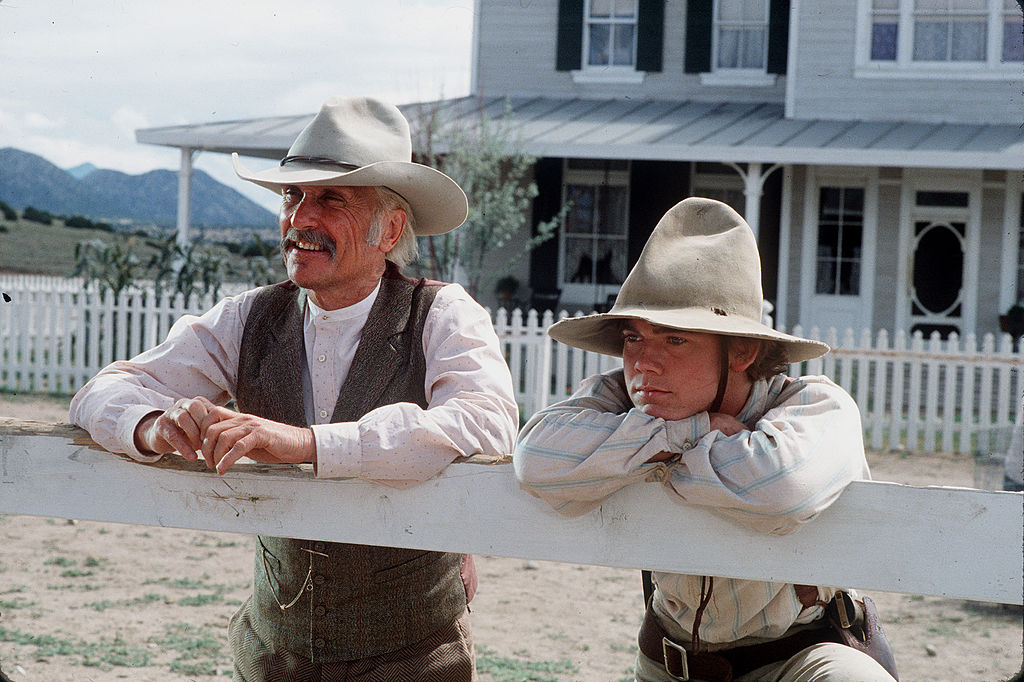
Lengthy, blood-drenched, male-coded: novels like Lonesome Dove have nearly vanished from publishers’ lists. So why is everyone on TikTok reading it? (CBS Photo Archive / Getty Images)
On TikTok, there are dozens and dozens of videos of men and women, many of them young, staring into the camera to talk earnestly about an eight-hundred-page novel that was published forty-one years ago. “I didn’t see the western phase of my life coming, but I’m glad we’re here,” one woman says. “I want to talk about Lonesome Dove. . . . ” And this is what they do. They rhapsodize over characters who “feel like they are a part of your life.” They celebrate the “absolute journey” and the “incredible” prose. “I’ve tried to find a better book than Lonesome Dove and I’ve failed miserably, many times,” a twenty-year-old British man declares.
What makes this all the more remarkable is that the novel’s author, Larry McMurtry, died more than five years ago and isn’t terribly famous. McMurtry, in his lifetime, enjoyed enviable success — Lonesome Dove sold millions of copies and won a Pulitzer Prize, his novels were adapted into popular films and television shows (including the 1989 hit Lonesome Dove miniseries) — but was overshadowed by many of his more prominent literary peers, including Philip Roth, John Updike, and Norman Mailer, even if he was commercially far more successful. Unlike with another contemporary who died not long ago, Joan Didion, there is no cult of McMurtry, no particular mystique for a man who was, in addition to his career as a novelist, a well-regarded antiquarian bookseller. Lonesome Dove, until not long ago, wasn’t even an especially remembered or revered novel of the late twentieth century — no Sophie’s Choice, no Ragtime. And unlike, say, John Steinbeck’s East of Eden, which is enjoying a resurgence because Zoe Kazan’s miniseries was just dropped on Netflix, the Lonesome Dove Netflix adaptation (also by Kazan) was only announced last month and has no official release date. Many of the TikTok videos precede Netflix’s announcement.
Why Lonesome Dove? Why now? And what does it mean for a publishing industry that, with few exceptions, no longer publishes novels — literary fiction, in particular — remotely like it? This is, indeed, a strange time for people who care about books. There is no shortage of reports and opinion pieces, backed up by enough data, to show that America has a literary crisis and technology is eating away at our attention spans. Books still sell — the publishing industry is much more resilient than it looks — and physical bookstores proliferate, but it’s inarguable the literary novel matters much less to mass culture than it once did. Mostly gone, too, are novels like Lonesome Dove: lengthy, blood-drenched, and male-coded. Women, as TikTok has shown, can enjoy Lonesome Dove as much as men, despite a vicious gang rape later in the novel, no doubt thanks to its sharply written female characters like Lorena Wood, Clara Allen, and Elmira Johnson.