The Creativity Con Ate the Middle Class
Thomas Frank on the middle class’s most cherished idea, creativity, and how it became the cover story for the plutocracy that replaced it.
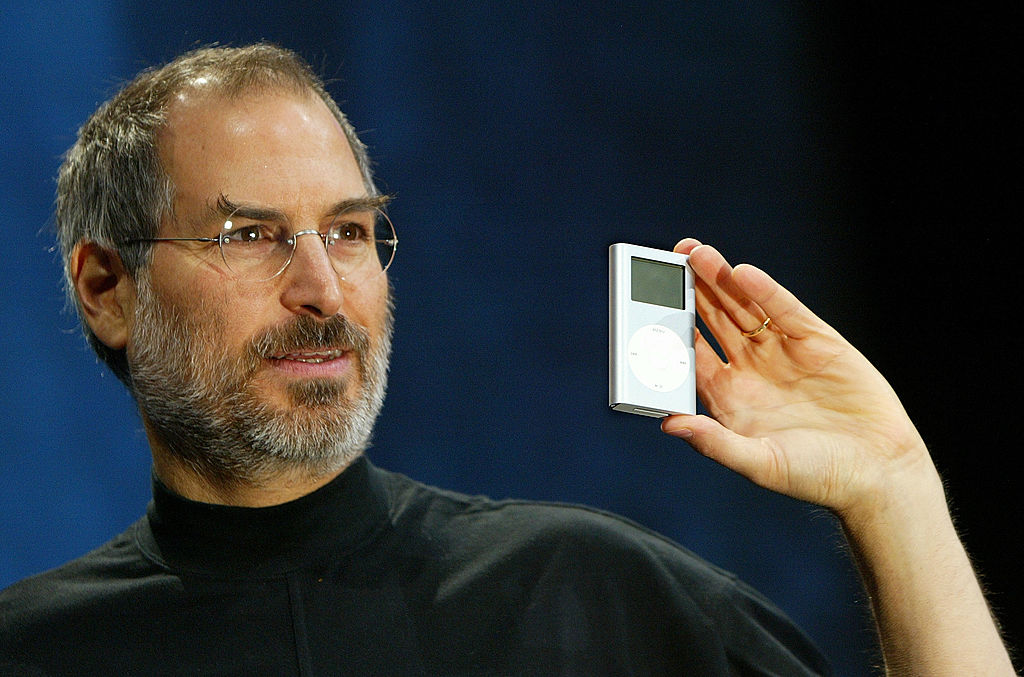
Creativity was the vague but all-American form of brilliance that would give us artistic achievement and spiritual satisfaction at the same time. It was a short walk from there to the cultlike adulation we routinely express for Steve Jobs, innovator and prophet, billionaire son of the old middle class. (Justin Sullivan / Getty Images)
The faiths and hopes of the postwar middle-class society have mostly evaporated today. Our parents’ beliefs in consensus and the goodness of American civilization have joined mainline Protestantism and the benevolent corporation on some nostalgia channel of discarded ideas. One signature ideal of that era has survived, however. Indeed, it thrives; it glows with an incandescence that time cannot dim. I am referring to our ongoing fascination with creativity, the human power that our affluent-society ancestors liked to believe made life worth living and that was, at the same time, responsible for the forward motion of civilization itself.
Every year brings a bumper crop of sunny new literature on this tired old subject. Self-help books tell us how to sharpen our skills and be more creative; Substack writers explore the fascinating details of mental performance; South by Southwest (SXSW) and its many imitators bring together practitioners of this colorful art; governments zone urban areas for innovative pursuits; foundations issue sumptuous prizes to the exceptionally creative; executives from industries like advertising and defense assure us of their dedication to the human imagination; and Silicon Valley sells artificial intelligence as a creativity force multiplier — or, rather, it did before we started to fear AI as a creativity poison that would blunt our mental skills if not obsolete them altogether.
The long-running appeal of creativity to middle-class Americans is easy to understand: it is an explanation for progress that seems to put them in history’s starring role. The reason our country is so successful, it assures us, is the day-to-day innovativeness of millions of ordinary but ingenious people. But the actual, real-world effects of creativity have been anything but healthy for the middle-class society. At every step in the long march to our current state of crushing plutocratic inequality, creativity’s holy name was invoked. The big tax cuts of the 1970s and ’80s were done in order to reinvigorate our creativity. Our leaders deregulated banks, did endless favors for tech and pharma, allowed deindustrialization to rust out the heartland, and ushered us generally into a “postindustrial” era in which working people lost their claim on middle-class prosperity — all in order to augment our powers of creativity and innovation.