A Portrait of Eugene Debs for Today’s Left
Socialism is on the march, and capitalism’s defenders are on the ropes. Shawn Gude’s American Socialist: The Life and Legacy of Eugene V. Debs, a biography of the most prominent socialist agitator in American history, could hardly be more timely.
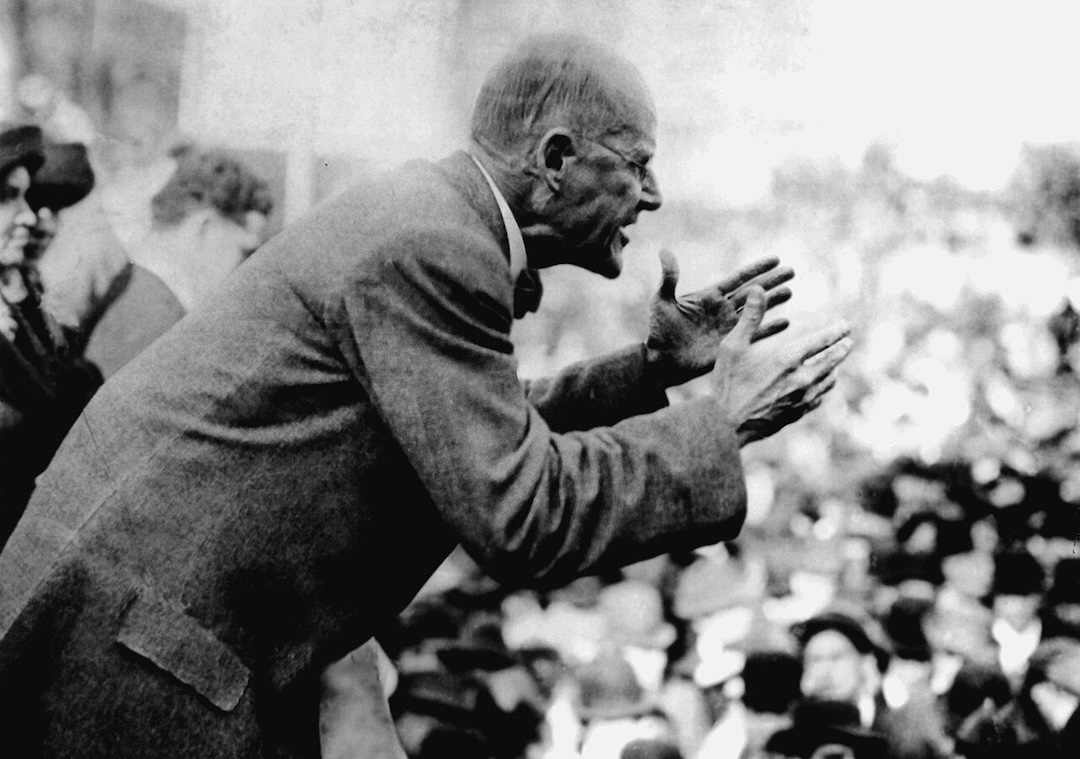
You can tell the capitalist system is in trouble when Americans start talking about Eugene Debs. (CantonRep.com)
You can tell the capitalist system is in trouble when Americans start talking about Eugene Debs. Although the popular image of the great labor and socialist leader has ebbed and flowed since his death a century ago this month, our New Gilded Age has placed him back in the spotlight. Progressive politicians and labor activists, including United Auto Workers President Shawn Fain and union organizer Jaz Brisack, quote his speeches with regularity. Last year, Alexandria Ocasio-Cortez traveled to Debs’s home in Terre Haute, Indiana, to introduce Bernie Sanders, who has long cited the Hoosier firebrand as a political hero. And when Zohran Mamdani kicked off his mayorship of the nation’s largest city, he did so by quoting Debs.
Such tributes signify a wider movement. The worldview that Debs championed is more popular now than at any other point since his death, with polls suggesting that Americans, especially young people and people of color, view socialism more positively than they ever have. The Democratic Socialists of America (DSA), the institutional descendant of Debs’s Socialist Party of America, recently surpassed 120,000 members to become the largest socialist organization in US history, and more than 250 members currently serve in elected positions across forty states.
In that respect, Shawn Gude’s American Socialist: The Life and Legacy of Eugene V. Debs could hardly be more timely. This charmingly penned and prodigiously researched study both refreshes familiar stories and prods readers to reconsider common assumptions. For instance, Gude devotes more pages than previous biographers to black socialism and Debs’s racial thinking, revealing less a stodgy, dogmatic relic of the (very) Old Left than a flawed yet often versatile rebel who actively and continuously widened his personal understanding of solidarity. In doing so, American Socialist complicates the erroneous notion of Debs as a rigid and unchanging determinist whose outlook failed to reckon with the complexities of race and class.