Britain’s Health Crisis Is Becoming a Political Crisis
In Britain, healthy life expectancies between poor and rich regions can vary by as many as 20 years. Not only is this a social crisis; it is undermining trust in government and fueling the far right’s cynical politics.
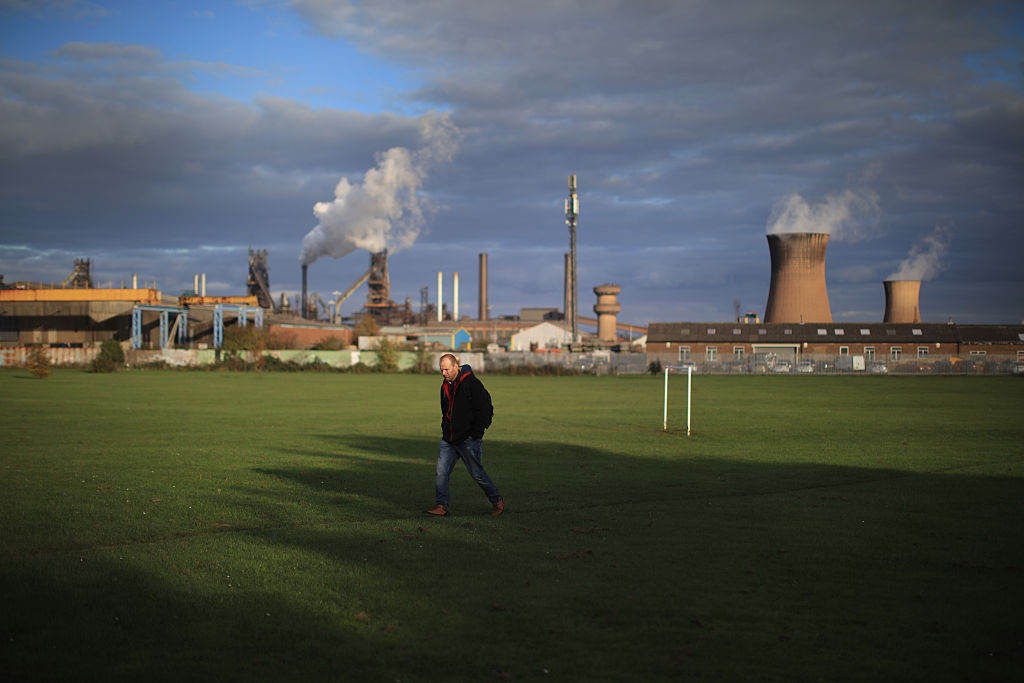
Place in the UK subjected to deindustrialization, poverty, and economic insecurity have carried a disproportionate burden of illness for decades. (Christopher Furlong / Getty Images)
Britain is becoming a sicker country. A country in which millions of people can expect to spend an increasing share of their lives in poor health is not just a recipe for a social crisis but a political one too.
The latest figures are extraordinary. Healthy life expectancy in the United Kingdom has fallen to its lowest level since the present Office for National Statistics series began in 2011 to 2013. A boy born today can expect around 60.7 years of good health; for a girl, the figure is 60.9. Yet even these averages conceal the more disturbing story. In the most deprived areas of England, healthy life expectancy is just 49.8 years for men and 48.2 for women. In the least deprived areas, it reaches 69.2 and 68.5 years, respectively. Measured across the deprivation gradient, the gap is 19.3 years for men and 20.1 for women.
Increasingly, Britain has become two countries separated by twenty years of healthy life.