When Belgian University Cleaners Swept Out Their Boss
Fifty years ago, women cleaners at a Belgian university went on strike, then set up their own cooperative called the Liberated Broom. A new film shows how they kicked out the boss, starting an experiment in self-management that lasted for 14 years.
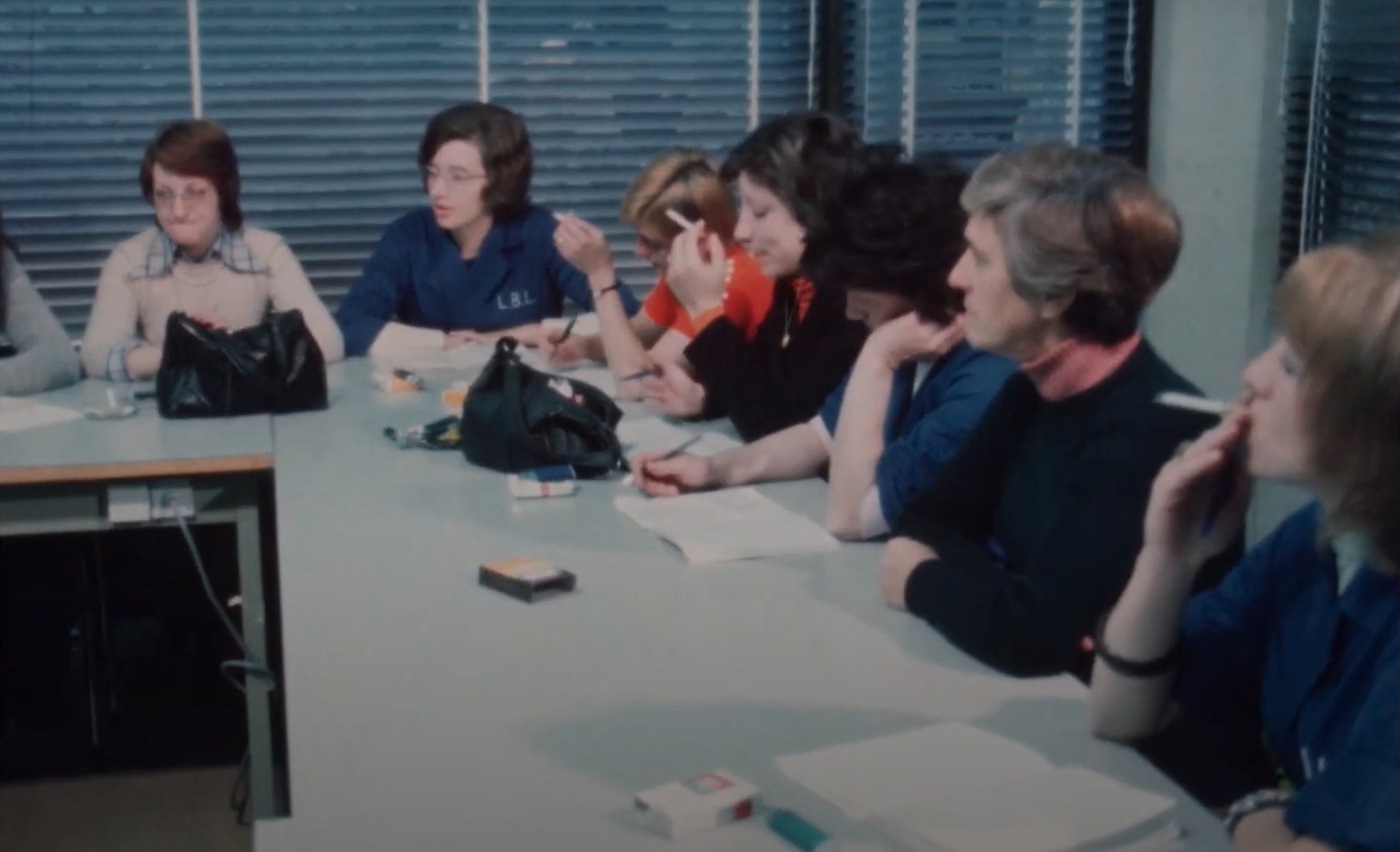
University cleaners hold a meeting in a still from Coline Grando’s documentary Le balai libéré. (Doclisboa / YouTube)
In 1975, over thirty women cleaners at Belgium’s newly created Catholic University of Louvain-la-Neuve (UCL) went on a three-week strike, “fired” their boss, and decided to launch a self-managed cooperative instead. Their experiment in radical economic democracy — which they named “Le Balai Libéré” (the Liberated Broom) — allowed them to triple their salaries, grow the cooperative to over a hundred workers, and demonstrate that workers can manage their own affairs. After fourteen successful years, only the forcing through of an open tendering system — letting private competitors undercut them — abruptly ended their project.
The story of the Liberated Broom was virtually forgotten by the time French documentary filmmaker Coline Grando began her studies at the university in the late 2010s. But fortunately enough, she learned about it from a friend — and quickly decided to start recovering its memory. After five years of sifting through archives, door-knocking campaigns to find those involved in the cooperative, and conversations with the cleaners working at the university today, Grando released her documentary film Le balai libéré in 2023.
In an interview for Jacobin, Grando told Daniel Kopp about her film, the successes and challenges of self-management, and whether we could create a similar political imagination today.