James Lawson Was the Civil Rights Movement’s Drill Sergeant
The civil rights movement’s commitment to nonviolence wasn’t just moral but also strategic, based on a calculation of how the movement could best exert power. No practitioner of that nonviolence was more effective and disciplined than Rev. James Lawson.
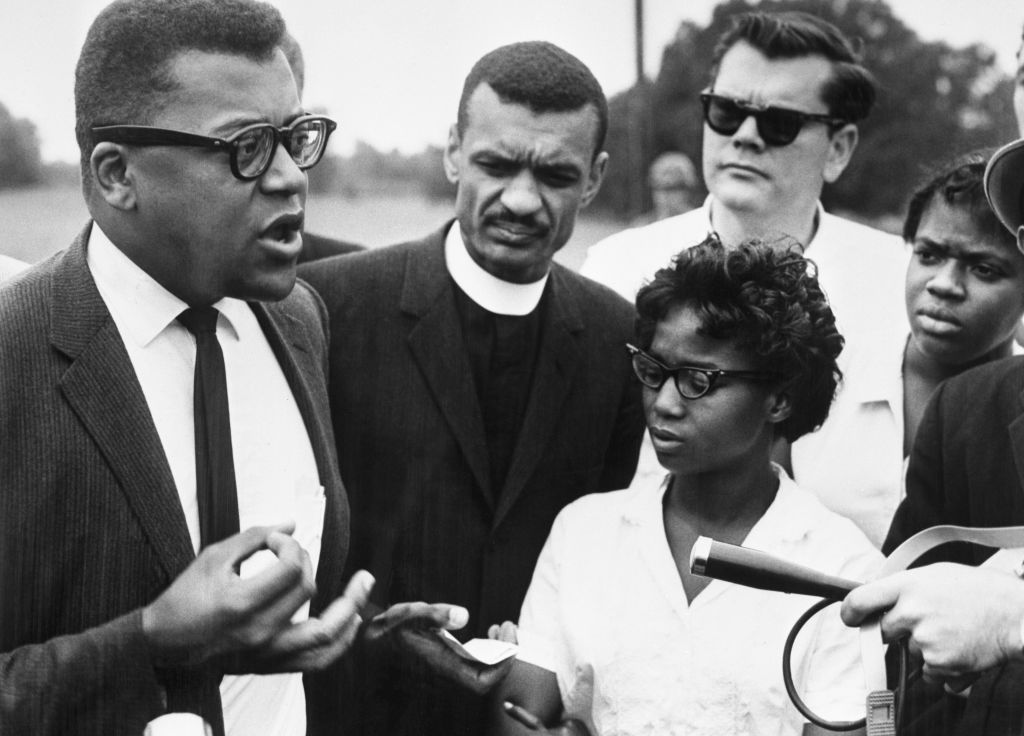
Legendary civil rights organizer James Lawson took fresh movement recruits, determined to destroy systems of oppression, and forged them into disciplined militants ready to face down their oppressors, whatever the cost — up to and including death. (Bettmann Archive / Getty Images)
Reverend James Lawson Jr did not attend the 1963 March on Washington for Jobs and Freedom. Most of the movement’s boldfaced names — the “Big Six” civil rights leaders, labor leaders and religious figures, celebrities and entertainers — were there, in front of a quarter million people up on the Lincoln Memorial’s marble steps. But Lawson was not. He was hundreds of miles away from the nation’s capital, organizing and training people at a regional gathering of Methodist student leaders in Upstate New York.
Lawson and his colleagues paused the proceedings so that anyone who wanted to board a bus to Washington early that morning could do so. “I had planned to go,” recalls Lawson in his landmark memoir, Nonviolent, “but we didn’t have enough room for every student who wanted to attend. I decided to give up my seat on the bus so that a student could go instead.”
Lawson deserves to be remembered as one of the black freedom movement’s greatest leaders. Those who knew and worked with him, as well as anyone who has delved beneath the surface of the movement’s history, understand just how important a figure he was. No less of an authority than Martin Luther King Jr himself considered Lawson “the leading theorist and strategist of nonviolence in the world.”