Socialists Organized in the 1950s Civil Rights Movement
In 1950s America, the Cold War was raging, but socialists were playing key roles in the early civil rights movement. We can’t afford to let that radical history be sanitized.
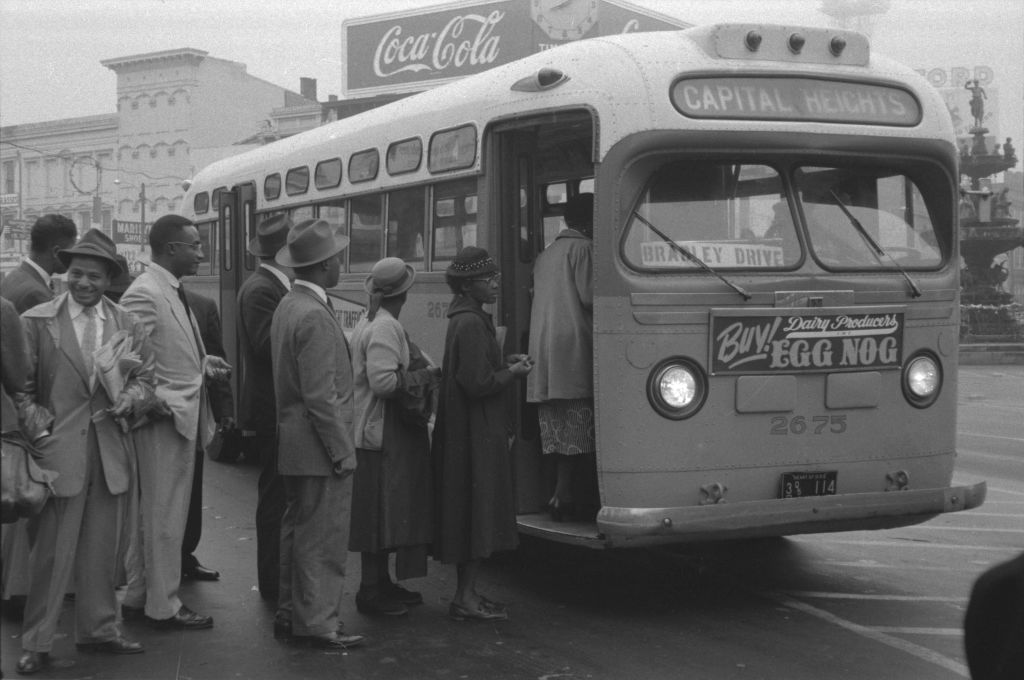
African Americans boarding an integrated bus, following the Supreme Court ruling ending the Montgomery bus boycott in 1956. The boycott inspired many US socialists to throw themselves wholeheartedly into the civil rights struggle. (Don Cravens / Getty Images)
The Montgomery bus boycott of 1955–56 opened a new phase in the centuries-long struggle for black freedom and inspired a rebirth of activism and militancy in the United States. Pioneering mass direct action against segregated public accommodations, Montgomery was the forerunner of movement struggles of the early 1960s.
The bus boycott was won by the largest black mobilization since the March on Washington of 1941. Montgomery’s entire black community was organized through the churches, which were packed by protest meetings of thousands every night, and through the construction of alternative transportation — a highly effective carpool system that shuttled over 20,000 black workers to and from their jobs every day for a year. It was a brilliant portrait of the latent genius, determination, and self-organizing capacity unleashed when the working class goes into motion.
The bus boycott created new systems of struggle, strategies, tactics, organizations, leaders, and cadres. The bravery and audacity of ordinary working people was symbolized by Rosa Parks, a seamstress who touched off the boycott by fighting for her rights with unyielding dignity and courage. The mass character and militancy of the black liberation movement made it the model, the dynamic motor force, that influenced all the subsequent movements of the 1960s.