What Everyone Should Know About How Capital Works
Mainstream economics cannot accept the concept of contradiction that is foundational for Karl Marx’s analysis of capitalism. David Harvey explains why we need the Marxist perspective if we want to make sense of capital’s latest mutations in the age of AI.
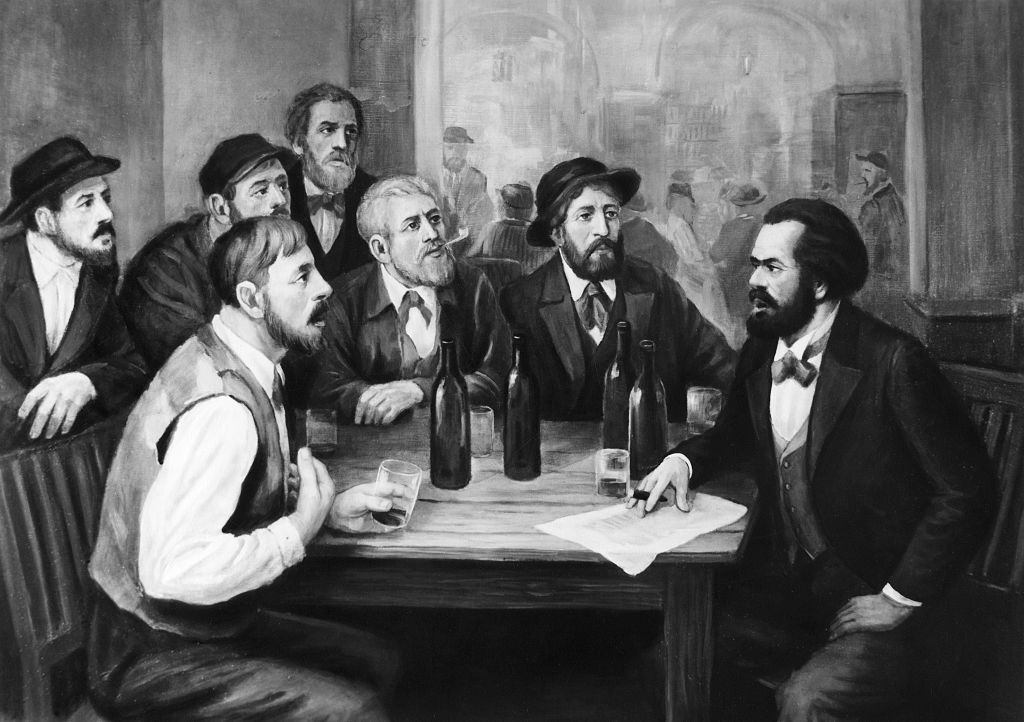
David Harvey: “Both Franklin Roosevelt and John Maynard Keynes explicitly recognized that their aim was to save capital from the capitalists. Being averse to Marx’s method, they could not, however, figure out how to do so.” (Ullstein Bild / Getty Images)
In Volume 1 of Capital, Karl Marx ventures the opinion that “classical political economy stumbles approximately onto the true state of affairs, but without consciously formulating it. It is unable to do this as long as it stays within its bourgeois skin.”
Marx and the bourgeois economists confront the same material realities, but they interpret, explain, and use them very differently. For example, both David Ricardo (the leading bourgeois figure in nineteenth-century political economy) and Marx considered capitalism to be a passing form of economic organization but for totally different reasons.
Both believed the profit rate on capital would ultimately fall to zero. Ricardo believed wages would have to rise to pay for the increasing cost of food grown on increasingly scarce and less fertile land. Rents would also rise because cultivable land would become increasingly scarce. Hence, rising wages and rising rents would squeeze profits until they fell to zero.
Marx proposes a very different explanation. Individual capitalists operating under the coercive laws of competition adopt technologies that increase labor productivity. The need for labor power is thereby reduced. But labor power is the source of all value and surplus value (profit). In the absence of any countervailing forces, the rate of surplus value (profit) culled from the exploitation of labor power tends to fall.
Ricardo’s view, articulated in the 1820s looked ridiculous by the 1870s, when global markets and the global production of food grains had moved onto the low cost, high-yielding lands of North and South America and Eastern Europe. Marx’s explanation, on the other hand, holds good, though with, as we shall see, certain caveats.
Historical Materialism
The aim of my book The Story of Capital is to consciously formulate what Marx discovered in the course of his political economic investigations. “Marx was unable to ‘conserve’ Ricardo,” as Samir Amin remarks: “He could do no more than to show the limitations of ‘economic science,’ so as to call for the problems being posed in a different way, in a different language, replacing the questions drawn from the economic field by other questions, drawn from another broader field, that of historical materialism.”
The contextual conditions for capital accumulation have, of course, changed over time, and political-economic theory has had to adapt. For example, competition over technological advantage for military hardware, communications, and logistics has surged in recent years and derives from interstate rather than from intercapitalist competition (the internet was developed by the military, for example). `
It is also the case that Marx never completed his project. In the Grundrisse, Marx outlined a whole list of topics to be taken up such as “capital as credit; capital as share capital; capital as money market . . . state and bourgeois society; taxes, or the existence of the unproductive classes; the state debt; population; the state externally: colonies; external trade.” To venture into these fields, as happens in The Story of Capital, in no way dilutes, diminishes, or dishonors the work that Marx did complete. The advancement and eventual completion of his project is a worthy objective.
But it is still true to this day that the field of economics needs to be liberated from its bourgeois skin. This was demonstrated all too clearly in November 2008, at the height of the so-called global financial crisis. Queen Elizabeth visited the London School of Economics. In the course of this visit, she asked the assembled economists why they had not seen the financial crisis coming.
Not having any immediate answers, the economists consulted, ran seminars, and gathered data. Six months later, they sent a collective letter to Her Majesty. They explained that failure to recognize systemic risks lay at the root of their failings. Neglecting systemic risks appears particularly egregious. Most of us would not elect to board an airplane whose design had not been checked for systemic risks.
The Story of Capital seeks to interrogate the internal malfunctions and systemic risks within capital’s evolving and ever-changing mode of production. But it does so with the aid of rather special theoretical tools drawn from Marx’s work on the political economy of capital.
Contradictions of Capital
While Marx famously proclaimed that our aim should not only be to understand the world but to change it, he spent an enormous amount of time and effort on understanding that which he sought to change. His practice over many volumes and unpublished notebooks suggests that he believed it vital to understand capital’s evolution in order to change it.
There is, however, a certain difficulty in appealing to Marx’s framework. His “peculiar language and crabbed method of argument,” as Joan Robinson, a close colleague of John Maynard Keynes, complained in the 1940s, makes it necessary to translate much of what Marx has to say into intelligible German and an adequate English translation. But as Robinson also said, his works are all too often “treated in academic circles with contemptuous silence broken only by an occasional mocking footnote.”
To say that this is still so today, particularly in the United States, would be an understatement. In The Story of Capital, I struggle to overcome such prejudices. The result, I hope, is a far more accurate and penetrating account of the political economy of capital than that to be found in bourgeois textbooks.
“The exact development of the concept of capital is necessary,” Marx wrote in the Grundrisse,
since it is the fundamental concept of modern economics, just as capital itself . . . is the foundation of bourgeois society. The sharp formulation of the basic presuppositions of the [capital] relation must bring out all the contradictions of bourgeois production, as well as the boundary where it drives beyond itself.
Notice Marx’s appeal here to the term “contradiction.” Capital contains contradictions, he writes, and “our purpose . . . is to develop them fully. But Ricardo does not develop them . . . rather he brushes them off.” The concept of contradiction is not to be found in bourgeois political economy (classical and neoclassical, Keynesian or marginalist.) But it is foundational for Marx.
Micro and Macro
So why is the concept of contradiction so important? Bourgeois political economy of any stripe is divided into microeconomics (the micro theory of the firm) and macroeconomics (the theory of the laws of motion of capital governing economic behavior of national/global economies). Despite many attempts, it has proven impossible to derive macroeconomic principles from micro theory, or vice versa. The two theoretical domains are forever separate in bourgeois economics.
For Marx, however, the contradiction between micro and macro is the foundation for theory construction. Individual capitalists (the micro level) driven by the coercive laws of competition (a universal macro force), adopt technologies that collectively increase the productivity of labor (a result with macro consequences).
The more efficient producers with the superior technologies drive out their rivals through competition. Rising labor productivity throughout the macro economy diminishes the number of laborers required. So, as we have seen, the aggregate profit rate falls.
Individual capitalists working to maximize the rate of return on their capital, produce a macro result less and less favorable for further capital accumulation. Who, then, is going to save capital as a whole from the rational but destructive behavior of myriad individual capitalists?
This is the dynamic contradiction that runs throughout all of Marx’s work. Public policy institutions — the capitalist state, the varieties of bourgeois economics in the universities, the policy think tanks, and key institutions such as the central banks, the International Monetary Fund, and the Bank of International Settlements — are collectively supposed to manage this contradiction.
But as we shall see, their bourgeois theoretical frameworks are for the most part inadequate to this task. They frequently make things much worse (the imposition of a politics of austerity on ailing economies by policymakers has a long history of doing just that). Both Franklin Delano Roosevelt and John Maynard Keynes explicitly recognized that their aim was to save capital from the capitalists. Being averse to Marx’s method, they could not, however, figure out how to do so.
Particular and Universal
Marx’s method, grounded in historical materialism, is both dialectical and relational. This is foreign to the bourgeois method, which rests on a mechanical scientific materialism.
For Marx, no economic concept stands alone. Each reflects relations and positionalities within the totality of capital circulation. This totality is an organic whole, an ecosystemic construction based in historical materialism as Amin advocates, rather than a product of the mechanical materialism and positivism of Ricardian economics.
The power of Marx’s method can be seen in Capital, which begins by isolating the commodity as the basic economic concept. But the commodity leads a double life. It has both a use value and an exchange value. This dualism is antagonistic and contradictory. If you use the commodity, you cannot sell it, and if you sell it you cannot use it.
But all commodities are in principle exchangeable, so they must have some property in common. They are all, says Marx, directly or indirectly products of creative human labor. As such, they are all commensurable with each other as values defined as the socially necessary labor time congealed in all commodities.
But the labor time congealed in the commodity is of two sorts: concrete (the actual time taken to produce a particular commodity in a particular place and time) and abstract (the time on average that it takes to produce the same commodity over all places and times). The particular and the universal are conjoined in the act of market exchange.
If it takes on average ten hours to produce a widget, then that is what I will get when I exchange it in the market, no matter how many hours I actually take to produce it. The meaning of each concept is given through its interrelation with all the others. If one concept changes, then all of them change. The chain of contradictions knits the individual moments together within the totality.
Value Theory
Value, defined as “socially necessary labor time,” is positioned early in this unfolding matrix of social relations, but it is subject to continuous redefinition as the social necessity that Marx superimposes upon the Ricardian labor theory of value becomes more explicit with capital’s evolution. How to revamp the value theory to account for the huge present-day bonuses larded out in the IPO of the Musk empire parallels Marx’s thinking on the status of the value theory when finance, credit, and the bankers enter on the scene.
Having for the umpteenth time excoriated the Ricardian adoption of Say’s law (which states that supply creates its own demand, thus making generalized overproduction impossible), Marx goes on to assert that in fact overproduction (socially unnecessary labor time or anti-value) is “the foundation and fundamental contradiction of developed capital.” Value is not a solid and unchanging foundation for Marx’s political economy but a category whose meaning evolves with the system it regulates:
The contradiction between production and realization — of which capital, by its concept, is the unity — has to be grasped more intrinsically than merely as the indifferent, seemingly reciprocally independent appearance of the individual moments of the process, or rather of the totality of processes.
The capitalists themselves have a limited answer to the problem of falling profits. They can change scale and switch from small-scale, localized, low-labor-productivity artisanal production (typical of the eighteenth century) to large-scale mass factory production employing much more labor and producing more and more commodities.
This produces yet another contradiction. The chapter in Volume 3 of Capital ostensibly dealing with the falling rate of profit begins by examining the tendency of the profit rate to fall but ends up examining the tendency to produce a “plethora” (overaccumulation) of capital in commodity form, along with a constant expansion of the world market and a financialization based on the rise of mass production, which requires mass consumption.
The resultant contradiction between falling rate and rising mass moves center stage in shaping the contradictions of capital. “How, then,” Marx asks, “should we present this double-edged law of a decline in the rate of profit coupled with a simultaneous increase in the absolute mass of profit arising from the same causes?” It is from this contradiction that all manner of other contradictions, such as those embodied in the circulations of fixed and interest-bearing capital, flow. These are the contradictions that unfold in the development of the argument in The Story of Capital.
Totality
Problems have solutions. Contradictions do not. They are permanent points of tension that can only be managed within the system in which they are embedded. They only go away when the system as a whole disappears.
There is nothing strange or unusual about this mode of theorizing. I am, for example, constantly having to manage the contradictions between my professional life requirements and my personal desires and responsibilities. We all of us know how such a tension works through our daily experience.
Much of the time the contradictions remain latent and quiescent. But if my university is taken over by authoritarians (as was the Central European University in Hungary under Viktor Orbán), then the contradiction between professional prospects and the desire to live a comfortable life with family and friends becomes the locus of a personal crisis. It cannot be “brushed off” in the manner of Ricardo.
On the macro level, this means that wage labor cannot be abolished without abolishing capital (and vice versa). On the other hand, treating contradictions as if they are problems that have solutions more often than not produces catastrophic errors of management.
But there is another nuance that needs to be folded into Marx’s alternative account of political economy. And that is the perspective of the totality. Martin Jay has bequeathed us a voluminous study of the history of this concept in his book Marxism and Totality. To simplify, totality refers to a condition in which no single part of society, either economic, political, cultural, or ideological, can be understood in isolation.
Each part derives its meaning, function, and dynamics from its relationship to the whole system. The totality is dynamic. Social relations change over time. The internal relations within the totality are structured as distinctive “moments.” For example, the circulation of capital is constituted by the circular movements of the different moments of money, commodities, labor processes, market exchange, consumption, etc.
To understand why society works the way it does, we need to understand how all these “moments” relate and interact. Marx sets up such a system in the Grundrisse, albeit in rather more opaque terms:
While in the completed bourgeois system every economic relation presupposes every other in its bourgeois economic form, and everything posited is thus also a presupposition, this is the case with every organic system. This organic system itself, as a totality, has its presuppositions, and its development to its totality consists precisely in subordinating all elements of society to itself, or in creating out of it the organs [such as a central bank] which it still lacks. This is historically how it becomes a totality. The process of becoming this totality forms a moment of its process, of its development.
As Georg Lukács points out in History and Class Consciousness: “It is not the primacy of economic motives in historical explanation that constitutes the decisive difference between Marxism and bourgeois thought, but the point of view of totality.” Bourgeois thought cannot grasp totality because doing so “would expose the historical contingency of capital itself.”
The Rule of Abstractions
In the Grundrisse, Marx frequently appeals to this concept of totality. Note well that the totality that Marx is embracing is organic and ecosystemic (a plant that changes and grows) and not mechanical (a machine that runs). The totality can be concrete and real (as in the case of a human body) or an idealist abstraction (as in the case of a mode of production).
In the latter case, it is superimposed on the concrete and abstract aspects of the commodity as a principle of order:
The method of rising from the abstract to the concrete . . . reproduces it as the concrete in the mind. But this is by no means the process by which the concrete itself comes into being. For example, the simplest economic category, say e.g. exchange value, presupposes population, moreover a population producing in specific relations; as well as a certain kind of family, or commune or state, etc. It can never exist other than as an abstract one-sided relation within an already given, concrete, living whole.
As a category, by contrast, exchange value leads an antediluvian existence . . . for which conceptual thinking is the real human being, and for which the conceptual world as such is thus the only reality, the movement of the categories appears as the real act of production — which only, unfortunately, receives a jolt from the outside — whose product is the world; and — but this is again a tautology — this is correct in so far as the concrete totality is a totality of thoughts, concrete in thought, in fact a product of thinking and comprehending; but not in any way a product of the concept which thinks and generates itself outside of or above observation and conception; a product, rather, of the working-up of observation and conception into concepts.
The totality as it appears in the head, as a totality of thoughts, is a product of a thinking head, which appropriates the world in the only way it can. . . . The real subject retains its autonomous existence outside the head just as before; namely as long as the head’s conduct is merely speculative, merely theoretical. Hence in the theoretical method, too, the subject, society, must always be kept in mind as the presupposition.
As the market exchange system becomes more general and systematized, so participants acquire “objective dependency relations . . . in antithesis to those of personal dependence . . . that earlier prevailed.” “Individuals are now ruled by abstractions [e.g., the interest rate and the wage rate] whereas earlier they depended on one another.”
To what degree, then, are we confronted by abstractions forged through market processes rather than exchange relations with individual persons? For Marx, the abstraction is “nothing more than the theoretical expression of those material relations which are their lord and master”:
Philosophers have determined the reign of ideas to be the peculiarity of the new age and have identified the creation of free individuality with the ideological overthrow of this reign. This error was all the more easily committed, from the ideological stand-point, as this reign . . . appears within the consciousness of individuals as the reign of ideas . . . the belief in the permanence of these ideas, i.e. of these objective relations of dependency, is of course consolidated, nourished and inculcated by the ruling classes by all means available.
This was exactly what Friedrich Hayek, Milton Friedman, Keith Joseph, the Institute of Economic Affairs, and Margaret Thatcher (backed by innumerable think tanks funded by the billionaire class) so expertly organized and accomplished in the 1980s turn to the ruling ideas of neoliberalism. “There is no alternative [TINA],” Thatcher declared, and many accepted this slogan as gospel truth.
What Marx is doing here is showing how historical material experiences are transposed into ideological categories and presuppositions open to argumentation. In these passages, Marx is showing how the material conditions of social and economic life get transposed into ideological conflict.
Dialectical Thinking
Ideological struggles over these ruling ideas thus play a key hegemonic role in the dominance of capital. One of the aims of The Story of Capital is to bring back dialectical thinking, dialectical methods, and dialectical sensitivities into the forefront of an attempt to revitalize Marxist political economy. Marx clearly took much of his thinking on dialectics from G. W. F. Hegel but modified it into a more malleable and adaptable system as he turned to historical materialism as his lodestar.
In his studies of capital defined as “value in motion” and in his emphasis upon processes, he put into practice a process-based ecosystemic dialectics later taken up fortuitously in the works of Alfred North Whitehead in Process and Reality (1936) and elaborated upon by Richard Levins and Richard Lewontin in The Dialectical Biologist (1985) and by Bertell Ollman in his Dialectical Investigations (1993). I sought to summarize these ideas in my book Justice, Nature and the Geography of Difference.
The conclusion we reach is that capital has to be understood and represented dialectically as an ecosystemic (organic) totality and as an evolving story. It has a beginning and will certainly have an end, though at this point in its history, much depends upon the collective efforts (both conscious and unconscious) that might lead us to meaningful and in some respects destructive changes in our long-run future.
There are, however, pointers to this future. Thomas Piketty argues that if the rate of return on capital exceeds the rate of capital’s growth, then the end result is ever-increasing and spiraling inequality in the distribution of wealth and power. The top 1 percent of money earners now increasingly dominate the social order and monopolize the distribution of global wealth and power.
But there are other aggregate relations that must give us pause. If the average rate of interest of the dominant global reserve currency is persistently lower than the rate of growth, then capital can continue to expand, albeit at the price of taking on burgeoning, long-term Ponzi-style debts with ever-accelerating turnover times and increasingly stressful problems of absorbing more and more surplus capital (perpetual overaccumulation or what Marx called the continuous production of “a plethora of capital”) that will lead to increasing extractivism and deepening environmental degradation.
When the rate of interest of the global reserve currency is persistently higher than the rate of growth, then the result will likely be systemic asset deflation (of the sort experienced in Japan since 1990), material austerity, and investments in negative value (destructive military expenditures, wars, and building bridges to nowhere). It is not hard to see the traces of these contradictory futures already etched into our daily lives.
Monopolies dominate us, destructive wars engulf us, technological innovations render labor ever more redundant, turnover times continue to accelerate, and the state-finance nexus congeals around a regulatory regime favorable to the billionaire class: which leaves everyone else trying to figure out how to survive, let alone wage class struggle against the embedded abstractions of capital.
Crises and Spasms
The dystopian view that artificial intelligence itself tentatively predicts is of a small faction of the global population dominated by an elite techno-managerial class/caste, trained in a few supe-elite educational institutions (Harvard and the Massachusetts Institute of Technology, Beijing University and the Chinese Academy of Science, Oxbridge in Britain, the Grands Écoles in Paris, etc.), living in astonishing affluence in a few key metropolitan centers, insulated against the impoverished discontents of everyone else living on the pittance of a parsimonious universal basic income, financed and disciplined by a system of debt peonage, administered and controlled by an authoritarian surveillance state.
Ironically, the academic discipline most threatened by the advent of AI is formal scientific neoclassical economics, while disciplines rooted in particularities (like geography and anthropology), particularly when more clearly synthesized within the framework of historical materialist methods, will prove far more resistant, if not immune. Only that wing of conventional economics that accepts, with the economist Jürg Niehans, that monetary policy is an art and not a science will survive (presumably anchored in vulnerable institutions like the Federal Reserve).
Enrollments in university economics classes are already falling. The prospects for many other forms of skill and knowledge (e.g., the law) are likewise bleak. All the more reason to embrace a form of political economy that is AI-resistant and focuses on what Marx called “the growing incompatibility between the productive development of society and its hitherto existing relations of production,” all expressed
in bitter contradictions, crises, spasms. The violent destruction of capital not by relations external to it, but rather as a condition of its self-preservation, is the most striking form in which advice is given it to be gone and to give room to a higher state of social production.
But conventional economics must first be freed from its constraining bourgeois skin in favor of the far more inventive and flexible historical materialism of the sort that Marx so cleverly pioneered.