The New Cold War Will Be Powered by AI

When the White House reportedly pressed Anthropic to pull a new model over the weekend, it looked like a clash between Washington and Silicon Valley. Instead, the episode revealed a growing consensus: AI is now a tool for great power competition.
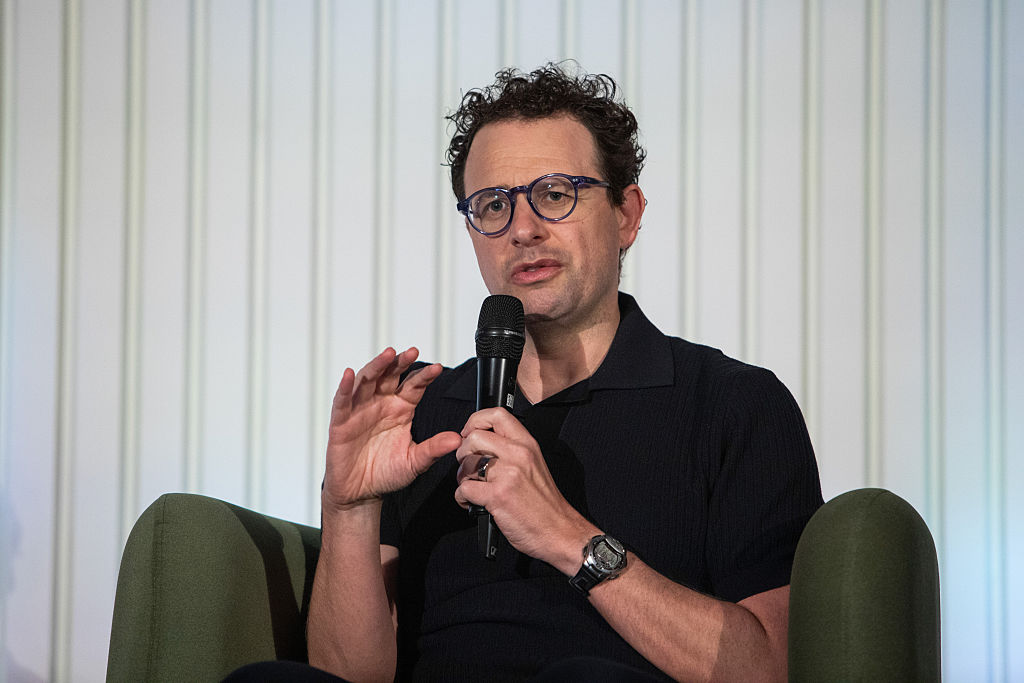
Anthropic CEO Dario Amodei speaks at a company  event in Bengaluru, India.

Dario Amodei, cofounder and chief executive officer of Anthropic, during the company’s Builder Summit in Bengaluru, India, on February 16, 2025. (Samyukta Lakshmi / Bloomberg via Getty Images)


Over the weekend, the White House made what appeared to many to be a shocking move: it banned the foreign use of Anthropic’s latest AI models, including by Anthropic’s own noncitizen employees. The move has divided commentators. Those sympathetic to Anthropic, which has withdrawn consumer access to the models in response, have claimed that the White House is retaliating against the company for the restrictions it previously placed on the Pentagon around the use of its large language models for military purposes. Critics have replied that the company is simply getting what it asked for, given its recent pleas for aggressive government regulation of the industry.

The restrictions will limit the use of Mythos and Fable, two of the company’s most advanced models, to US citizens, on grounds of national security. Ironically, Anthropic has long advocated for the US government to see its trade and industrial policy as national security issues. Despite the appearance of conflict, the White House and Anthropic are less divided than they may seem.

A Bipartisan Project

Anthropic, along with affiliated individuals and groups, has long lobbied Washington (with great success) for strict export controls to keep the technology out of the hands of national rivals.

Since at least the end of the first Trump administration, a chorus of powerful new voices in Washington has lobbied the federal government to restrict AI usage and development among countries the United States perceives as its enemies. These include, above all, China but also weaker nations such as Iran, Cuba, and Russia. The weapon of choice for imposing these restrictions has been export control policies designed to cripple the development of AI in these countries and to prevent US technology from being used abroad. One of the main organizations responsible for this hawkish line on tech has been the Center for Security and Emerging Technologies (CSET), a think tank founded in 2019 and inspired by effective altruism, a technocratic theory seeking to alleviate social suffering without redistributing wealth or calling for more democracy.

These lobbying efforts have proven very successful. Starting under the Biden administration, CSET-affiliated figures have pushed for the implementation of federal export control policies to align with the above goals and, more importantly, gain influence within Washington’s bureaucratic power structures, above all the US Department of Commerce. Much of this network of influence survived intact through the transition from Donald Trump to Joe Biden and back again, although China’s threat to suspend shipments of rare earth minerals essential to technology and weapons production in January of last year forced these hawks to soften their stance. Despite this slight climbdown, Congress has moved to cement export restrictions on many goods and technologies the United States deems to be of strategic importance.

Lobbyists in favor of weaponizing the United States’ tech industry have consistently presented their work as part of a bipartisan project. Just last month, a New York Times op-ed coauthored by former CSET alum and Biden staffer Ben Buchanan argued that Democrats and Republicans should be united in “strengthening and enforcing export restrictions on advanced A.I. chips . . . and cracking down on Chinese smuggling.” The result is a cross-partisan platform with considerable sway over federal policy.

Core figures in this lobby effort have been closely affiliated with Anthropic. RAND CEO Jason Matheny, for example, who founded CSET and led much of the early lobbying effort around AI export controls, was a trustee on Anthropic’s Long-Term Benefit Trust until December 2023. Ben Buchanan, adviser to Anthropic, has been pivotal in developing this new constellation of export controls. Anthropic CEO Dario Amodei has openly contributed to the lobbying campaign. In January last year he coauthored a Wall Street Journal op-ed urging the Trump administration to strengthen its export controls to cripple Chinese AI.

CSET and Anthropic are also linked by financial ties. Many effective altruist investors including Facebook cofounder Dustin Moskovitz, disgraced FTX head Sam Bankman-Fried, and the effective altruist financing hub Coefficient Giving (formerly Open Philanthropy), have extensive personal connections to Anthropic. It would not be misleading, indeed, to refer to Anthropic as the corporate arm of a collective movement whose institutional representative in Washington is CSET, ultimately bankrolled by a wealthy circle of ideologically committed donors in the tech sector.

These close ties should come as no shock. Anthropic began life amid an exodus of devoted partisans of AI safety from OpenAI, after it had become clear that the company was willing to break with its founding stated commitments to responsible development of AI along the lines envisioned by AI safety advocates. Ever since, Anthropic has presented its ambitions in moral terms drawn from the lexicon of effective altruism, criticizing competitors for failing to “align” a vision of future artificial general intelligence (AGI) with “human values.” Those ambitions have persisted (with heavy caveats) alongside the company’s rapid emergence as an industry leader.

These regulations have influenced, or given license to, restrictive policies of Anthropic’s own. The tech company has discriminated on the basis of nationality, refusing in some instances to work with people from Belarus, China, Cuba, Iran, Myanmar, North Korea, Russia, Sudan, Syria, Crimea, or the so-called Donetsk People’s Republic and Luhansk People’s Republic. From this perspective, the recent punitive White House export controls levied against Anthropic are best seen as intensifications of policy strategies long pursued by Anthropic itself.

AI-Powered Neoconservatism

Anthropic CEO Dario Amodei has been one of the clearest defenders of the broad contours of this fusion of the new tech sector and America’s national security state. In his remarks on “peace and governance” from “Machines of Loving Grace,” an October 2024 essay describing the positive potentials of powerful AI, after describing his hopes for an AI miracle solution to the world’s health and development woes, he proposes a bloc of “democratic” nations mixing AI-enabled aid enticements and military intimidation to extract desired political reforms abroad.

My current guess at the best way to [prevent AI-powered authoritarianism] is via an “entente strategy” in which a coalition of democracies seeks to gain a clear advantage (even just a temporary one) on powerful AI by securing its supply chain . . . . This coalition would on one hand use AI to achieve robust military superiority (the stick) while at the same time offering to distribute the benefits of powerful AI (the carrot) to a wider and wider group of countries in exchange for supporting the coalition’s strategy to promote democracy.

Context makes clear that he views the United States as the prime mover in this coalition. He explicitly compares it to the American “Atoms for Peace” initiative, whose largest geopolitical legacy may be the role it played in helping to develop Israel’s nuclear program. (Incidentally, the Anti-Defamation League has ranked Claude as the AI most opposed to anti-Zionism.)

Anthropic, partly inspired by this hawkish outlook, has been hostile to what it calls China’s “distillation” of its AI, by which they mean training a less capable large language model on the outputs of a stronger one. It is not merely that they see these Chinese firms as national security risks, or even as market competitors stealing their intellectual property. Losing the “democratic” monopoly on advanced AI would mean diminished leverage for the entente’s “carrot,” undermining the United States’ ability to offer its rivals incentives to comply with its aims. As a recent white paper observes, China’s relatively open product licenses make distillation more likely.

In recent weeks, Anthropic has continued to assert its commitment to AI safety along these nationalist lines. In his latest essay, Amodei states that “[d]emocracies should seek to form a global coalition centered on building AI according to their common values, iteratively trying to draw in the rest of the world by making it more and more attractive to be part of the coalition and less and less attractive to be outside it,” and approvingly notes the use of autonomous military drones in Ukraine against Russia. In a statement to Wired, Anthropic clarified that new model safeguards “ensure Claude isn’t used to erode” the advantage the “US and its allies hold . . . in frontier chips and the highly optimized software that runs them at full potential.” And, most significantly, Anthropic has allegedly assisted the National Security Agency in crafting Claude-enabled cyberattacks against China and Iran, reasoning that if Mythos “is not used to build attack agents, adversaries will find a way to do it.” American supremacy over and through AI remains a core Anthropic value in both word and deed.

A Political Vision

Anthropic has a political vision of what freedom is too, along with its views about who should guarantee liberty. In “Machines of Loving Grace,” Amodei rejects suggestions that a future AI could solve the “socialist calculation problem” of centrally allocating goods, citing the famous right-wing social theorist Friedrich Hayek, who argued that economies are too complicated to be organized through any means other than the market. And “even if it could do so,” governments would still be wrong to implement such an economic planning computer. He instead speculates hopefully that we might live to see “a capitalist economy of AI systems, which then give out resources (huge amounts of them, since the overall economic pie will be gigantic) to humans based on some secondary economy of what the AI systems think makes sense to reward in humans.”

Such economic considerations have been central to Anthropic’s efforts to distinguish itself as the AI front-runner with a human, safety-oriented face. It consistently warned against the possibility of human economic redundancy after artificial general intelligence and urged employers and governments to prepare for a humane transition to mass nonemployment. At the core of this project, it has placed the Anthropic Economic Advisory Council. Introduced last spring, the ten-person council is meant to start making good on the company’s humanitarian promise to shepherd markets and workplaces through the hazardous terrain posed by AGI, the stage at which machine intelligence surpasses its human counterpart. It will “provide Anthropic with expert guidance on the economic implications of AI development and deployment,” including on “labor markets, economic growth, and broader socioeconomic systems.”

The council leans economically right wing and market liberal. Members include popular libertarian pundit Tyler Cowen; George W. Bush and Trump advisers John List and Tomas Philipson, the latter having been central to Trump’s downplaying of COVID-19; and National Bureau for Economic Research Fellow John Horton, who has expressed measured optimism about AI’s ability to marketize economic life along new dimensions. For example, his team writes enthusiastically that AI-enabled consumer preference analysis may permit “personalized pricing strategies that can improve price discovery and market efficiency, lowering the deadweight loss previously caused by information asymmetry,” a practice traditionally tarred as price gouging. This liberal economic outlook coheres naturally with the liberal international outlook to accompany it.

Company leadership has taken up controversial positions on social issues as well. Amodei indicates hope, for example, that AI will facilitate the genetic culling of the mentally ill in future generations through embryo selection. While acknowledging the possibility for controversy, he registers optimism about eventually largely bringing the public on board, a task possibly facilitated by Anthropic’s deepening integration into the medical system. This is of a piece with a vogue in and around tech circles for incentives and technology to improve the human gene pool by preventing supposedly genetically undesirable births. Amodei’s proposal combines this resurgent eugenic enthusiasm with Anthropic’s and Claude’s newfound cache.

Since its origins, Anthropic has cast itself as the morally conscientious alternative to OpenAI, SpaceX, and other competitors. It has framed its research and development goals in terms of moral vision. It sent cofounder and research director Chris Olah to sit beside the Pope while he presented an encyclical on the moral problems of AI and has been hailed for its moral integrity in its conflicts with the White House and Pentagon. It is mistaken to think that these moves are motivated by a cynical desire to launder its reputation. The company and its leadership are driven by a set of moral principles — the problem is many of them are in the service of war, imperialism, and the immiseration of the majority.