Workers Don’t Have to Die in the Heat
California’s heat protections for workers decreased heat-related deaths by 31% in recent years. With deaths climbing around the United States, extending these protections throughout the country could save as many as 1,500 lives each year.
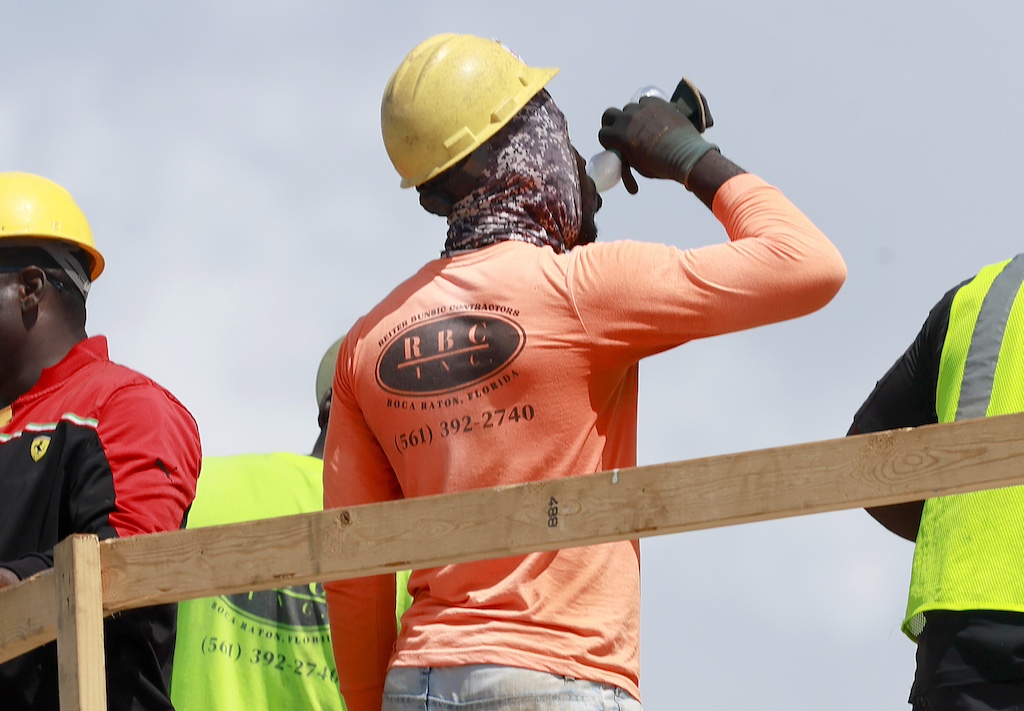
Construction workers try to stay hydrated while working in the heat. (Mike Stocker / South Florida Sun Sentinel via Getty Images)
On a blistering day in May 2008, seventeen-year-old farmworker María Isabel Vásquez Jiménez was tying grapevines in a vineyard outside Stockton, California, when the temperature crept past 100 degrees Fahrenheit. It was only her second day on the job. She was two months pregnant and, according to investigators, had little access to shade or cool drinking water. After hours beneath the sun, she fainted.
Rather than call an ambulance, supervisors drove her to a parking lot, where her fiancé tried to revive her with a wet cloth. By the time she reached a clinic, her body temperature had climbed to 108 degrees Fahrenheit. Two days later, she was gone.
Part of the tragedy was that California’s laws should have kept María alive. In 2005, California passed the nation’s first heat standard — a policy that required water, shade, and rest breaks for outdoor workers. María’s death showed that such words on paper were not enough and spurred California to ratchet up enforcement efforts in 2010.