Why Have Concert Tickets Gotten So Expensive?

A wave of tour cancellations. Ticket website crashes. Iran war fuel surges. Fans going into debt to attend festivals. Welcome to the misery that is live music in 2026.
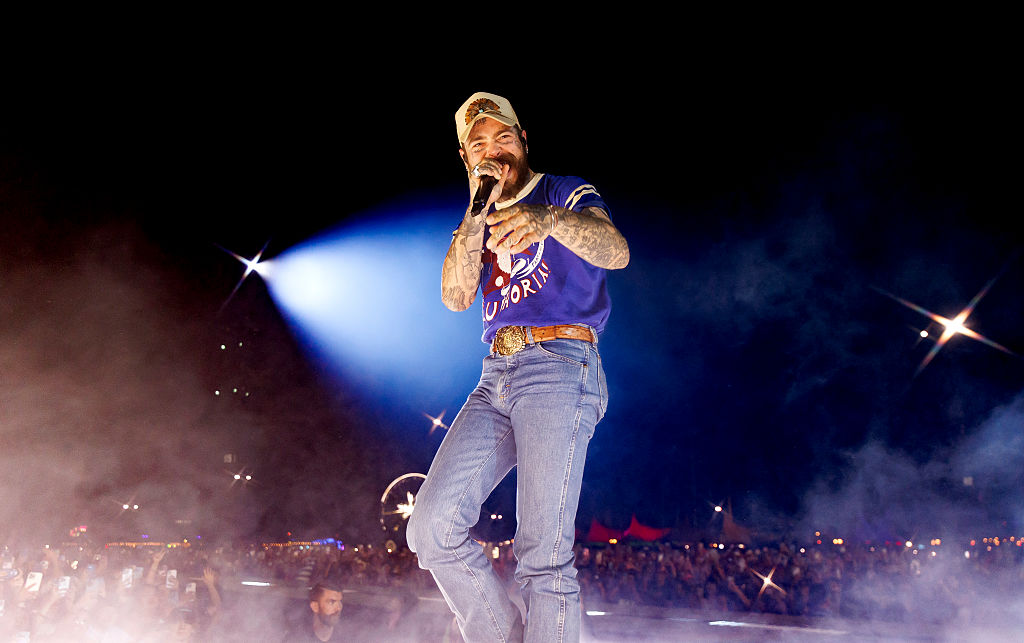
Post Malone performs on stage at Coachella Music Festival in Indio, California, on April 13, 2025.

Post Malone, Meghan Trainor, and the Pussycat Dolls all delayed or canceled their 2026 tours. Some industry experts think “blue dot fever” is to blame. (Christopher Polk / Billboard via Getty Images)


Anyone who’s recently bought concert tickets knows what a miserable and expensive process it’s become.

Paying anything close to a reasonable price often requires scouting social media and news sites for tour announcements. As the sale date approaches, fans have taken to opening new credit cards or desperately combing through Reddit posts for presale codes — only to miss out because they showed up a few minutes late or got bumped to the back of the queue by a site glitch.

In the end, concertgoers are often forced to pay far above face value on the secondary market. The cost of going live has gotten so out of hand that a 2025 Cash App study found over half of Gen Z has gone into debt to fund concert expenses.

Soaring prices have recently become a big debate point in the music industry. In response to several popular artists canceling tours, industry analysts began speculating about a surge in “blue dot fever,” where undesirable seats sit unsold on Ticketmaster.

The conversation provoked industry-leading publication Billboard Pro to ask, “Have Ticket Prices Finally Gotten Too High?”

Making sense of current woes is tricky, with people pointing to factors ranging from industry monopolies and scalpers to post-COVID-19 market corrections and the Iran war.

What’s abundantly true is that ticket prices have been rising for years, and fans are taking notice. In 2025, overall ticket sales declined even as industry revenue increased. Rising costs may also be contributing to new forms of audience behavior, like waiting until the last minute for price dips or simply skipping certain dates altogether. Artists themselves are struggling in light of mounting road expenses — often taking significant losses on the way.

New legislation and organizing represents a promising solution; Democrats and Republicans are even coming together to tackle the issue. While it’s not obvious what’s wrong or if these solutions will be enough, most people agree things are getting out of hand.

What Is “Blue Dot Fever”?

In early May, a Page Six article provoked a widespread conversation about whether artists are cancelling tours due to poor sales. The author termed it blue dot fever, the “sea of blue dots representing available seats” that fans simply don’t want to buy.

The music industry press lit up, and it even drew attention from mainstream platforms like NBC and ABC. Commentators point to cancellations or postponements by artists like Post Malone, Zayn Malik, Dolly Parton, the Pussycat Dolls, Demi Lovato, and Meghan Trainor.

Many industry veterans and music journalists believe something really is going on.

Michael Kaminsky, founder of KMGMT and an instructor at the University of Southern California, acknowledged serious challenges. “For a lot of artists, it’s increasingly difficult to tour and have a healthy business,” he explained. “A lot of this is fans’ sensitivity to ticket prices, but kids also have a lot of options now, and going to concerts is not as ingrained in their culture.”

Others have questioned whether blue dot fever is to blame. Live Nation President and CEO Michael Rapino said the number of cancellations this year was actually lower than historical data, which typically hovers around 1 to 2 percent; he further contended the company has seen no evidence of demand pullback.

Dave Brooks, a blogger and former senior director for live music and touring at Billboardsuggests blue dot fever is simply a joke that got out of hand.

“Consumers now buy later than ever before,” he says. “The old model — where every show sold out instantly months in advance — no longer reflects current buying behavior. Fans wait for payday schedules, travel confirmations, dynamic price drops, or last-minute plans.”

Brooks thinks fans are just being more strategic, which is “a normal byproduct of modern ticketing systems, dynamic pricing, production holds, secondary-market churn, and the increasingly fluid nature of concert sales cycles.”

It is difficult to assess how real blue dot fever is. Ten or so canceled events doesn’t make for a definitive dataset. Many artists are being tight-lipped or citing personal reasons for why they’re skipping the road — while they very well may be lying, the evidence just isn’t conclusive.

Still, sales really are behind several cancellations. There was evidence that the Pussycat Dolls pulled their North American reunion tour due to sluggish sales in the United States and Canada. At the beginning of May, Kid Cudi directly admitted sales were the reason he canceled a Birmingham show, saying “the ticket sales just weren’t strong enough.” In mid-May, actor-turned-musician Kiefer Sutherland also revealed “very low ticket sales” were the reason he pulled his remaining dates.

There is also some evidence we are seeing a longer trend. In 2022, Rolling Stone already noted that “eye-popping ticket prices” were behind many “furious op-eds and social media posts.”

2024 saw ramped up chatter about cancellations. When Jennifer Lopez called off her tour that year, ostensibly to spend more time with her family, commentators pointed to evidence of low sales. Meanwhile, the Black Keys openly downsized their 2024 tour to smaller venues, and Lauryn Hill explicitly canceled her tour due to sales.

Rising Costs

Whatever is behind these cancellations, ticket prices certainly have risen over the last decade. In a December 2025 report on touring, Billboard noted that the average ticket cost jumped significantly during the previous ten years — from $84.15 in 2015 to $127.17 in 2025.

This swell is definitely affecting consumer behavior. Billboard’s report also noted a 0.3 percent drop in gross and attendance from 2024 to 2025. Additionally, ticket prices dropped from $130.36 to $127.17.

Even so, prices remain high, and fear of missing out on big events is driving fans to bite the bullet — or even spend beyond their means.

Cash App found that over half of Gen Z concertgoers had resorted to buy now, pay later (BNPL) systems — essentially, going into debt — to fund accommodations (30 percent), transportation (24 percent), tickets (21 percent), and even concert outfits (18 percent). Many of them (45 percent) also opened a new credit or debit card to take advantage of exclusive member presales for shows.

Billboard Pro reported that last year, BNPL was how a majority of attendees paid for big festivals like Lollapalooza and Rolling Loud, with about 60 percent of 2025’s Coachella tickets selling through the event’s payment plan system.

This trend could reflect greater caution, but the industry itself seems to be weathering a slight dip. Mordor Intelligence projects that the US live music market, valued at $18.51 billion in 2025, will climb to $26.93 billion by 2031.

Pollstar also found that revenue was concentrating toward big stars like Coldplay and Beyoncé: through the third quarter of 2025, the top ten worldwide touring artists by ticket sales grossed a combined $2.02 billion, up 12.7 percent from the previous year.

What Went Wrong?

Whatever mechanisms are at play, many experts do think costs are a central factor.

“It’s hard to think that ticket prices aren’t playing at least some role in everything,” says John Chavez, an agent at Ground Control Touring who spoke to Billboard Pro. “It’s clear that it’s much more expensive to go to a concert, especially when you’re getting to 2,000-cap-and-above-sized venues, the arenas and theaters and sheds of the world. It’s a lot more expensive to do that than it once was.”

Other analysts have framed the issue as a market correction to the boost that followed COVID-19, when fans rushed to attend concerts as shutdown restrictions were lifted. In 2023, the first full year of post-pandemic live music, revenues shot past pre-2020 records, causing Pollstar to wonder if we had entered a new “Golden Age of Live.”

Even so, the market may be normalizing. Pollstar also warned about what it dubbed the “drinking from the firehose” effect, with a glut of events that consumers can’t keep up with.

“There was this mad rush to go out and do stuff once again, and I think it created this false sense of security in terms of where the industry is concerned,” booking agent Brent Lippincott told Consequence of Sound. “There was this idea that we could just continue to raise prices and people are gonna pay them, and the industry’s going to continue to grow and we have nothing to worry about.”

Other commentators think the core driver is how people purchase tickets in the digital era. Dynamic pricing, where prices fluctuate in response to market demand similar to the airline and rideshare industries, has been a key target. However, some people counter that dynamic prices can also result in savings for fans.

The secondary market in particular has gotten intense scrutiny as scalpers and bots scoop up tickets to price-gouge fans. In 2023, there were 10.5 billion secondary market tickets across sports, concerts, festivals, and theater, representing 25 to 30 percent of ticket inventory for high-demand tours. Some resellers even have made use of speculative listings, where they list tickets they don’t actually have possession of yet.

One of the most high-profile examples of a problematic secondary market was the chaotic 2022 sale for Taylor Swift’s Eras tour. Following days of complaints about crashes and frozen queues, Ticketmaster canceled the sale after receiving 3.5 billion system requests, four times more than they had ever received before.

The 2024 Oasis reunion tour also saw site crashes, prompting the band to resort to a lottery system just to enter the queue. (I was a lucky winner for a New York area show, but Pitchfork news director Alex Suskind reports having to fly to Mexico to catch a date.)

The Swift incident was significant enough to prompt regulatory action. In 2023, the Senate Committee on the Judiciary convened a hearing in response to the disastrous sale. During the session, Democrats and Republicans actually came together to question whether the 2010 merger of Ticketmaster and Live Nation represented a monopoly.

In 2024, the federal government filed an antitrust suit against the companies, winning the case with a unanimous jury decision this year. A coalition of US states have more recently issued a call to split up the company.

This issue has proven to be surprisingly bipartisan. Shortly after stepping into office last year, Donald Trump called for the Federal Trade Commission to enforce the 2016 Better Online Ticket Sales Act (BOTS Act), which makes it illegal to circumvent security measures for online ticketing using bots or other tactics. One of the direct consequences was a lawsuit filed against a sizable ticket broker, with a judge ruling that humans and bots alike could be held liable.

Whatever the faults of the music industry, there is also considerable evidence that touring costs are ballooning due to external factors.

Rising travel costs have been particularly tough on artists. The National Independent Talent Organization says that artists typically take home $8 on a $100 ticket, burning a significant chunk of income on fuel, gear, hotels, per diems, and visas. Billboard Pro reports that the Iran war has exacerbated an already punishing post-COVID landscape, with blossoming fuel costs contributing to losses or the decision to bail on tours altogether.

“What I see now is the middle class eroding, and it’s harder for everyone there,” Kaminsky explained. “Expenses are way up, some have tripled from even a few years ago.” He also acknowledges fuel as a key factor, remarking, “The day the Iran war started, my daily ticket counts took a huge dip.”

Fixing the System

Ultimately, the chaos of the music industry may be due to several factors, not just blue dot fever. Even so, it’s certain that artists and fans are hurt by the current state of affairs. At best, fans are forgoing live music, and at worst, they are living beyond their means — taking on debt to buy tickets and concert fits.

Professionals are also struggling. One study found that in 2024, 64 percent of independent venues operated without profitability, and a 2025 report observed that “overwhelmingly” musicians “cannot cover their expenses through music work alone.”

Bipartisan regulatory action is one positive step. Additional examples are seen in bills now in development across the country. California is currently weighing two: AB 1720, which imposes a 10 percent restriction on ticket resale costs, and AB 1349, which would ban speculative purchasing. Congress is also considering a bill that would ban speculative purchasing and require all ticket sellers to include the full ticket price in listings and advertisements.

Additionally, there is a growing interest in deeper forms of organizing around the issues affecting musicians. United Musicians and Allied Workers (UMAW), for example, formed in 2020 at the outset of the pandemic to represent workers in the music industry. Since then, they have mounted campaigns focused on the low streaming fees paid to musicians and decoupling the South by Southwest festival from defense contractors and the US Army, who were a “super sponsor” of the event in 2024. In a similar vein, Bandcamp United has represented employees of the music distribution platform.

As the sticker price has gotten bigger and bigger, it has brought increased attention to the plight of working musicians — and put pressure on companies and politicians to take action. The question is whether that attention will last long enough to fix the deeper issues at play.