We Shouldn’t Be Nostalgic for Jimmy Hoffa
At a time of historic working-class weakness, it’s tempting to watch the portrayal of Jimmy Hoffa in Martin Scorsese’s The Irishman and long for similar labor leadership today. But while Hoffa negotiated contracts that improved the lives of millions, his corruption and autocratic leadership also paved the way for the Teamsters’ decline.
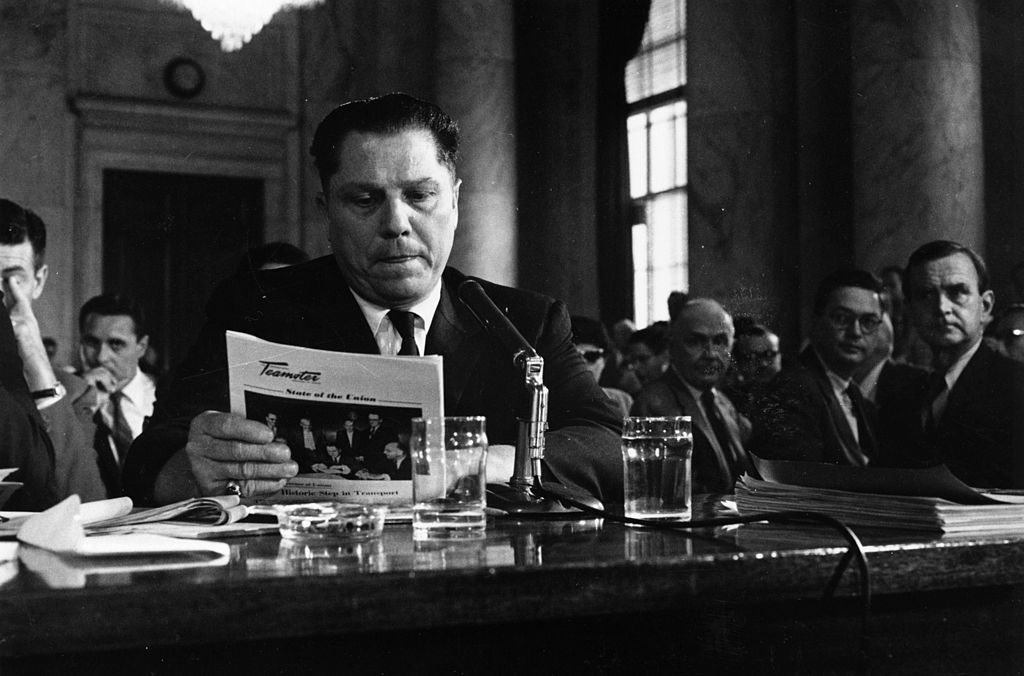
American labor leader Jimmy Hoffa, president of the Teamster’s, testifying at a hearing into labor rackets, August 11, 1958. Keystone / Getty
Nearly forty-five years after his 1975 disappearance outside the Machus Red Fox restaurant in a Detroit suburb, labor leader Jimmy Hoffa is sparking renewed interest, thanks in large part to Martin Scorsese’s latest movie The Irishman. Few have embodied the image of the tough guy “labor boss” more than Hoffa, who headed the International Brotherhood of Teamsters (IBT) from 1958 to 1967, when he went to federal prison on bribery and jury tampering charges.
Despite (or perhaps because of) his criminal notoriety, some seek to rehabilitate Hoffa, arguing that “he was one of the most brilliant, effective and ambitious union leaders in American history,” even if he was a little crooked. Ethical lapses aside, he was a staunch defender of workers’ interests and never stopped fighting for them. This earned him the enduring loyalty and admiration of millions of Teamster members.
It’s true that there is much to admire about Hoffa, particularly his organizing acumen and negotiating skill. Hoffa genuinely cared about his members. His actions improved the lives of millions through strong contracts and solid benefits. Compared to some of the empty suits who pass for labor leaders today, like disgraced former UAW President Gary Jones, a tough, strategic leader like Hoffa looks pretty good.