Trump Won’t Stop at Attacking Birthright Citizenship

Central to Donald Trump’s assault on birthright citizenship, enshrined in the Fourteenth Amendment and a key feature of American jurisprudence, is the creation of an underclass of hyperexploited labor at home and abroad.
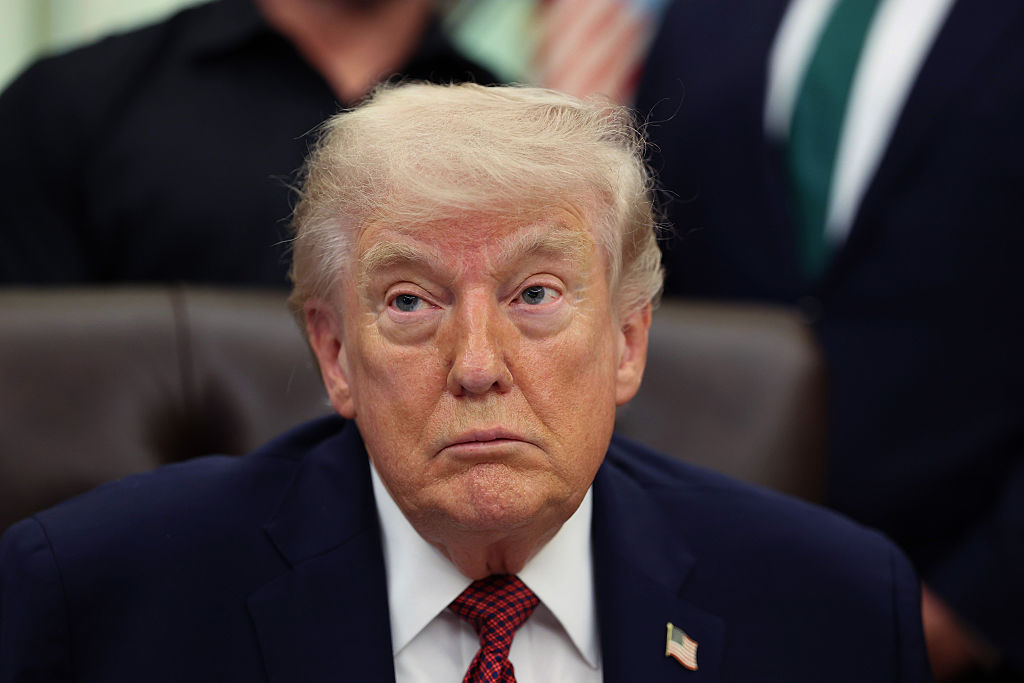
President Trump Signs Executive Order At The White House

Donald Trump is attempting to reshape the legal system into one in which all immigrants lose all rights and protections afforded by the Constitution. (Tasos Katopodis / Getty Images)


Earlier this month, the Supreme Court heard oral arguments in the case Trump v. Barbara, challenging Executive Order No. 14160, which declared that individuals born in the United States after February 20, 2025, are not US citizens if neither parent was a citizen or lawful permanent resident. Trump even attended the oral argument, the first time a sitting president has done so — because the issues contested in Trump v. Barbara are central to the MAGA agenda, going far beyond just those whose citizenship is impacted.

The three plaintiffs in the case either had temporary status or were in the process of obtaining legal status: Barbara, a pregnant Honduran asylum applicant; Susan, a Taiwanese citizen on a student visa with a one-year old; Mark, a Brazilian applicant for permanent residence whose son was born last year and initially received a US passport. The case is about the interpretation of the Fourteenth Amendment: “All persons born or naturalized in the United States, and subject to the jurisdiction thereof, are citizens of the United States and of the State wherein they reside.” The American Civil Liberties Union (ACLU), representing the plaintiffs, relies on the decades of legal precedent that have interpreted the Fourteenth Amendment to extend birthright citizenship to everyone who was born in the United States, regardless of the status of their parents — making Trump’s executive order blatantly unconstitutional.

Constitutional scholar Evan Bernick has argued that the attack on birthright citizenship is not unconstitutional but anti-constitutional, “reconfigur[ing] the Reconstruction Constitution into a means of perpetrating the very evils that abolitionists and Republicans sought to eradicate from our constitutional order.” The Fourteenth Amendment is one of these Reconstruction amendments.

Adopted in 1868, the Fourteenth Amendment both addressed Dred Scott v. Sandford, in which the Supreme Court denied enslaved African Americans citizenship, and the issue of Southern states’ “black codes” that created a legal system that pushed the formerly enslaved into exploitative forced labor similar to and sometimes worse than slavery conditions. The Fourteenth Amendment is one of the major legacies of Reconstruction, the period in which abolitionists and formerly enslaved people established some organized political power.

Trump’s solicitor general of the United States, Dean John Sauer — who has previously defended a Catholic priest accused of sexually abusing children and attempted to overturn the 2020 presidential election — argues that the phrase “subject to the jurisdiction thereof” in the Fourteenth Amendment does not apply to undocumented or temporary status individuals. He uses two legal concepts to defend this argument: domicile and allegiance.

Domicile is defined as physical presence and intent to remain. Sauer argues that undocumented and temporary status individuals are not domiciled in the United States: if physical presence is unlawful because an individual has no documentation or their status is temporary, an individual does not have intent to remain. This interpretation flies in the face of years of legal precedent that has interpreted domicile both more literally and broadly, allowing the courts to have jurisdiction over everyone within the US’s borders.

Additionally, domicile has a definition that has implications for those seeking permanent status in the United States. For example, refugee green card applicants must prove physical presence in the US, and only those domiciled in the US can act as financial sponsors for green card petitioners, including self-petitioners. Erecting more barriers to citizenship creates more precarity for immigrants, especially those seeking to escape danger and persecution in their home countries — which is, of course, what Trump is deliberately seeking here.

Sauer argues that the allegiance of formerly enslaved people to the United States had been “established by generations of domicile here. It did not grant citizenship to the children of temporary visitors or illegal aliens, who have no such allegiance.” Allegiance is a legal concept about the obligation a resident owes to the government in return for protection. That’s why naturalized citizens take an oath of lifelong allegiance in exchange for citizenship, and those born in the United States owe lifelong loyalty because of their birth. Currently, temporary residents have a duty of allegiance as long as they are physically present in the country.

While data shows that undocumented immigrants commit crimes at lower rates than citizens, Trump has cast immigrants as criminals since his first campaign. Trump declared the presence of undocumented immigrants who seek opportunity and refuge in the United States an “invasion” in order to justify invoking wartime powers within our borders. His solicitor general of the United States is now implying to the Supreme Court that immigrants do not contribute to the country and the government does not have a duty to protect them.

Immigration and Customs Enforcement (ICE) and the immigration system have routinely violated the due process requirements of the Fifth Amendment, and Trump’s attack on birthright citizenship implies a belief that immigrants should not have constitutional protections at all. Those working in the immigration system report it entering a new level of dysfunction; law-abiding immigrants and refugees are being detained at court hearings or adjustment-of-status interviews.

I’ve been working with the lawyers of detained clients, and they are seeing more people denied bond, more people with court dates that never come. Even those who want to voluntarily deport are not getting out. ICE has detained a historic high of over 70,000 people of all legal statuses, including citizens. Ninety percent of people in ICE detention are held in for-profit detention centers where they are coerced to work for $1 a day or less.

These policies are expanding a domestic incarcerated underclass in the United States, as the larger MAGA agenda expands that underclass worldwide. The US is behind the escalation in Iran, the genocide in Palestine, and economic instability in countries like Venezuela, Haiti, Nicaragua, and Cuba, all of which are displacing millions of people. The climate crisis, which the United States is the largest contributor to, displaces tens of millions of people every year. Economic migration, coming to the US for jobs, is in large part due to US economic domination of poorer countries. This month, the Supreme Court will also hear Trump’s challenge to Temporary Protected Status (TPS), temporary deportation protection for those whose home countries are designated too dangerous to return to. The arguments made in Trump v. Barbara make it clear that the administration wants to make it as hard as possible for immigrants to receive permanent status in the United States, including those that have to leave their home countries because of American actions.

The administration has also increased third-country deportations, when deportees who cannot return to their country of origin for threat of persecution or other danger are put on flights to whatever country Trump strong-arms into taking them. Deportees displaced in this way are more likely to become forced and hyperexploited labor, through trafficking, working without legal status (and therefore few worker protections or recourse against employer abuse), or entering unregulated job markets, creating a larger pool of cheaper labor in prisons and detention centers and on the margins.

While it seems unlikely that Trump will prevail in this case, the arguments make clear Trump’s aims. Sauer is both arguing that only those who have permanent legal status can establish domicile and that only those with “generations of domicile” can establish allegiance to the United States. Therefore, only those with generations of permanent legal status are “subject to the jurisdiction of” the United States. As ACLU lawyer Cecilia Wang pleads, “If you credit the government's theory, the citizenship of millions of Americans, past, present, and future, could be called into question.”

Constraining jurisdiction in this way suggests a system where all immigrants lose all rights and protections afforded by the Constitution. This parallels the terror campaign the administration is releasing on the streets through ICE and the National Guard, filling detention centers with immigrants of all legal status with fewer opportunities for release.

The birthright citizenship case is another attack on the Reconstruction Constitution. The Fourteenth Amendment is what established formerly enslaved Americans the liberty to contract — the foundation of labor regulations, including the right to collectively bargain. Trump’s anti-constitutionalism both erects barriers to progressive reform and expands tools to enact his agenda: executive power unchecked by the courts, state power unchecked by the Constitution, and unbridled use of military power.